

Highlights
- See the moonstones and guardstones of the Vatadage
- Visit the Parakrama Samudraya reservoir
- See the Buddha images carved in granite at Gal Vihara
- See the ruins of the royal palace and audience hall
- Visit the Lotus Pond, a stepped stone pool
Overview
Polonnaruwa was Sri Lanka's capital from the late 10th to the 13th century, after Anuradhapura fell. Its ruins, beside a huge ancient reservoir, are more compact and better preserved than those of Anuradhapura, and include some of the finest stone carving in the country. The ancient city is a UNESCO World Heritage Site and one of the highlights of the Cultural Triangle.
History
After the Chola invasion from South India destroyed Anuradhapura in the late 10th century, the Cholas ruled from Polonnaruwa. King Vijayabahu I drove them out in 1070 and kept it as his capital. The city reached its peak under Parakramabahu I in the 12th century, who unified the island, built monasteries, palaces and vast irrigation works, and is remembered as one of Sri Lanka's greatest kings. His successor Nissanka Malla added more monuments. Further invasions and political decline led to the city being abandoned in the 13th century, and the jungle covered it until archaeologists cleared it in the colonial period.
Main sights
Royal Palace group
The walls of Parakramabahu's palace still rise high, with holes for the beams of upper floors. Nearby are the Council Chamber, with carved elephant friezes and lion figures, and the royal bathing pool fed through stone channels.
The Quadrangle
The Dalada Maluwa, or Quadrangle, is the heart of the ancient city. The circular Vatadage, with its carved moonstones, guardstones and four Buddha statues, is one of the finest buildings of its kind. Around it are the Hatadage and Atadage, both linked to the Tooth Relic; the Gal Potha, a huge stone slab inscribed with Nissanka Malla's deeds; the Lotus Mandapa with stems carved like lotus stalks; the Thuparama image house; and the stepped Satmahal Prasada.
Northern monuments
Further north are the Rankoth Vehera, a large dagoba built by Nissanka Malla; the Lankatilaka image house with its towering walls and headless standing Buddha; and the white Kiri Vehera, still with its original plaster. The Gal Vihara has four Buddha figures cut from a single granite face, including a 14 metre reclining Buddha, regarded as masterpieces of Sri Lankan sculpture. Further on are the Lotus Pond and the Tivanka image house, whose murals survive.
South of the city
The Pothgul Vihara was a monastery library, and nearby stands a striking rock-cut statue of a bearded figure holding a manuscript, often said to be Parakramabahu I.
Parakrama Samudra
The Parakrama Samudraya, the Sea of Parakrama, is a vast reservoir built by Parakramabahu I by linking older tanks. It still irrigates the surrounding rice fields and is beautiful at sunset.
Tickets and tips
Foreign adults pay US$30, half price for children (Central Cultural Fund rates, October 2026). Buy the ticket at the museum near the rest house, which is worth a visit first for its models of the city. The site is spread over several kilometres, so rent a bicycle or hire a tuk-tuk, and start early to avoid the heat. Shoes and hats come off at the shrines; wear clothes that cover shoulders and knees. A guided Polonnaruwa day tour helps bring the ruins to life.
Getting there
Polonnaruwa is about 220 km from Colombo, around five hours by road, and about an hour from Habarana and Sigiriya. Trains on the Batticaloa line stop at Polonnaruwa, and buses run from Dambulla and Habarana.
When to go and how long to stay
Polonnaruwa is in the dry zone and is hot for most of the year. Most rain falls from about October to January. One full day, or a long morning, covers the main ruins; many people visit from a base in Sigiriya or Habarana.
Further afield
Medirigiriya, about an hour north, has a well-preserved circular Vatadage on a rock outcrop, often compared with the one in Polonnaruwa. Dimbulagala, south-east of the city, is a mountain with forest hermitages used by monks for many centuries. Both are quiet compared with the main ruins.
Suggested plan
Start at the museum at opening time, then cycle to the Royal Palace group and the Quadrangle while it is still cool. After a break, continue north to Rankoth Vehera, Lankatilaka, Kiri Vehera and the Gal Vihara, finishing at the Lotus Pond and Tivanka image house. In the late afternoon, take a safari at Minneriya or Kaudulla, or watch sunset over the Parakrama Samudra.
Where to stay and eat
There are guesthouses and hotels in the new town and beside the reservoir. Simple restaurants serve rice and curry. Nearby, Wasgamuwa and Minneriya national parks are within reach for an elephant safari.
Related posts
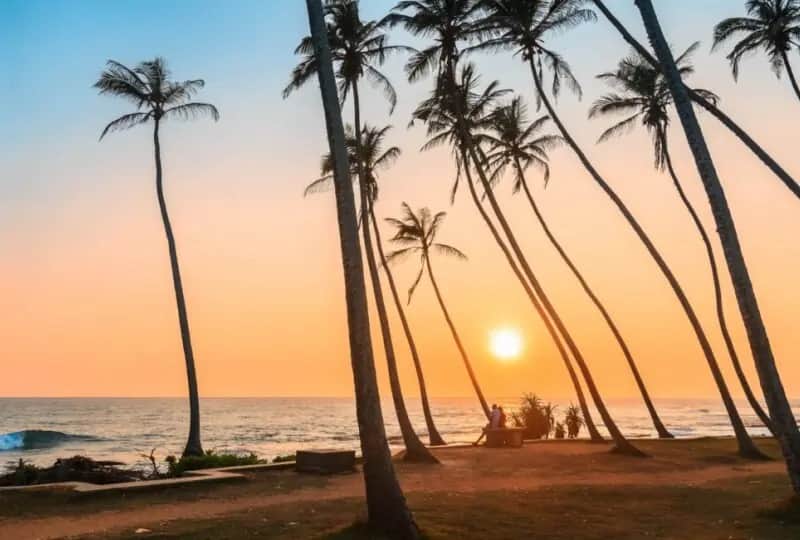
Koggala
Koggala, east of Galle, lies between a long beach and a lake scattered with islands. Boat trips, the stilt fishermen and the Martin Wickramasinghe Folk Museum make it a quieter base on the south coast.
Image Credit: ShutterStock

Ahungalle
Ahungalle is a quiet beach village between Bentota and Ambalangoda, home to a Geoffrey Bawa beach hotel. The Madu River mangroves, turtle hatcheries and Ambalangoda's mask workshops are all close by.
Image Credit: ShutterStock
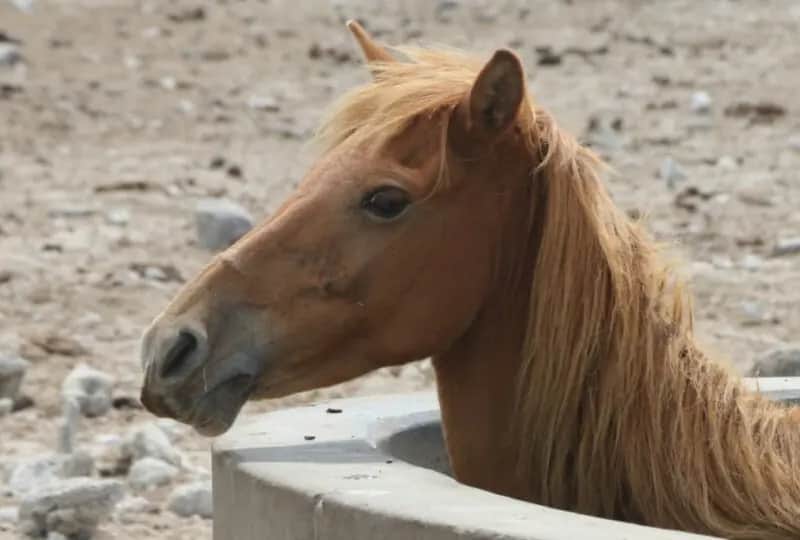
Delft Island
Delft is the largest of the islands off Jaffna, a windswept place of coral-stone walls, wild ponies and Dutch fort ruins. A ferry from Kurikadduwan makes it a full day trip from Jaffna.
Image Credit: ShutterStock
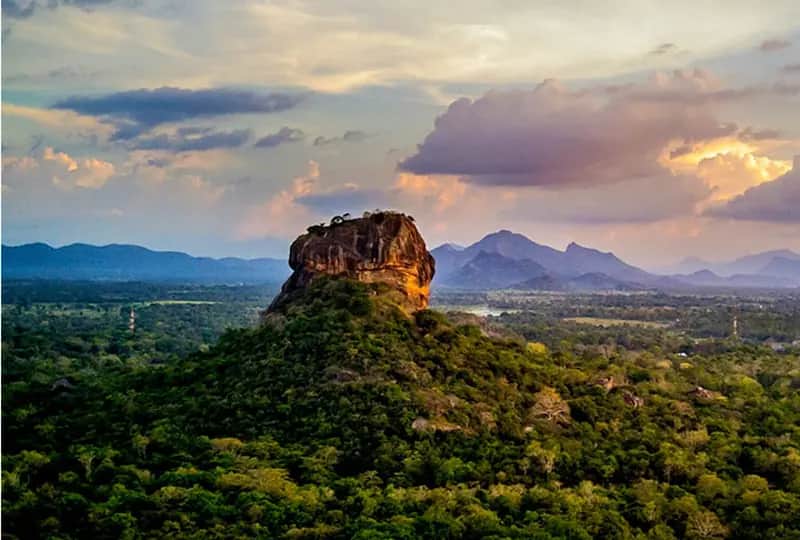
Sigiriya
Sigiriya is best known for its 5th century rock fortress, a UNESCO World Heritage Site with frescoes, water gardens and the giant Lion Gate. Neighbouring Pidurangala Rock gives the classic view of it at sunrise.
Image Credit: ShutterStock
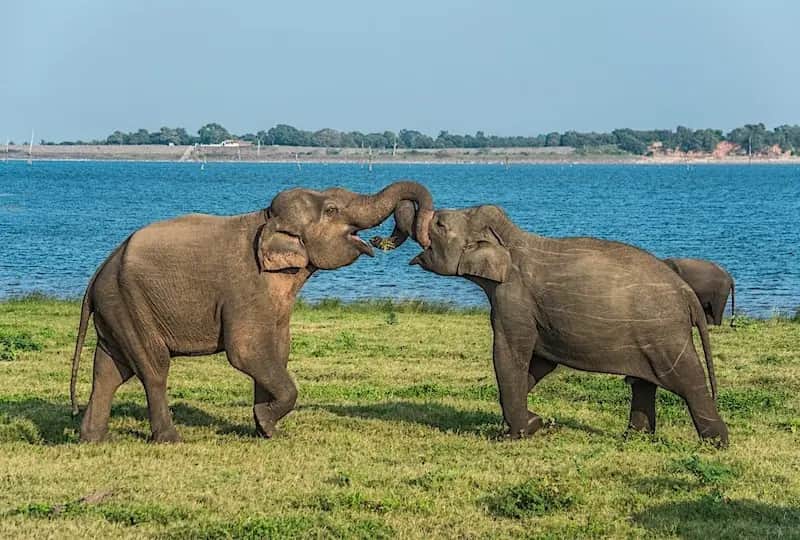
Kaudulla
Kaudulla National Park, near Habarana, is built around an ancient tank on the elephant corridor with Minneriya. Late in the dry season many herds move here, making it one of the best places in the country to watch elephants graze.
Image Credit: ShutterStock

Negombo
Negombo is a beach and fishing town close to the airport, the usual place for a first or last night in Sri Lanka. Its lagoon, early morning fish market, Dutch fort and many churches make it worth more than a transit stop.
Image Credit: ShutterStock