

All activities
Browse things to do across Sri Lanka, from beaches and wildlife to culture, hiking and water sports.
White Water Rafting in Kitulgala
Raft the Kelani River at Kitulgala, Sri Lanka's centre for white water rafting. Trips of about two hours run a series of rapids in the rainforest with a licensed guide, and no experience is needed.
ExploreImage Credit: ShutterStock
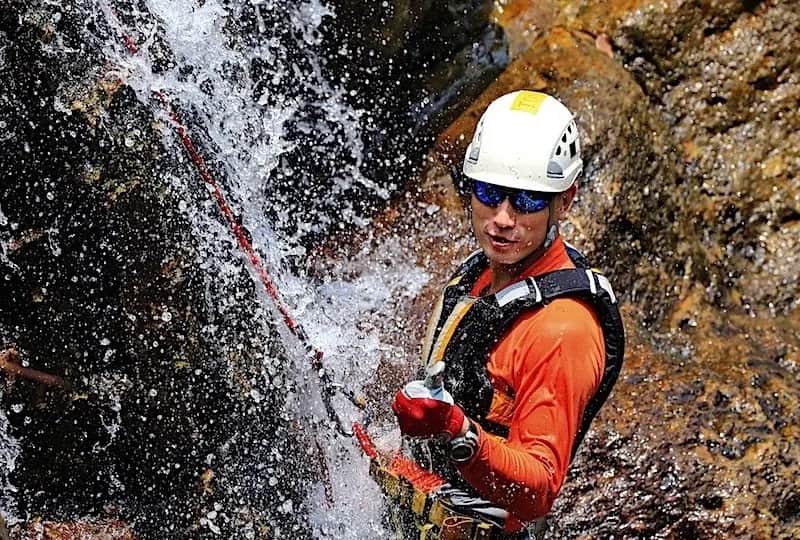
Water Abseiling
Lower yourself down a waterfall on a rope in the forest at Kitulgala. Guides provide the harness, helmet and training, and abseiling pairs well with a morning of rafting on the Kelani River.
ExploreImage Credit: ShutterStock

Kitulgala Jungle Trek
Cross the Kelani River by boat and walk into the Kitulgala forest reserve with a guide. The trails pass streams and small waterfalls, with endemic birds, butterflies and plants along the way.
ExploreImage Credit: ShutterStock

Trip to Singharaja Forest for the Day
Spend a day in Sinharaja, Sri Lanka's largest lowland rainforest and a UNESCO World Heritage Site. A guide leads you under tall trees and across clear streams, looking for endemic birds and other wildlife.
ExploreImage Credit: ShutterStock

Bird Watching in Sinharaja
Sinharaja is the best place in Sri Lanka to see endemic birds. With a local guide, look for the Sri Lanka blue magpie, red-faced malkoha and the mixed feeding flocks that move through the forest.
ExploreImage Credit: ShutterStock
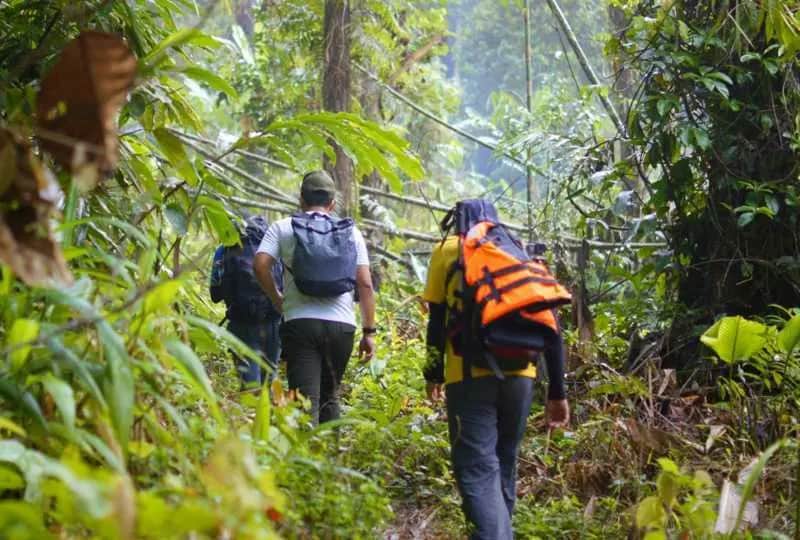
Trekking in Sinharaja
Trek through Sri Lanka's last large primary lowland rainforest on guided trails. Routes follow streams, pass waterfalls and climb to viewpoints such as Moulawella, with plenty of chances to see birds and lizards.
ExploreImage Credit: ShutterStock

Trekking in Horton Plains
Walk the high plateau of Horton Plains, above 2,000 metres in the central hills. The circular trail crosses grassland and cloud forest to World's End and Baker's Falls, best started at dawn.
ExploreImage Credit: ShutterStock

Camping in Horton Plains
Spend a night on the high plateau of Horton Plains with an authorised operator. Camping lets you start the World's End walk before the day visitors arrive and see the plains at dawn and dusk.
ExploreImage Credit: ShutterStock

Baker's Falls
Baker's Falls is a pretty waterfall on the main walking circuit of Horton Plains. It is named after the explorer Sir Samuel Baker and is reached by a short side path through cloud forest.
ExploreImage Credit: ShutterStock
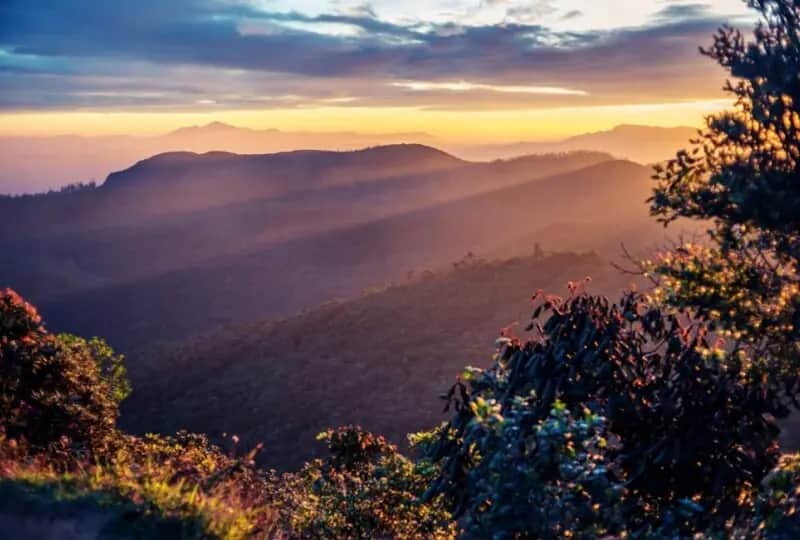
World's End
World's End is the cliff on the southern edge of Horton Plains where the land drops away by hundreds of metres. On a clear early morning the view stretches over tea country to the southern plains.
ExploreImage Credit: ShutterStock
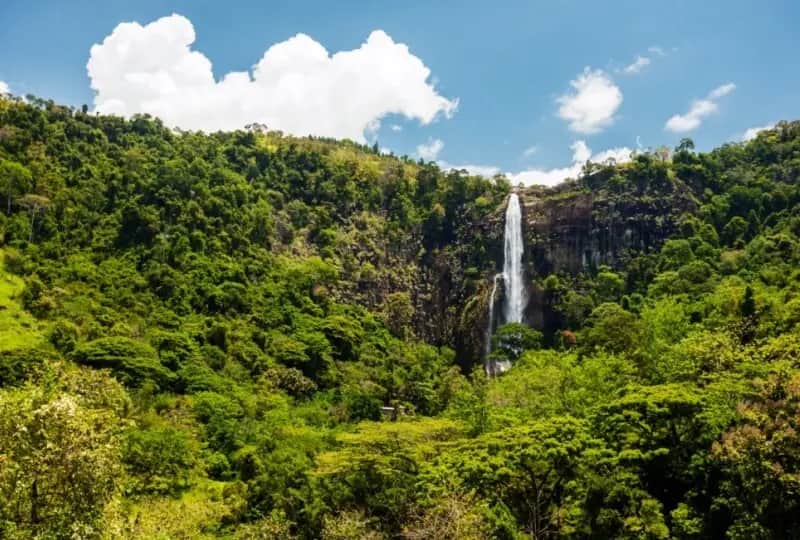
Bambarakanda Ella Falls
Bambarakanda, near Kalupahana, is the tallest waterfall in Sri Lanka at about 263 metres. The water falls in a long, thin ribbon down a sheer rock face surrounded by pine and forest.
ExploreImage Credit: ShutterStock
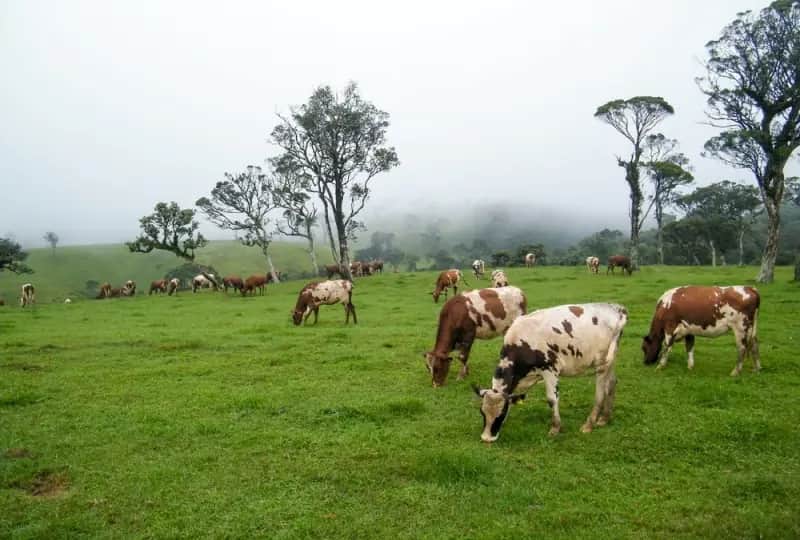
Ambewella Farm
Ambewela, on the plateau between Nuwara Eliya and Horton Plains, is known for its dairy farms. Visit to see the cattle, green pastures and cool climate that make the area look like northern Europe.
ExploreImage Credit: ShutterStock
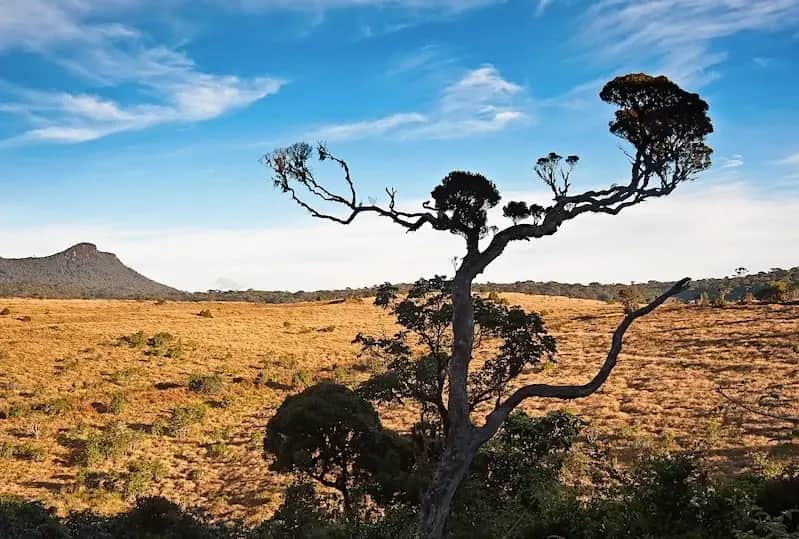
Horton Plains
Horton Plains National Park is a high plateau of grassland, cloud forest and streams at over 2,100 metres, part of a UNESCO World Heritage Site. It is home to sambar deer, endemic birds and the World's End cliff.
ExploreImage Credit: ShutterStock

Gal Oya National Park Safari
Gal Oya, in the east near Ampara, is one of the few parks in Sri Lanka with boat safaris. Cruise the Senanayake Samudraya reservoir looking for elephants swimming between islands, or explore the forest by jeep.
ExploreImage Credit: ShutterStock
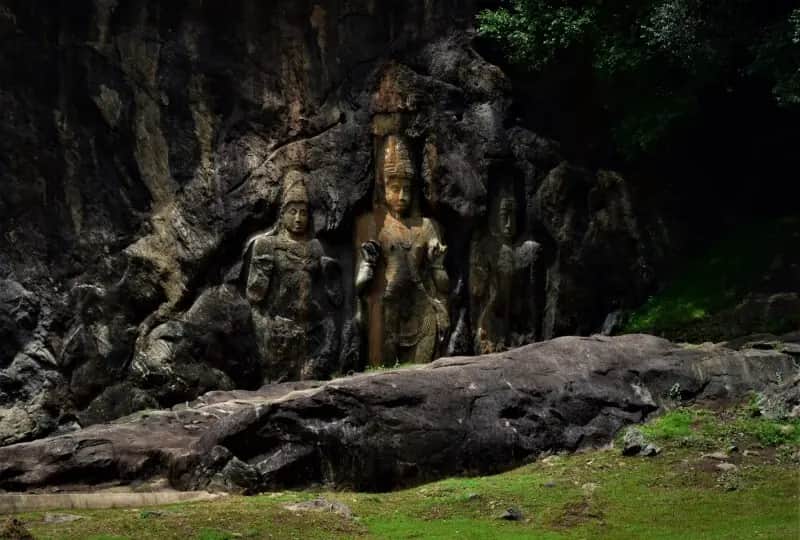
Buduruwayaya Archaeological Site
Buduruwayaya is an ancient Buddhist site near Wasgamuwa, set in quiet dry-zone forest. Its best-known feature is a large reclining Buddha among old ruins.
ExploreImage Credit: ShutterStock
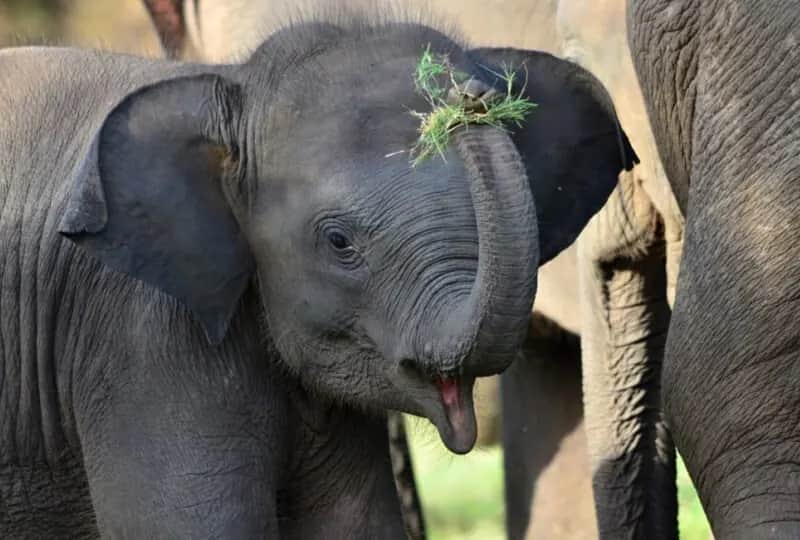
Wasgamuwa National Park Safari
Take a jeep safari in Wasgamuwa, a park between the Mahaweli and Amban rivers that sees far fewer visitors than Yala or Minneriya. Elephants, sloth bears and many birds live in its forest and grassland.
ExploreImage Credit: ShutterStock
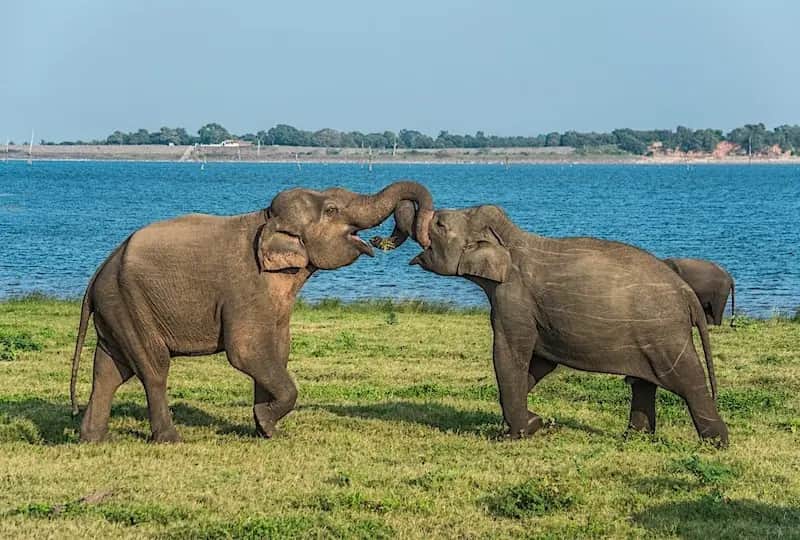
Kaudulla National Park
Kaudulla National Park, north of Habarana, surrounds an ancient tank on the elephant corridor with Minneriya. Late in the dry season large herds come here to graze on the fresh grass around the water.
ExploreImage Credit: ShutterStock
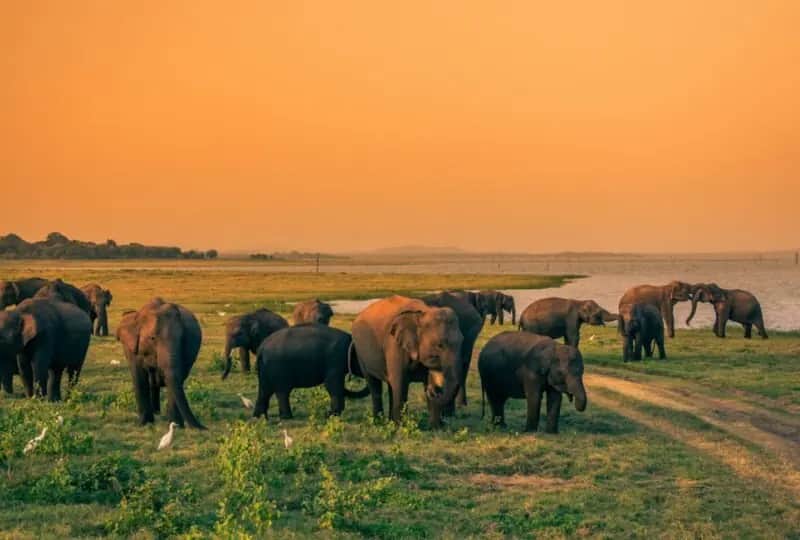
Kaudulla National Park Safari
Take an afternoon jeep safari at Kaudulla to see elephants on the shores of the ancient tank. From about August to December the herds can be large, and birds such as pelicans and storks gather on the water.
ExploreImage Credit: ShutterStock
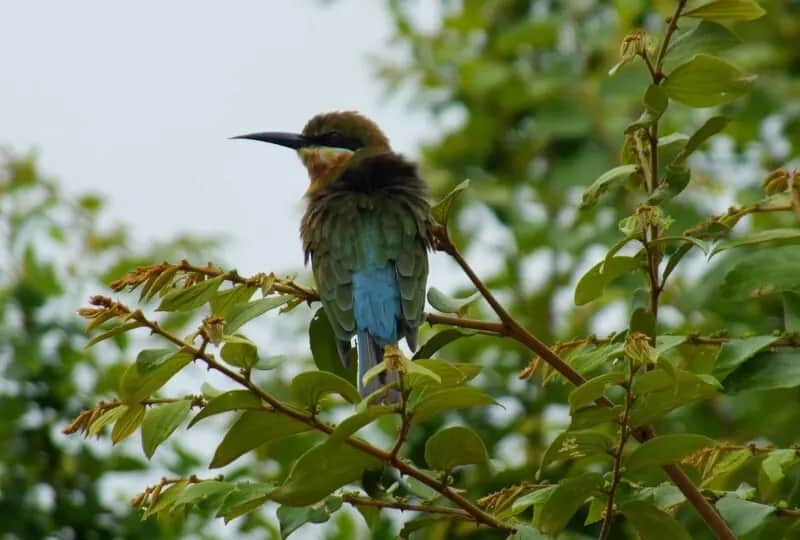
Kumana National Park
Kumana, on the south-east coast beside Yala, is one of the most important bird areas in Sri Lanka. Its centre is the Kumana Villu, a mangrove swamp where water birds nest in large numbers around May and June.
ExploreImage Credit: ShutterStock
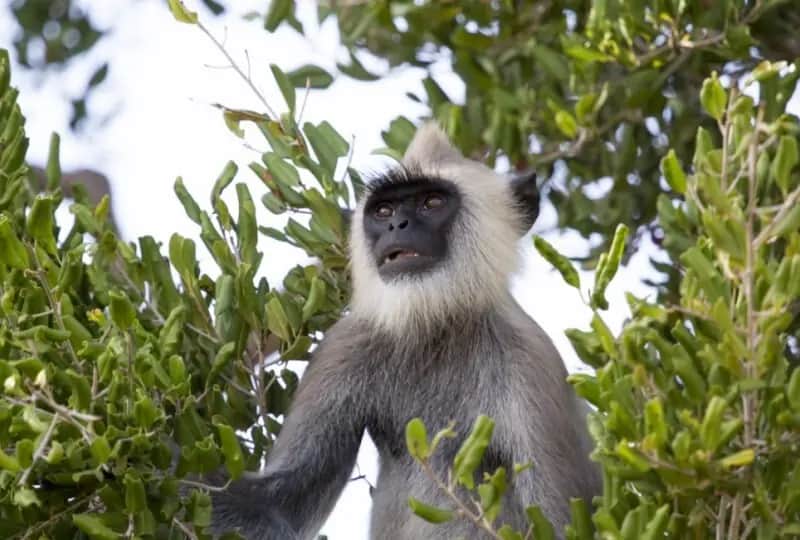
Kumana National Park Safari
A jeep safari in Kumana, south of Arugam Bay, is quieter than one in Yala and especially good for birds. Leopards, elephants and crocodiles also live among the park's lagoons and small tanks.
ExploreImage Credit: ShutterStock
Bambaragasthalawa Naga Pabbata Monastery Ruins
Bambaragasthalawa is an ancient Buddhist monastery site in the Kumana area, believed to be the Naga Pabbata Viharaya. Rock shelters, inscriptions and ruins lie in the quiet jungle near the coast.
ExploreImage Credit: ShutterStock

Kudumbigala Monastery
Kudumbigala is an ancient forest monastery among rocky outcrops between Arugam Bay and Kumana. Climb past cave shelters and small stupas to a rock summit with views over the jungle.
ExploreImage Credit: ShutterStock
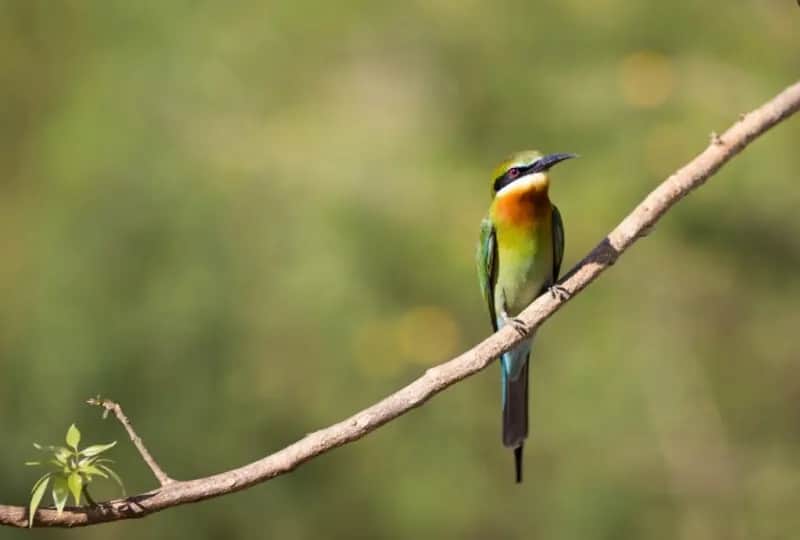
Birdwatching in Kumana National Park
Kumana, once called Yala East, is one of the best places in Sri Lanka for birdwatching. Pelicans, storks, spoonbills and herons nest in the Kumana Villu, and rare species such as the black-necked stork have been seen.
ExploreImage Credit: ShutterStock

Telulla Archaeological Site
Telulla is a small, little-visited archaeological site near Bundala. It has the remains of eleven small stupas, an image house and other buildings that were part of an old monastery.
ExploreImage Credit: ShutterStock
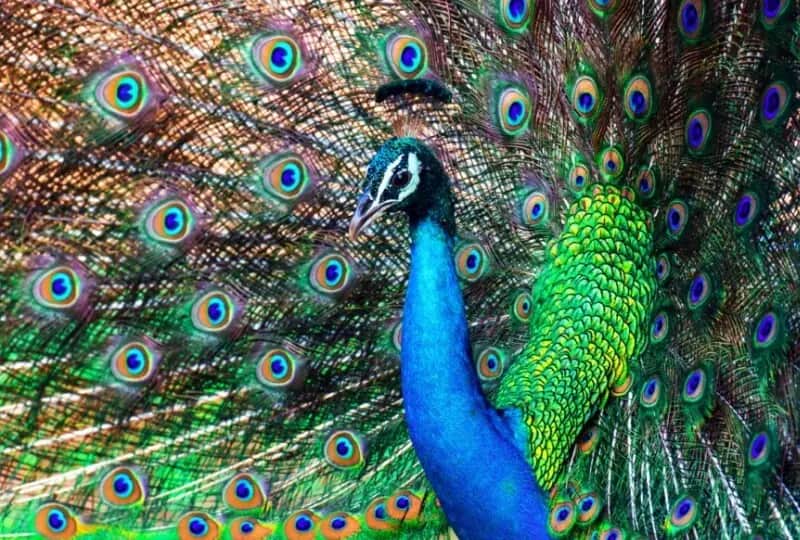
Ridiyagama Safari Park
Ridiyagama, near Hambantota, is Sri Lanka's first drive-through safari park, opened in 2016. Visitors tour it in closed vehicles to see animals such as lions, elephants and deer.
ExploreImage Credit: ShutterStock

Weerawila Tissa Sanctuary
The old tanks and wetlands around Weerawila and Tissamaharama are some of the best bird areas in the south. Visit early in the morning for water birds, raptors and waders close to Bundala and Yala.
ExploreImage Credit: ShutterStock
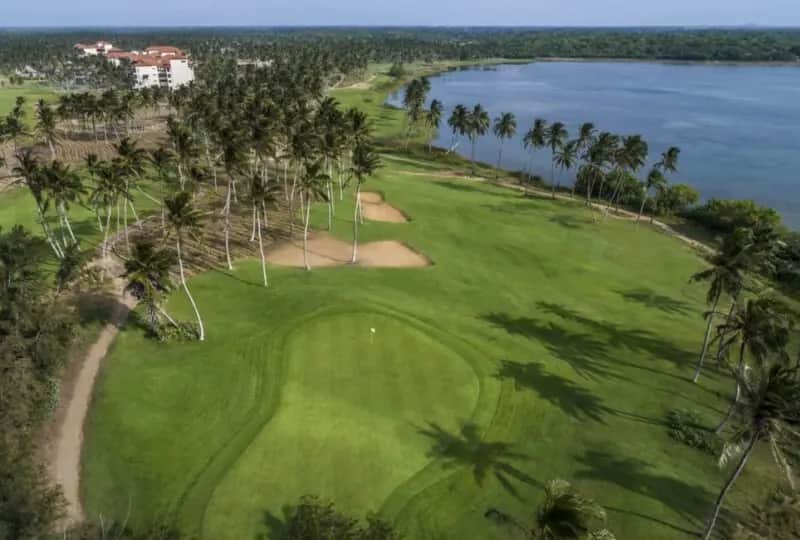
Golf at Shangri-La’s Hambantota
Play the 18-hole course at Shangri-La Hambantota on the south coast. Designed by Rodney Wright, it runs through coconut groves and scrub beside the Indian Ocean.
ExploreImage Credit: ShutterStock

Bird watching in Bundala National Park
Bundala National Park, Sri Lanka's first Ramsar wetland, is a maze of shallow lagoons, salt pans and dunes on the south coast. From about September to March, flamingos and thousands of migrant birds arrive.
ExploreImage Credit: ShutterStock

Camping at Bundala National Park
Stay at a tented camp near Bundala, where lagoon, scrub and sea meet. Camping puts you close to the park for early bird watching and safaris.
ExploreImage Credit: ShutterStock
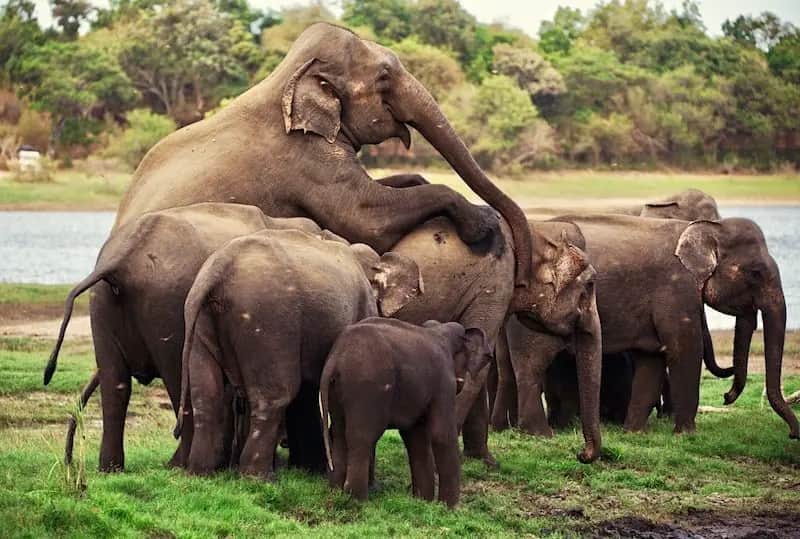
Minneriya National Park Safari
Watch the gathering at Minneriya, when large herds of wild elephants graze around an ancient tank in the dry season, usually from about July to October. Afternoon jeep safaris leave from Habarana and Sigiriya.
ExploreImage Credit: ShutterStock
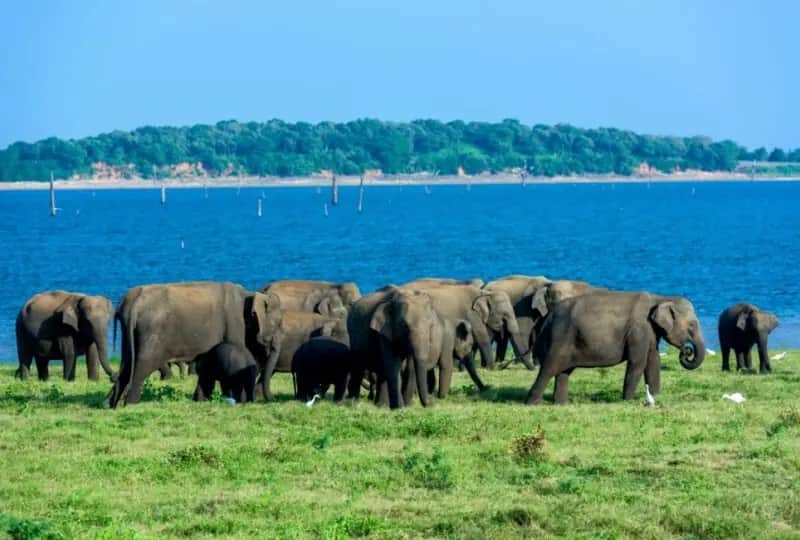
Udawalawe National Park Safari
Udawalawe National Park, around a large reservoir on the edge of the hills, is one of the best places in Sri Lanka to see wild elephants. Jeep safaris also find buffalo, crocodiles and many birds of prey.
ExploreImage Credit: ShutterStock
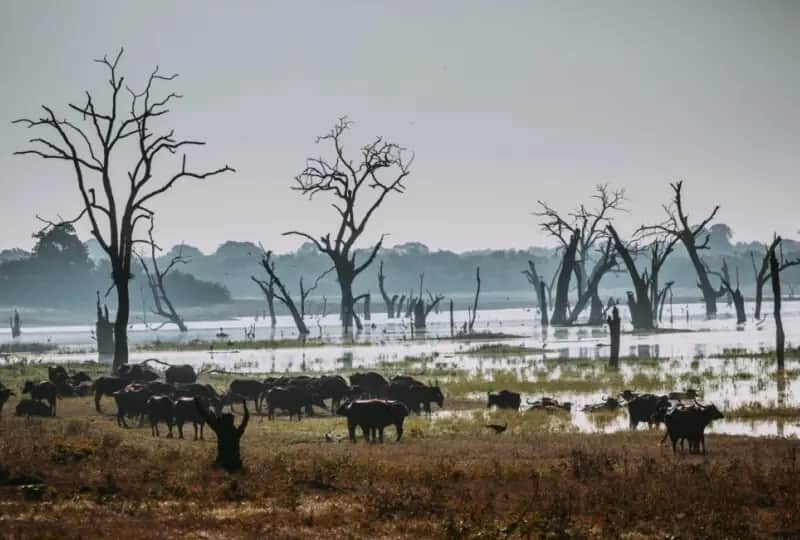
Udawalawe Reservoir and Dam
The Udawalawe reservoir, created by damming the Walawe river, lies along the edge of the national park. Elephants often come to drink on its shores, and the dam supplies water to farms across the region.
ExploreImage Credit: ShutterStock
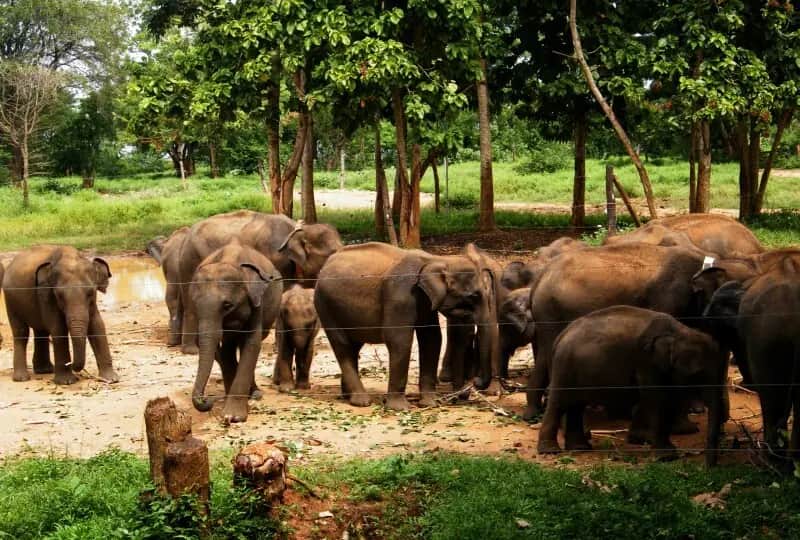
Elephant Transit Home
The Elephant Transit Home beside Udawalawe National Park cares for orphaned baby elephants until they can be released into the wild. Visitors can watch the calves being fed from a viewing area.
ExploreImage Credit: ShutterStock

Wilpattu National Park Safari
Wilpattu, on the north-west coast, is the largest national park in Sri Lanka. Its quiet forest is dotted with natural lakes called villus, and leopards and sloth bears are the main reasons to visit.
ExploreImage Credit: ShutterStock

Camping at Yala National Park
Stay at a tented camp on the edge of Yala National Park, close to the wildlife and the gate for the dawn drive. Operators provide beds, meals and guides.
ExploreImage Credit: ShutterStock
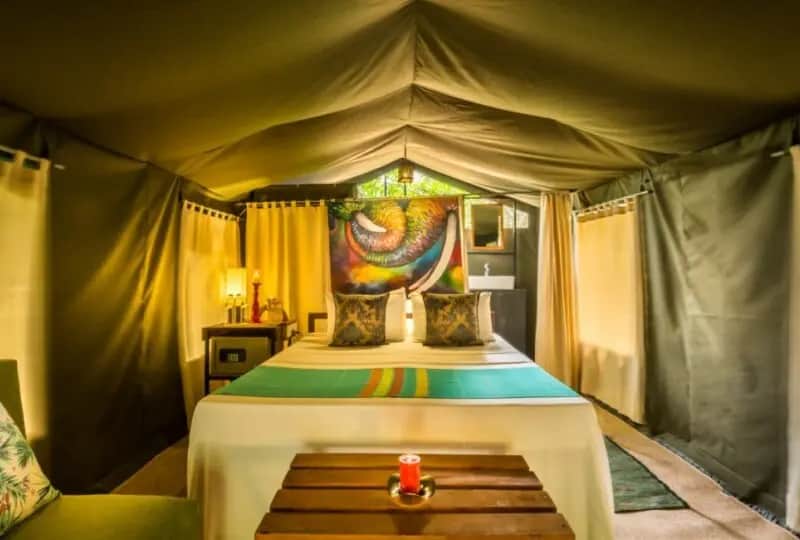
Glamping at Yala National Park
Glamping at Yala means a proper tent with a real bed, bathroom and good food on the edge of the national park. It is a comfortable way to stay close to the leopards and elephants.
ExploreImage Credit: ShutterStock

Lunugamvehera National Park
Lunugamvehera National Park, north of Tissamaharama, protects the catchment of the Lunugamvehera reservoir. It sees few visitors and links Yala with Udawalawe for elephants.
ExploreImage Credit: ShutterStock

Kataragama Kiri Vehera
Kiri Vehera is an ancient white stupa at Kataragama, one of the 16 most sacred Buddhist sites in Sri Lanka. Kataragama is also sacred to Hindus and draws pilgrims of many faiths.
ExploreImage Credit: ShutterStock

Situlpawwa Monastery
Situlpawwa is an ancient Buddhist monastery on a large rock in the Yala area, believed to date from the 2nd century BC. Climb to the stupa on top for views over the jungle.
ExploreImage Credit: ShutterStock

Akurugoda Stone Inscriptions
Akurugoda, near Tissamaharama, is one of the places in the old kingdom of Ruhuna where early writing cut in stone can be seen. The inscriptions are an important source for the island's early history.
ExploreImage Credit: ShutterStock
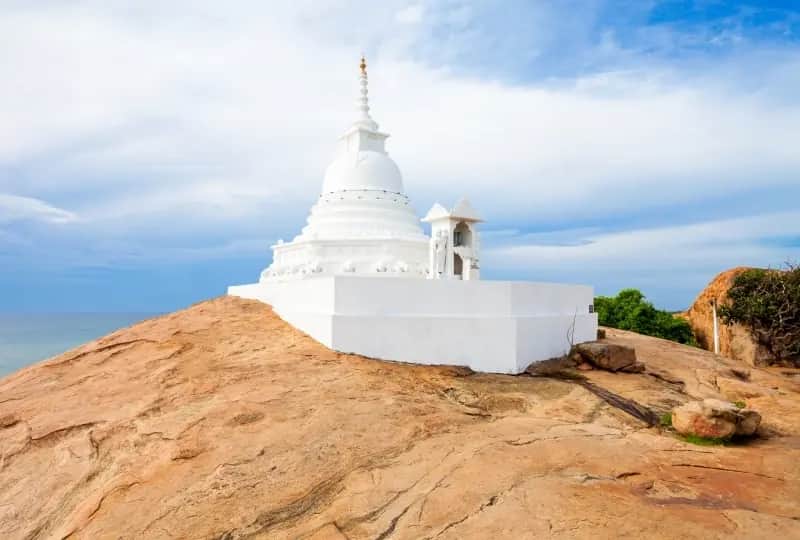
Kirinda Vihara Maha Devi Temple
Kirinda Raja Maha Viharaya is a Buddhist temple on a large rock by the sea at Kirinda, near Yala. It is linked to Viharamahadevi, the mother of King Dutugemunu, who in legend came ashore here.
ExploreImage Credit: ShutterStock
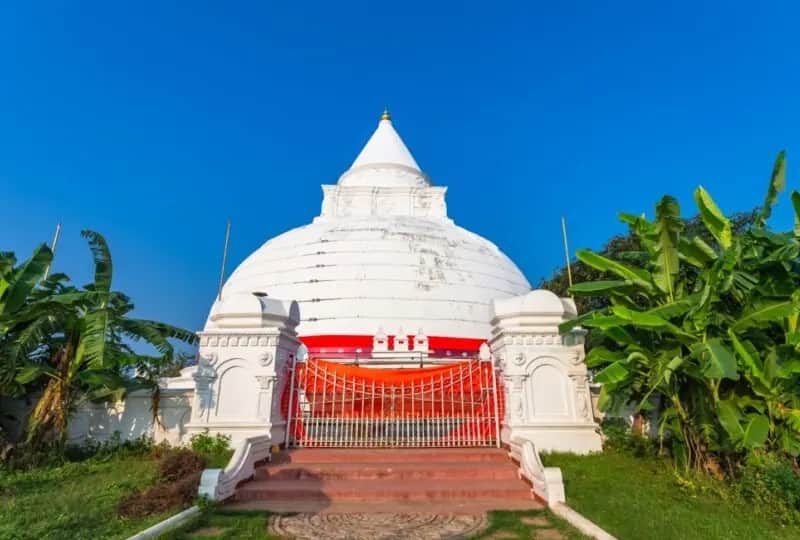
Tissamaharama Raja Maha Viharaya
The Tissamaharama Raja Maha Viharaya is the main temple of the old southern capital of Ruhuna. Its great white stupa is the largest in the south of the island.
ExploreImage Credit: ShutterStock
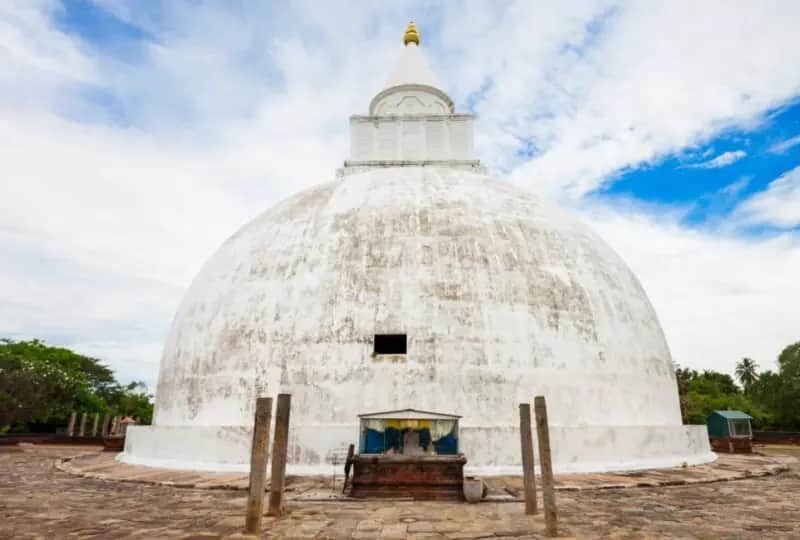
Yattala Vehera
Yattala Vehera is an ancient stupa on the edge of Tissamaharama, traditionally dated to around 2,300 years ago. It is surrounded by an elephant wall and the remains of an old monastery.
ExploreImage Credit: ShutterStock

Jaffna Library
The Jaffna Public Library grew from a small community library in the 1930s into a major centre of Tamil learning. Burned in 1981 with many rare manuscripts, it has been rebuilt in its original style.
ExploreImage Credit: ShutterStock
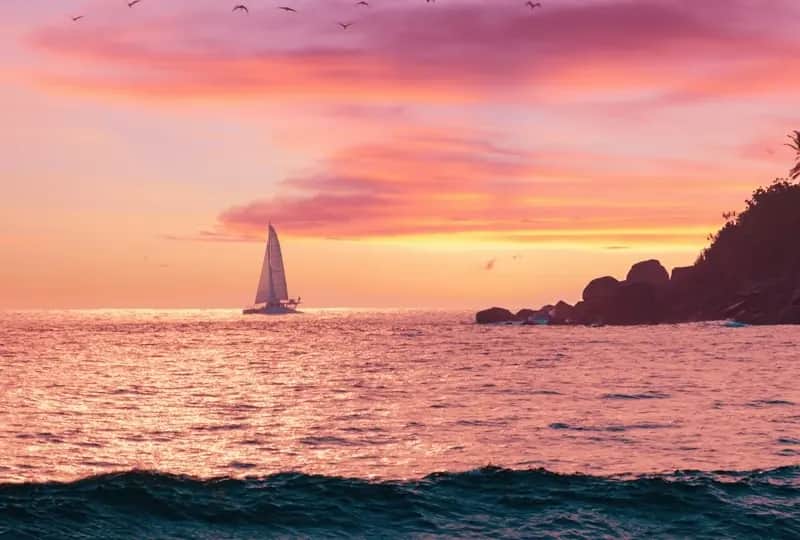
Luxury Catamaran Sailing to Delft Island
Sail the shallow waters of Palk Bay on a catamaran cruise from the Jaffna islands, visiting Delft and other small islands that few travellers reach. Expect quiet anchorages, swimming and village visits.
ExploreImage Credit: ShutterStock

Nallur Kovil
Nallur Kandaswamy Kovil, dedicated to Lord Murugan, is the most important Hindu temple in Jaffna. Visit during a puja, and come in July or August for its 25-day festival; men remove their shirts to enter.
ExploreImage Credit: ShutterStock
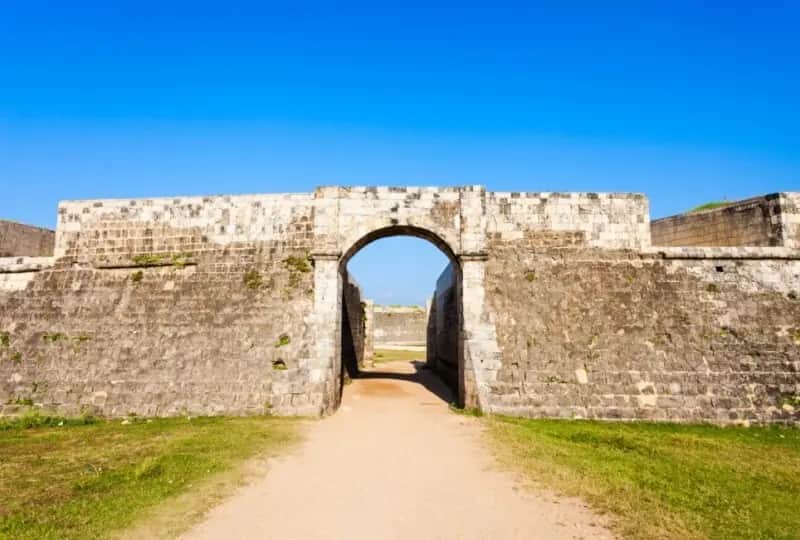
Jaffna Fort
Jaffna Fort stands beside the lagoon at the edge of town. Built by the Portuguese and rebuilt by the Dutch after 1658 as a large star-shaped fort, its ramparts give wide views over the water.
ExploreImage Credit: ShutterStock
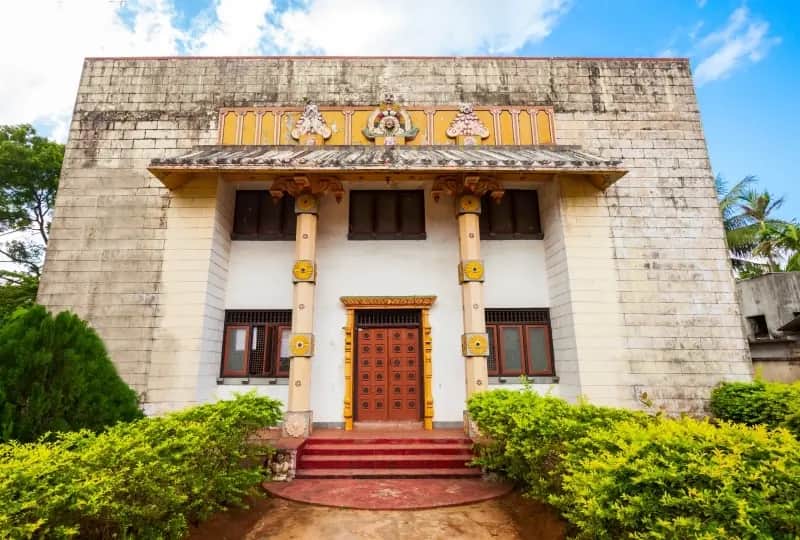
Jaffna Archaeological Museum
The Jaffna Archaeological Museum in Nallur displays finds from the north, including Buddhist and Hindu statues, coins and pottery. It is a short visit that adds depth to a day in the city.
ExploreImage Credit: ShutterStock

Elephant Pass
Elephant Pass is the causeway that carries the A9 road and the railway across the lagoon between the Jaffna peninsula and the mainland. It was a key battleground in the civil war and has a war memorial.
ExploreImage Credit: ShutterStock

Point Pedro
Point Pedro is a fishing town on the north coast, close to the northernmost point of Sri Lanka. Its name comes from the Portuguese for rocky point, and it has a lighthouse and a busy harbour.
ExploreImage Credit: ShutterStock
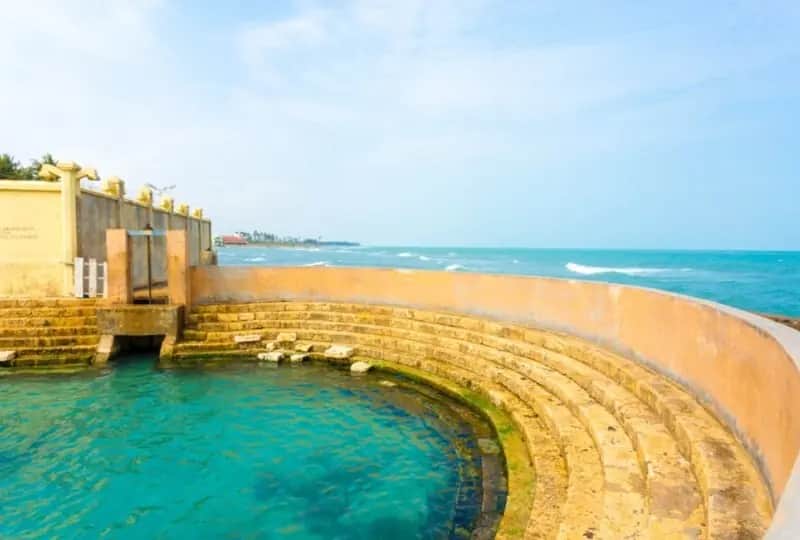
Keerimalai Springs
Keerimalai Springs are freshwater springs beside the sea on the north coast, feeding stone bathing pools that Hindus consider sacred. An old Shiva temple stands close by.
ExploreImage Credit: ShutterStock

Casuarina Beach
Casuarina Beach, on Karainagar island, is the best known beach in the north. Casuarina trees line the soft sand, and the water is shallow and calm in season.
ExploreImage Credit: ShutterStock

Dambakola Patuna Sanghamitta Temple
Dambakola Patuna was an ancient port on the north coast where, by Buddhist tradition, Sanghamitta landed with a sapling of the Bodhi tree. A temple now marks the spot.
ExploreImage Credit: ShutterStock
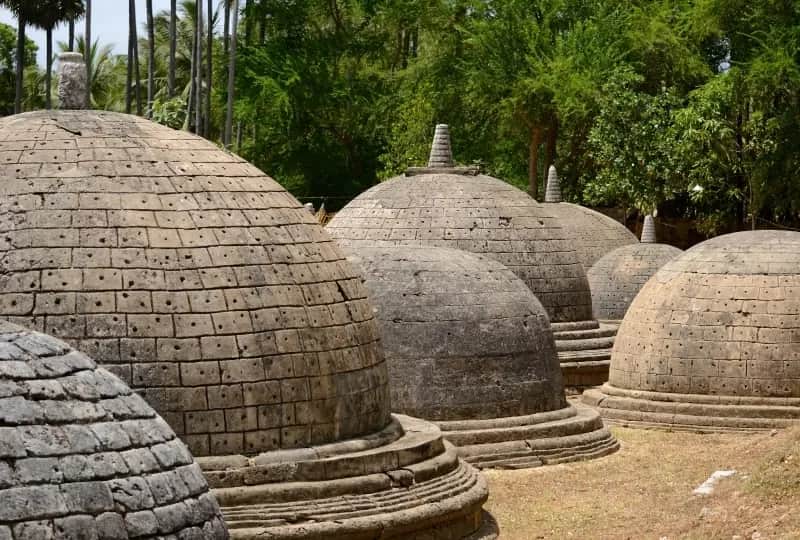
Kandarodai Viharaya
Kandarodai, near Chunnakam, is an archaeological site known for a cluster of small, dome-shaped stupas among palmyra palms. It is one of the most unusual ancient sites in the north.
ExploreImage Credit: ShutterStock
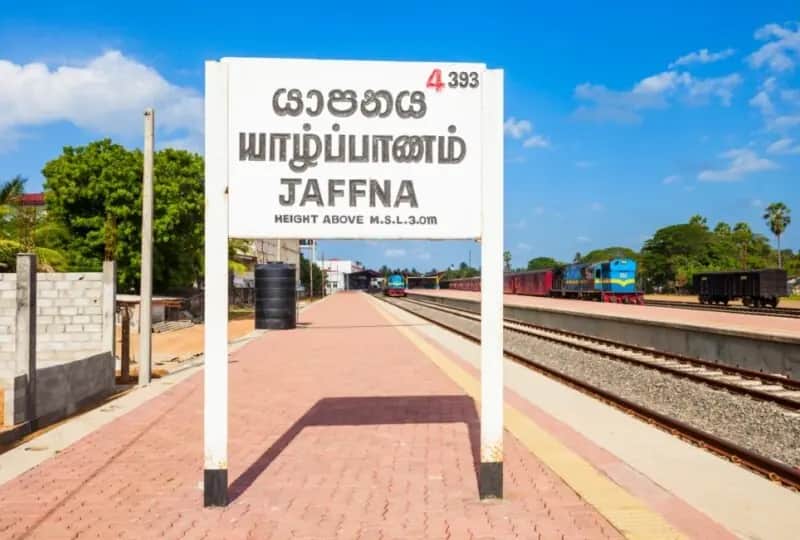
Jaffna City Tour
See the highlights of Jaffna in a day, from the Nallur temple and the Dutch fort to the public library, the market and the islands. A guide explains the Tamil culture, food and history of the north.
ExploreImage Credit: ShutterStock

Old-New Bridge of Mannar
Mannar Island is joined to the mainland by a causeway and bridge across a shallow strait. Fragments of the old bridge, damaged in the war, still stand beside the new crossing.
ExploreImage Credit: ShutterStock

Talaimannar
Talaimannar, at the north-western tip of Mannar Island, is the closest point in Sri Lanka to India and was once the ferry gateway between the two. Today it is a quiet, windswept place with a lighthouse and old pier.
ExploreImage Credit: ShutterStock
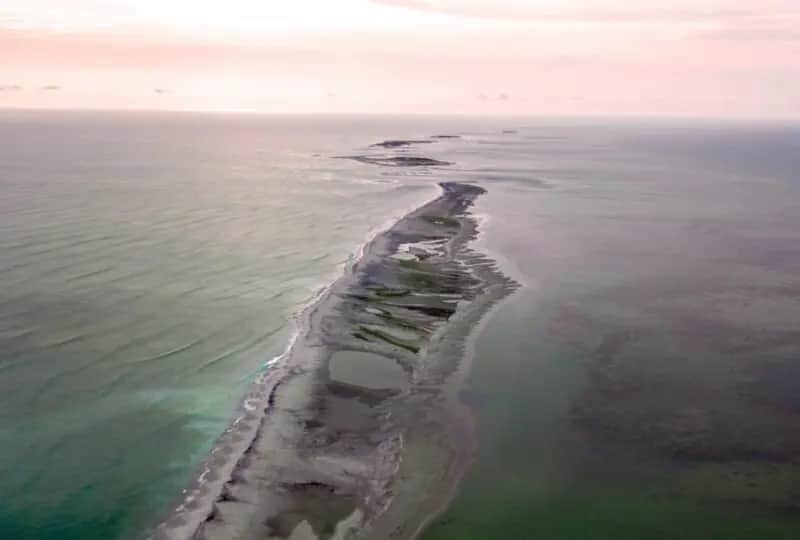
Adam’s Bridge
Adam's Bridge, also called Rama Setu, is a chain of shoals and sandbanks running about 30 km from Mannar to Rameswaram in India. In the Ramayana it is the bridge built by Rama's army.
ExploreImage Credit: ShutterStock

Baobab Tree of Mannar
Mannar has several baobab trees, a species native to Africa probably brought by Arab traders. The most famous, at Pallimunai, has a huge trunk and is among the oldest trees in Sri Lanka.
ExploreImage Credit: ShutterStock
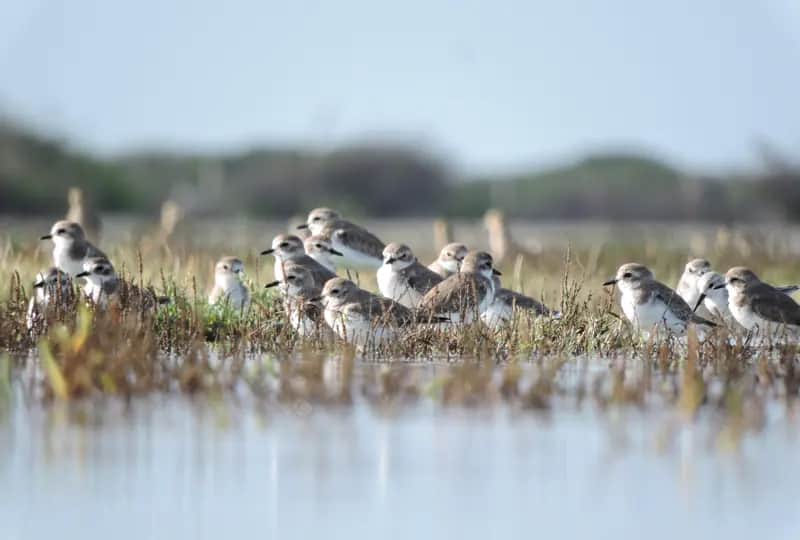
Bird Watching in Mannar
Mannar is one of the best places in Sri Lanka for wintering water birds. From about October to March its lagoons, mudflats and salt pans hold flamingos, waders, gulls and terns.
ExploreImage Credit: ShutterStock
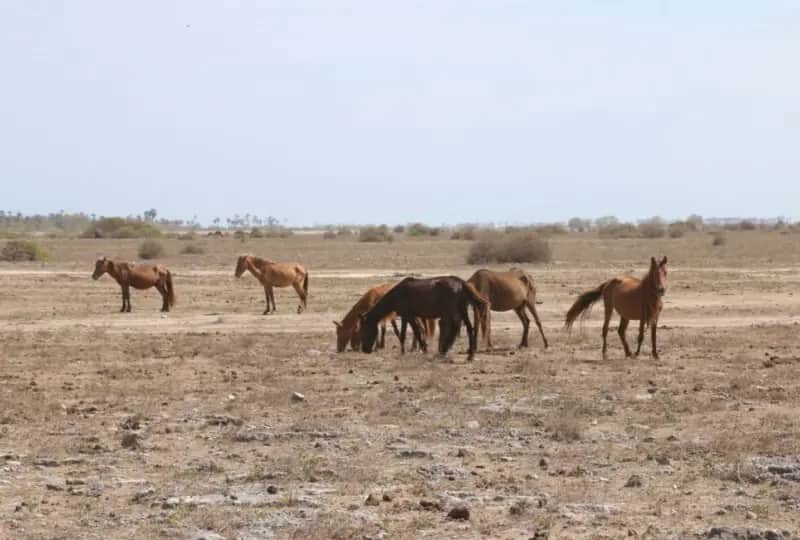
Full Day Tour of Delft Island
Spend a day on Delft, the largest island off Jaffna, reached by ferry from Kurikadduwan. See the wild ponies, coral-stone walls, Dutch fort ruins, the old baobab tree and the growing stone.
ExploreImage Credit: ShutterStock

Typical Local Lunch with Crab
After a morning exploring Delft Island, sit down to lunch in a local home, with crab curry and other northern dishes. It is a simple way to learn about life on the island.
ExploreImage Credit: ShutterStock

Adam’s Peak
Adam's Peak, or Sri Pada, is a steep peak of 2,243 metres sacred to Buddhists, Hindus, Muslims and Christians. Pilgrims climb about 5,000 steps by night from December to May to reach the summit for sunrise.
ExploreImage Credit: ShutterStock
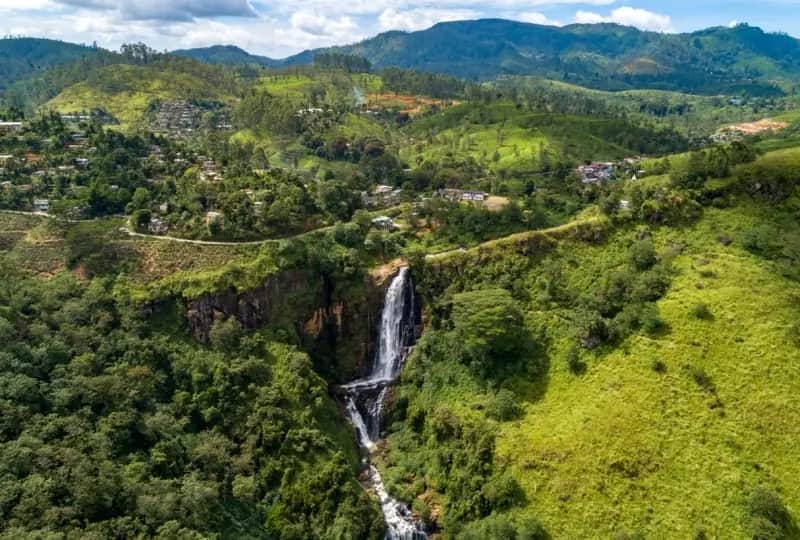
Devon Falls
Devon Falls drops in three tiers for about 97 metres through tea country near Talawakele. It is named after an early coffee planter and is best seen from the viewpoint on the main road.
ExploreImage Credit: ShutterStock

St. Clairs Falls
St Clair's Falls, near Talawakele, is one of the widest waterfalls in Sri Lanka, often called the Little Niagara of Sri Lanka. It is seen from viewpoints on the Hatton to Nuwara Eliya road.
ExploreImage Credit: ShutterStock
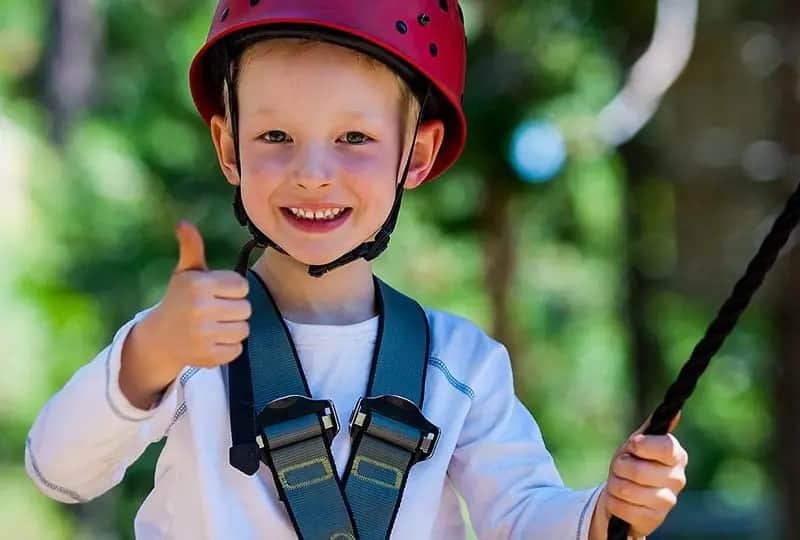
Zip lining in Ella
Fly over tea estates and forest on a zip line near Little Adam's Peak in Ella. The lines run high above the valley, with safety briefings and equipment provided.
ExploreImage Credit: ShutterStock

Ravana Falls
Ravana Falls tumbles over several tiers of rock beside the road from Ella down to Wellawaya. It is one of the widest falls in the country and linked in legend to King Ravana.
ExploreImage Credit: ShutterStock

Ella Rock Hike
Ella Rock is the big ridge facing Ella town across the valley. The hike to the top takes three to four hours return, partly along the railway and through forest, to a viewpoint over the hills.
ExploreImage Credit: ShutterStock

Little Adam's Peak
Little Adam's Peak is the easiest hike in Ella, a walk of about an hour through tea fields to a rounded summit. It is popular at sunrise for views over the valley and Ella Rock.
ExploreImage Credit: ShutterStock
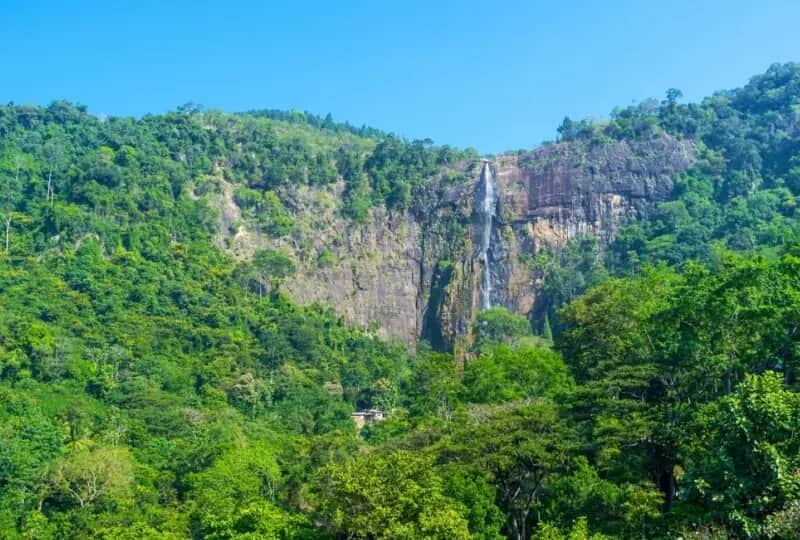
Diyaluma Falls
Diyaluma Falls drops about 220 metres from the edge of the Koslanda plateau, making it the second highest waterfall in Sri Lanka. It is close to the main road between Haputale and Wellawaya.
ExploreImage Credit: ShutterStock

Upper Diyaluma Trek
Trek to the top of Diyaluma Falls, near Koslanda, to swim in natural rock pools above a drop of about 220 metres. Go with a guide and avoid the pools after heavy rain.
ExploreImage Credit: ShutterStock

Ravana Cave
Ravana Cave is a cave in the cliffs near Ella, reached by steep steps from the road towards Wellawaya. It is linked to the Ramayana story of Sita's captivity.
ExploreImage Credit: ShutterStock

Nine Arches Bridge & Demodara Rail Hike
The Nine Arches Bridge is a stone railway viaduct between Ella and Demodara, set among tea estates. Walk along the track or through the hills and time your visit with a train; services run between Nanu Oya, Ella and Badulla.
ExploreImage Credit: ShutterStock
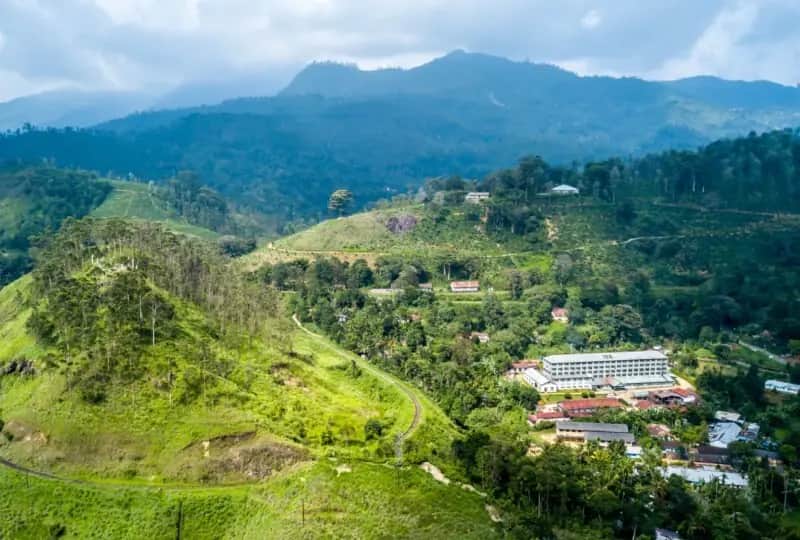
The Demodara Loop
At Demodara, between Ella and Badulla, the railway spirals around a hill and passes under itself through a tunnel. It is one of the most unusual pieces of railway engineering in Sri Lanka.
ExploreImage Credit: ShutterStock
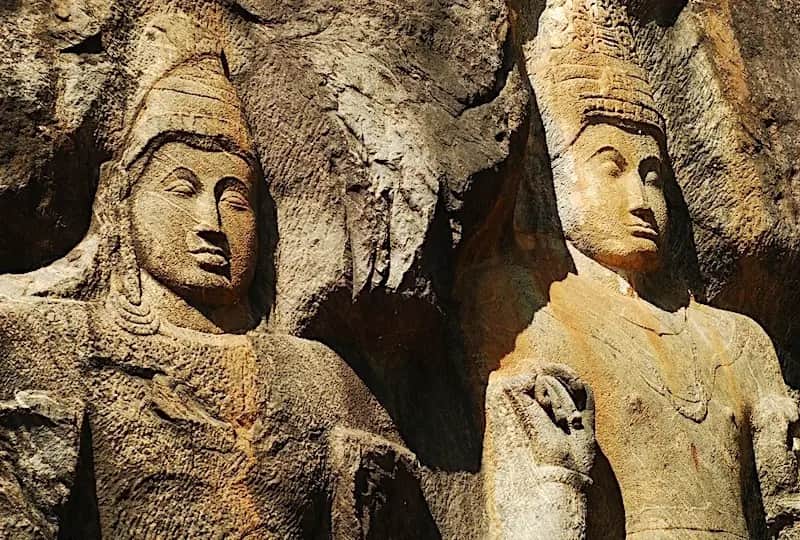
Dhowa Rock Temple and Cave
Dowa Raja Maha Viharaya is a cave temple beside the road between Ella and Bandarawela. An unfinished standing Buddha is carved into the rock face, and the cave has old paintings.
ExploreImage Credit: ShutterStock
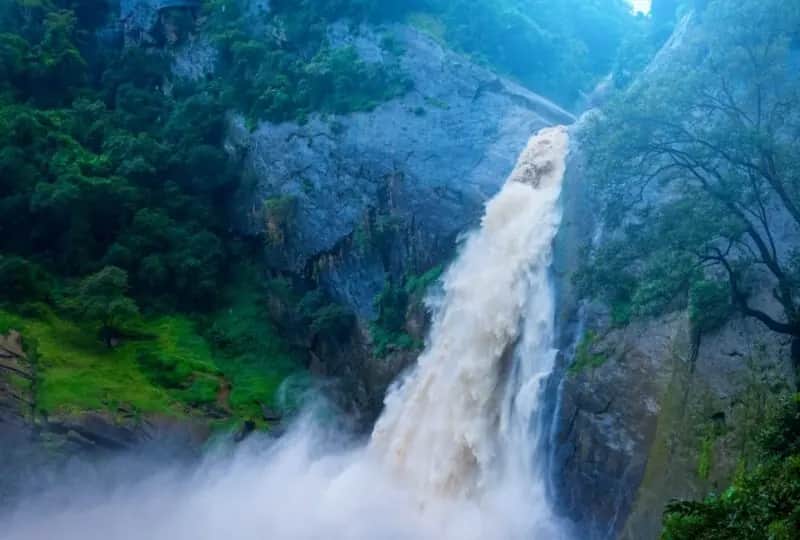
Dunhinda Falls
Dunhinda Falls, on the Badulu Oya north of Badulla, drops about 64 metres in a cloud of spray, which gives it the name Bridal Falls. A forest path of about 1 km leads to the viewpoint.
ExploreImage Credit: ShutterStock

Lipton’s Seat
Lipton's Seat is a viewpoint above the Dambatenne tea estate near Haputale, named after the tea merchant Sir Thomas Lipton. Go early in the morning for clear views over the hills.
ExploreImage Credit: ShutterStock

Adisham Bungalow
Adisham Bungalow is a stone country house in the forest near Haputale, built in the early 20th century for Sir Thomas Lester Villiers. It is now a Benedictine monastery, with gardens open to visitors on certain days.
ExploreImage Credit: ShutterStock
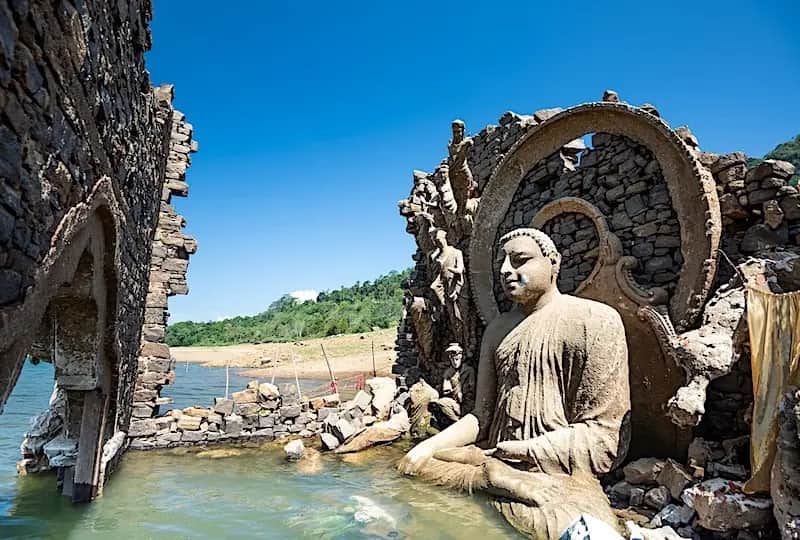
Kadadora
Kadadora, in the Kotmale area, is known as the hiding temple. The old temple was submerged by the Kotmale reservoir and appears again when the water level falls.
ExploreImage Credit: ShutterStock
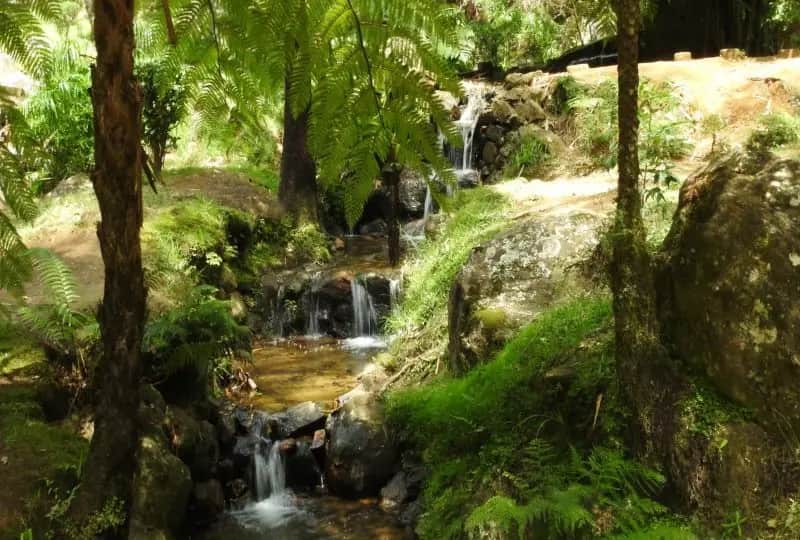
Ashok Vatika
Ashok Vatika is the royal garden where, in the Ramayana, King Ravana held Sita captive. Sri Lankan tradition places it at Seetha Eliya near Nuwara Eliya, where a temple to Sita stands.
ExploreImage Credit: ShutterStock

Divurumpola
Divurumpola, on the road between Nuwara Eliya and Welimada, is one of the main Ramayana sites in Sri Lanka. Tradition holds that Sita underwent her trial by fire here, and a Buddhist temple stands on the spot.
ExploreImage Credit: ShutterStock

Mandaram Nuwara
Mandaram Nuwara is a small farming village at the foot of Pidurutalagala, off the main tourist routes. Misty hills, vegetable terraces and pine forest make it a quiet place for walks.
ExploreImage Credit: ShutterStock

Visit Tea Plantations & Factories
Tea is the defining crop of the hill country. Visit an estate and factory around Nuwara Eliya to see how high-grown Ceylon tea is plucked, withered, rolled and dried, then taste the result.
ExploreImage Credit: ShutterStock

The Post Office and other Colonial buildings
Nuwara Eliya was developed by the British in the 19th century, which is why it looks like an English town. See the red-brick post office, the Grand Hotel, the Hill Club and old bungalows.
ExploreImage Credit: ShutterStock
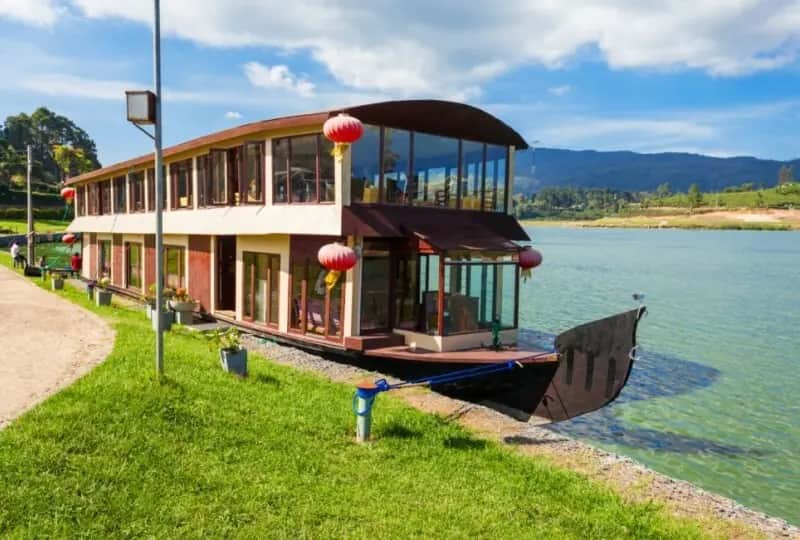
Lake Gregory
Lake Gregory, on the southern edge of Nuwara Eliya, was created in the 1870s under Governor Sir William Gregory. Walk the lakeside path or take a boat out on the water.
ExploreImage Credit: ShutterStock
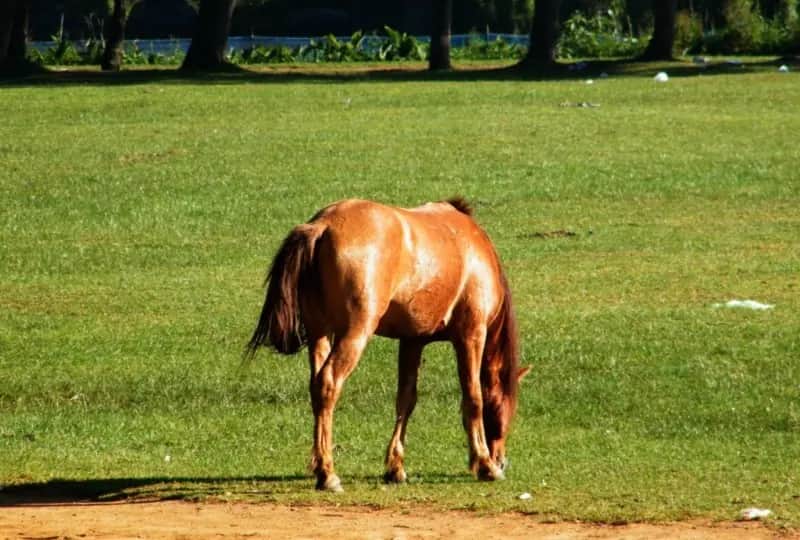
Victoria Park
Victoria Park is the main public garden in Nuwara Eliya, named in 1897 for Queen Victoria's jubilee. Flower beds, a stream and many birds make it a pleasant stop in the town centre.
ExploreImage Credit: ShutterStock

Hakgala Botanical Gardens
Hakgala Botanical Gardens lie on the slopes of Hakgala Rock, about 10 km from Nuwara Eliya. Started in 1861 as a cinchona garden, they are known for roses, ferns and orchids.
ExploreImage Credit: ShutterStock

Pidurutalagala - the tallest peak in Sri Lanka
Pidurutalagala, at about 2,524 metres, is the highest mountain in Sri Lanka and rises behind Nuwara Eliya. Access to the summit is restricted because of a military installation.
ExploreImage Credit: ShutterStock

Nuwara Eliya City Tour
Explore Nuwara Eliya, the hill station often called Little England, on a guided day. The tour links colonial buildings, Lake Gregory, Victoria Park, a tea factory and Hakgala gardens.
ExploreImage Credit: ShutterStock

Strawberry Farms
Nuwara Eliya's cool climate is one of the few in Sri Lanka where strawberries grow well. Visit a farm to see how they are grown and try fresh fruit and desserts.
ExploreImage Credit: ShutterStock
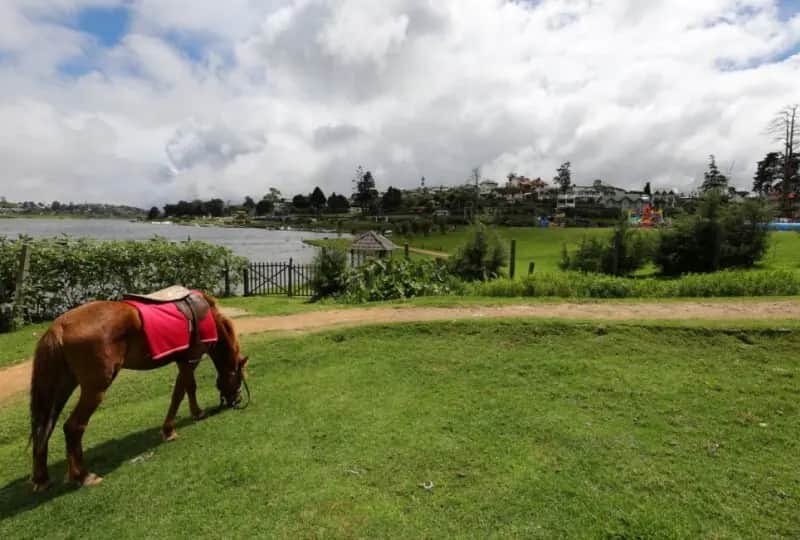
Nuwara Eliya Horse Racing Course
The Nuwara Eliya racecourse lies in the centre of town at about 1,868 metres, one of the highest in the world. Races are held in the April holiday season.
ExploreImage Credit: ShutterStock

Nuwara Eliya Golf Club
Nuwara Eliya Golf Club, founded in 1889, is one of the oldest golf clubs in Asia. Its 18-hole course runs through the centre of the hill town.
ExploreImage Credit: ShutterStock
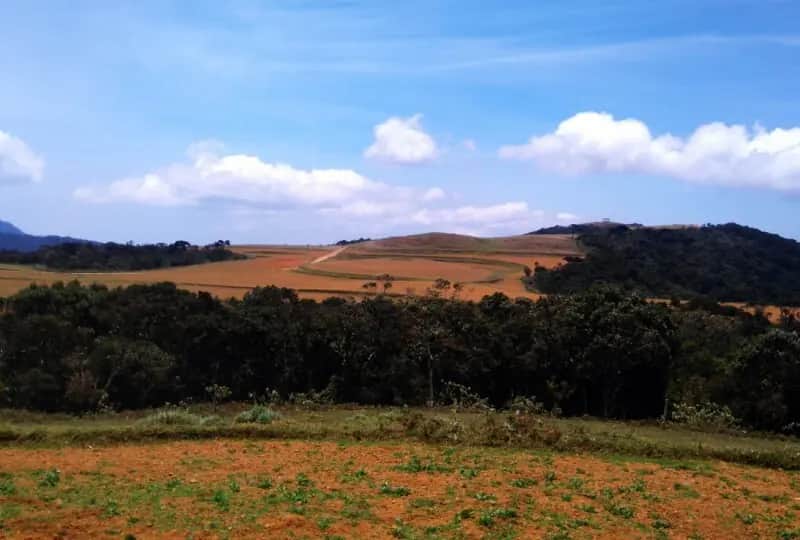
Moon Plains
Moon Plains is an area of montane grassland just outside Nuwara Eliya. Its viewpoint, sometimes called Mini World's End, looks over the surrounding mountains on a clear day.
ExploreImage Credit: ShutterStock
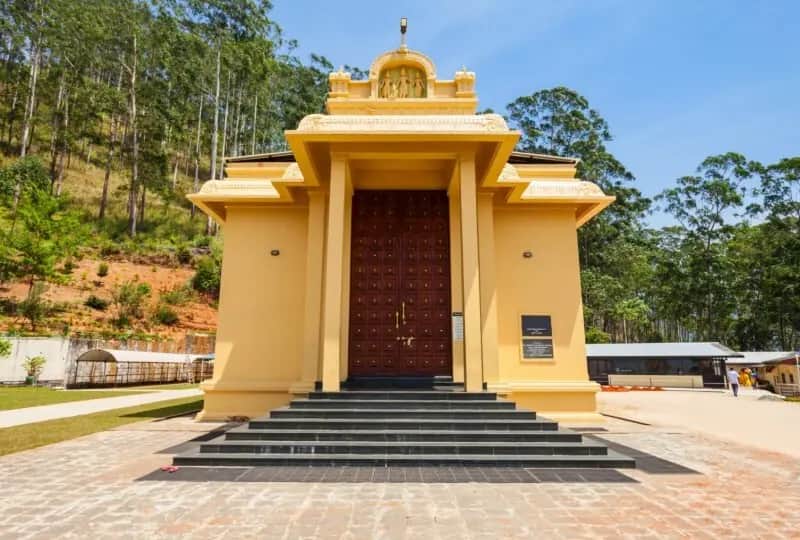
Sri Baktha Hanuman Temple
The Sri Baktha Hanuman temple stands on a hillside at Ramboda, between Kandy and Nuwara Eliya, looking over the Kotmale valley. It is dedicated to Hanuman and is a stop on the Ramayana trail.
ExploreImage Credit: ShutterStock

Seetha Amman Temple
Seetha Amman Temple, at Seetha Eliya near Hakgala, is a small Hindu temple dedicated to Sita. Tradition places the Ramayana's Ashok Vatika here.
ExploreImage Credit: ShutterStock

Ramboda Falls
Ramboda Falls drops over several tiers of rock beside the main road between Kandy and Nuwara Eliya. It is one of the easiest waterfalls in the hills to see.
ExploreImage Credit: ShutterStock

Bomburuella Waterfall
Bomburu Ella, beyond Welimada, is made up of many streams pouring side by side over a wide rock face. It is reached by a forest walk and sees few visitors.
ExploreImage Credit: ShutterStock
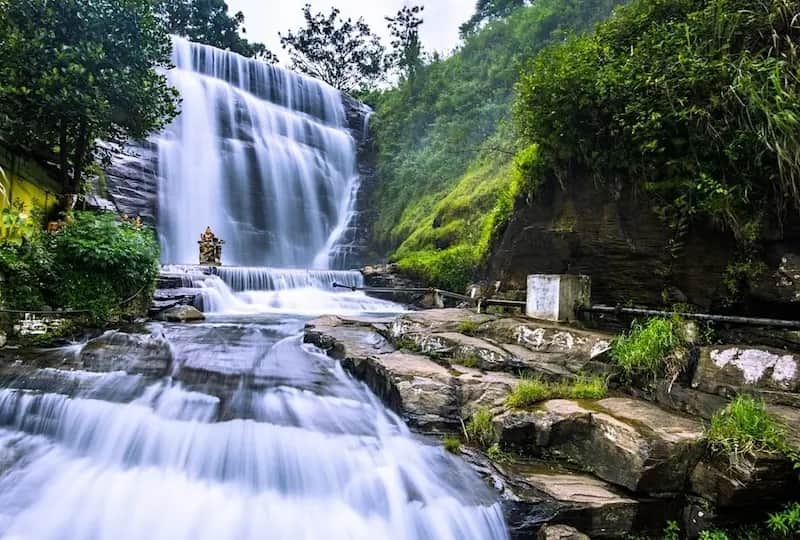
Dunsinane Falls
Dunsinane Falls flows between two tea estates near Pundaluoya, north-west of Nuwara Eliya. It drops in two parts through forest and tea.
ExploreImage Credit: ShutterStock

Waterfall Hopping
The eastern side of the Knuckles range, around Huluganga and Bambarella, has many waterfalls close together. Spend a day walking between them with a guide and swim in the pools in the dry months.
ExploreImage Credit: ShutterStock
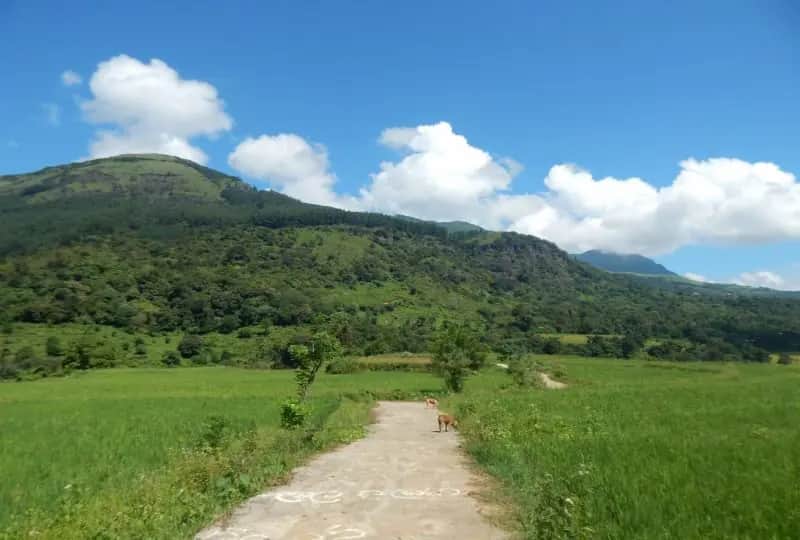
Laggala
Laggala, also called Lakegala, is a sharp rock peak at the northern end of the Knuckles range near Dunuwila. It rises steeply above farmland and is linked in local tradition to the Ramayana.
ExploreImage Credit: ShutterStock

Dunuwila
Dunuwila is a quiet farming area with a lake below the northern slopes of the Knuckles range, close to Laggala rock. Paddy fields, water and mountain views make it a peaceful stop.
ExploreImage Credit: ShutterStock

Yahangala
Yahangala is a rock in the northern Knuckles area where, in local Ramayana tradition, King Ravana's body was laid after his death. It can be seen from around Laggala and Dunuwila.
ExploreImage Credit: ShutterStock

Pitawala Pathana
Pitawala Pathana is a grassland on a gently sloping slab of rock in the Knuckles range, near Riverstone. A short walk leads to a cliff edge known as Mini World's End, with views over the lowlands.
ExploreImage Credit: ShutterStock

Hiking and Trekking in Knuckles Range
The Knuckles range, north-east of Kandy, is one of the best areas in Sri Lanka for hiking, part of a UNESCO World Heritage Site. Trails run from short walks to multi-day treks through cloud forest and villages.
ExploreImage Credit: ShutterStock

Meemure
Meemure is a remote village in a valley of the Knuckles range, surrounded by mountains, forest and streams. A winding road leads there, and homestays offer a taste of traditional village life.
ExploreImage Credit: ShutterStock
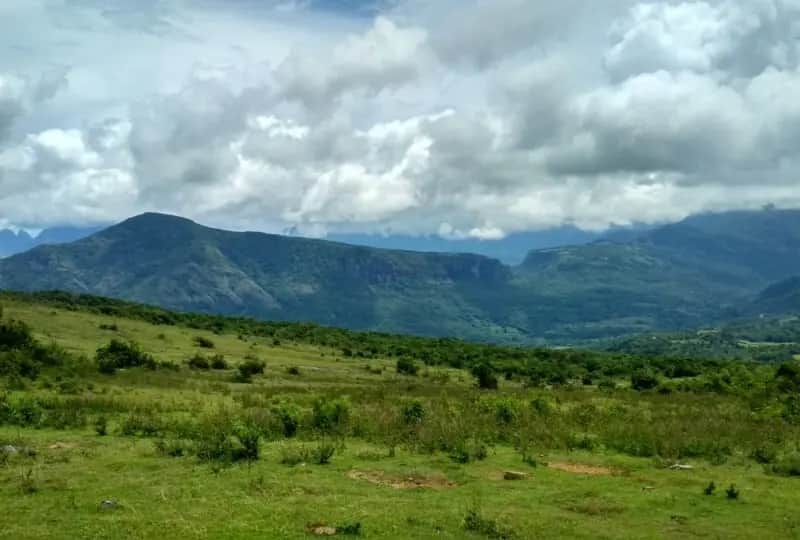
Mini World’s End
Mini World's End is a viewpoint at the edge of an escarpment in the Knuckles range, reached on foot from Deanston. On a clear day it looks far over the lowlands.
ExploreImage Credit: ShutterStock
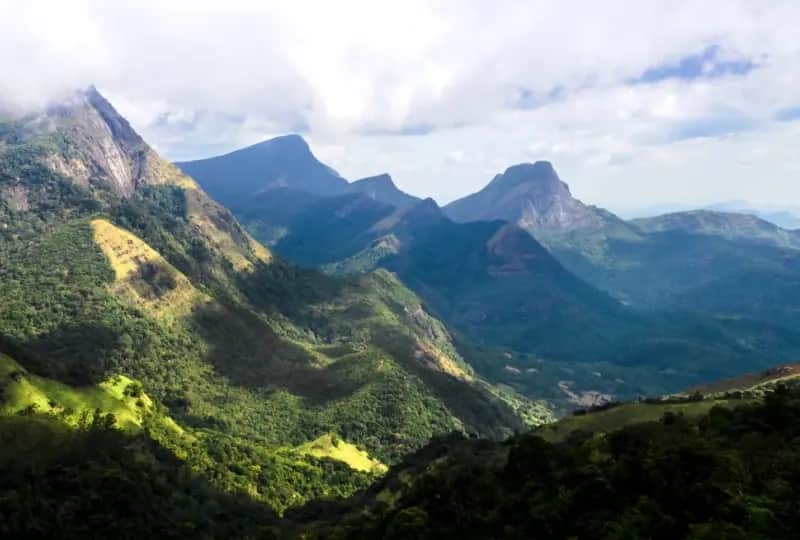
Corbet's Gap
Corbet's Gap, locally Attala Wettuwa, is a pass high in the Knuckles range on the road down to Meemure. It is a starting point for walks and one of the best viewpoints in the range.
ExploreImage Credit: ShutterStock

Elephant Rock Point
Elephant Rock is a rock headland south of Arugam Bay with a gentle surf break and a short climb to the top. It is a favourite spot for sunset views over the coast and lagoon.
ExploreImage Credit: ShutterStock
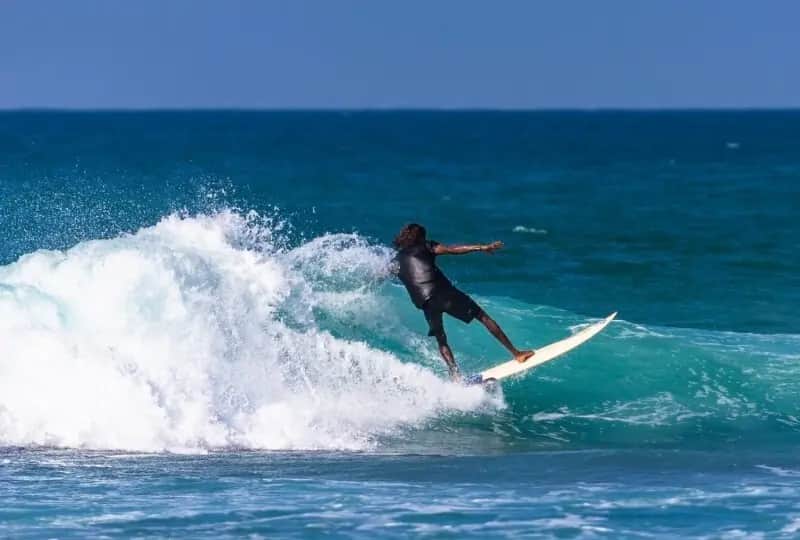
Peanut Farm
Peanut Farm is a surf spot south of Arugam Bay, named after fields that once grew behind the beach. Its two breaks are quieter than the main point and suit a range of levels.
ExploreImage Credit: ShutterStock

Whiskey Point
Whiskey Point is a surf spot about 15 minutes north of Arugam Bay, with gentle waves that suit beginners. A few cafes and guesthouses stand behind the beach.
ExploreImage Credit: ShutterStock

Surfing in Arugam Bay
Arugam Bay is Sri Lanka's best known surf destination, with the season running from about April to October. The Main Point offers long right-hand waves, and other breaks nearby suit beginners.
ExploreImage Credit: ShutterStock

Pottuvil Lagoon Safari
Paddle or boat through Pottuvil lagoon, just north of Arugam Bay, past mangroves full of birds. Monitor lizards and crocodiles are often seen along the banks.
ExploreImage Credit: ShutterStock

Panama Lagoon Safari
Explore the lagoons and wetlands around Panama village, south of Arugam Bay. They are rich in birds, and elephants sometimes come to the water in the evening.
ExploreImage Credit: ShutterStock

Lahugala National Park Safari
Lahugala Kitulana is a small park inland from Arugam Bay, important for elephants that gather around its tanks. A short safari here is easy to add to a stay on the coast.
ExploreImage Credit: ShutterStock

Yoga in Arugam Bay
Yoga and surfing go together in Arugam Bay. Many surf camps and guesthouses run classes, which help with flexibility and recovery between sessions in the water.
ExploreImage Credit: ShutterStock
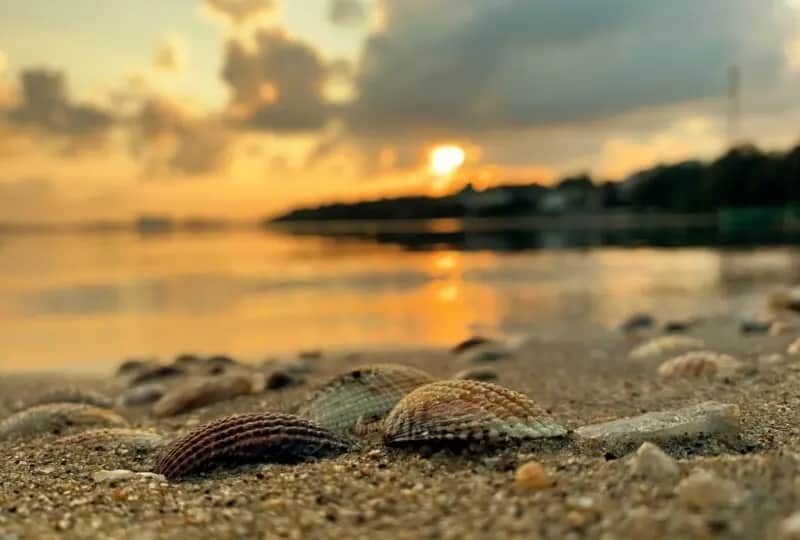
Trincomalee Harbour
Trincomalee Harbour is one of the largest and deepest natural harbours in the world. It was prized by the Portuguese, Dutch and British, and a key naval base in the Second World War.
ExploreImage Credit: ShutterStock
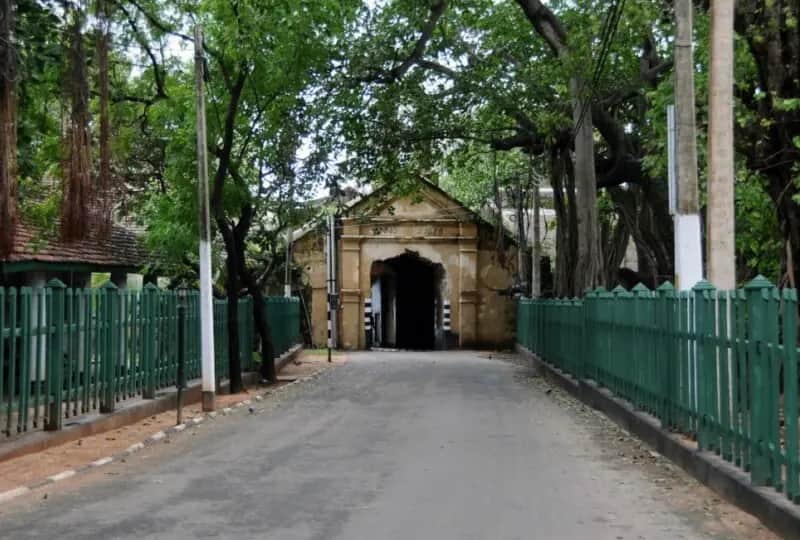
Fort Frederick
Fort Frederick guards the headland between Trincomalee town and its harbour. Still used by the army, it is open to visitors walking through to the Koneswaram temple, with spotted deer grazing inside.
ExploreImage Credit: ShutterStock
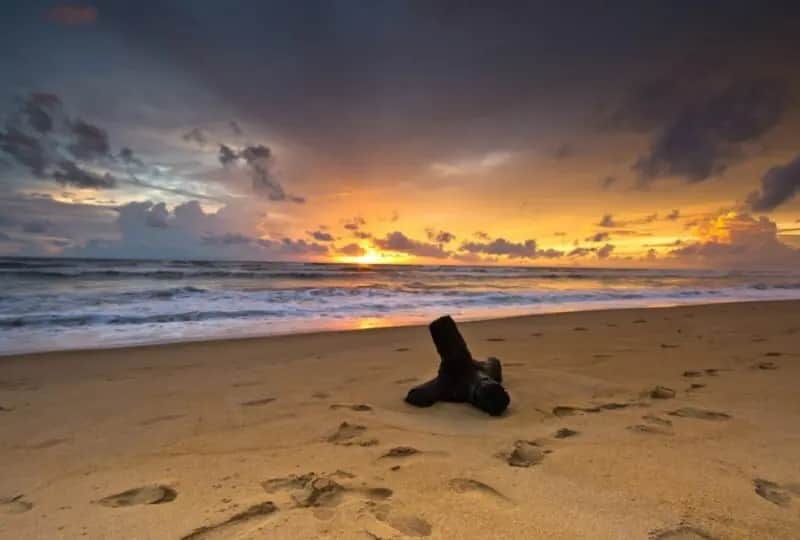
Trincomalee Beaches
Trincomalee is surrounded by long sandy beaches, including Uppuveli and Nilaveli. They are at their best from about April to September, when the south and west coasts have the monsoon.
ExploreImage Credit: ShutterStock
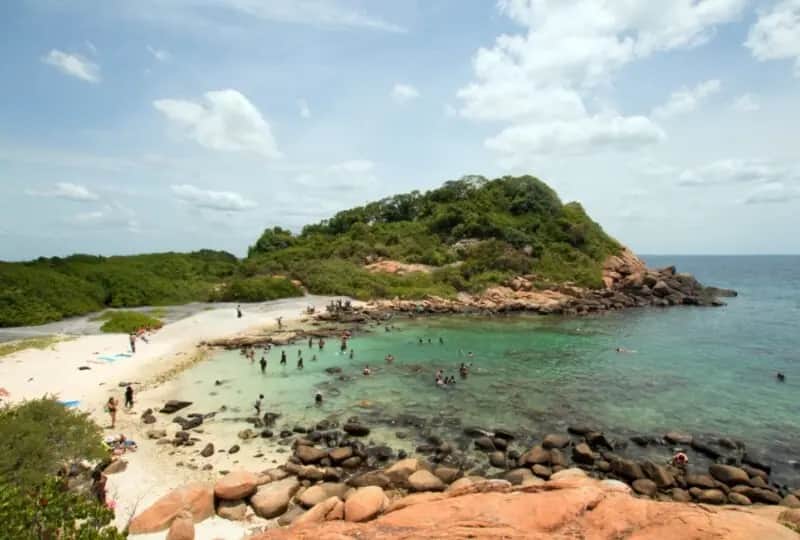
Pigeon Island
Pigeon Island, off Nilaveli, is one of two marine national parks in Sri Lanka. Snorkel over coral among reef fish, turtles and blacktip reef sharks in the calm season.
ExploreImage Credit: ShutterStock
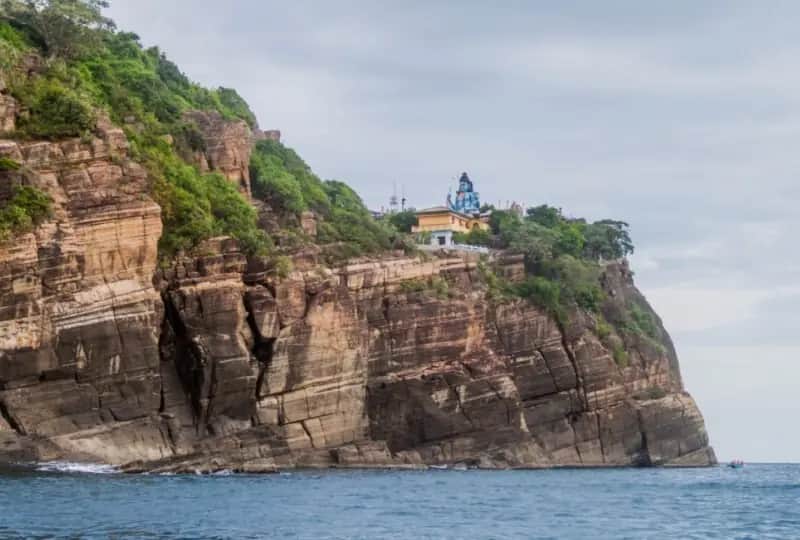
Koneswaram Temple
Koneswaram is one of the most sacred Hindu temples in Sri Lanka, dedicated to Shiva and set on Swami Rock high above the sea. Visit during an evening puja for the views and atmosphere.
ExploreImage Credit: ShutterStock

Luxury Catamaran Sailing and Whale Watching in Trincomalee
This seven-day catamaran cruise explores the east coast from Trincomalee, with time for whale and dolphin watching, snorkelling and quiet beaches. It runs in the calm season on the east coast.
ExploreImage Credit: ShutterStock

Whale & Dolphin Watching in Trincomalee
Deep water close to the shore makes Trincomalee one of Sri Lanka's main places for whale and dolphin watching. Blue whales, sperm whales and dolphins are seen, mainly from about March to August.
ExploreImage Credit: ShutterStock

Golf in Trincomalee
Eagles' Golf Links is an 18-hole course at China Bay, run by the Sri Lanka Air Force. It overlooks the bay and harbour.
ExploreImage Credit: ShutterStock
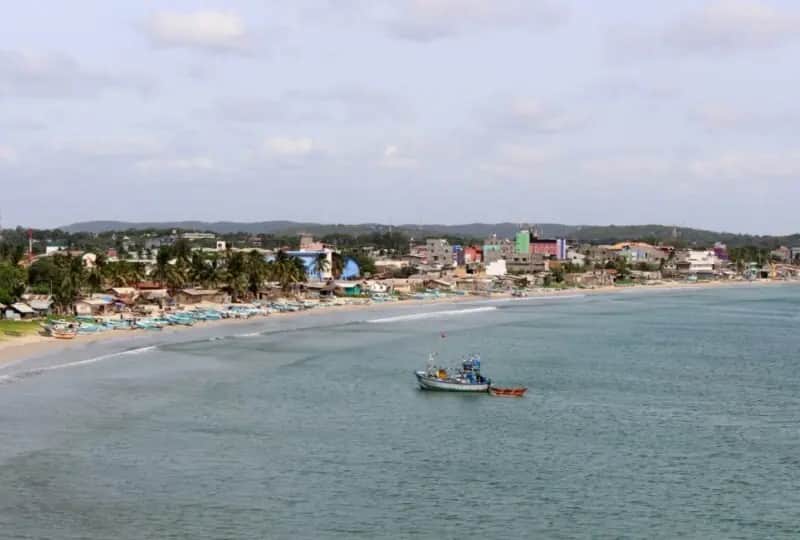
Day Tour of Trincomalee
See the best of Trincomalee in a day, from Koneswaram temple and Fort Frederick to the harbour, the beaches and the Kanniya hot wells.
ExploreImage Credit: ShutterStock
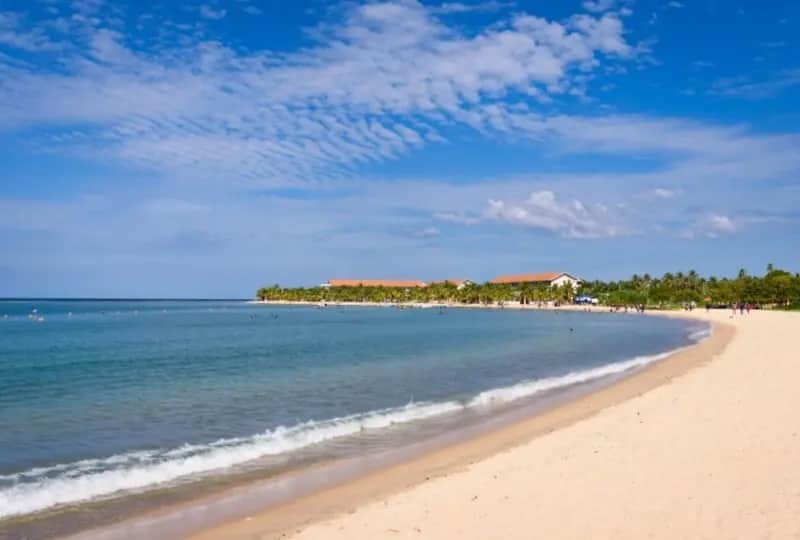
Pasikuda Beach
Pasikuda is a bay on the east coast north of Batticaloa, protected by a reef. The water is so shallow and calm in season that you can wade far out.
ExploreImage Credit: ShutterStock

Water Sports at Pasikudah and Kalkudah
Pasikudah and neighbouring Kalkudah offer snorkelling, diving, jet skiing and boat trips over the reef. Conditions are best from about April to September.
ExploreImage Credit: ShutterStock

Batticaloa Lighthouse
Batticaloa Lighthouse stands where the lagoon opens to the sea. It is a good spot to watch fishing boats and the sunset over the water.
ExploreImage Credit: ShutterStock

The Singing Fish and the Kallady Bridge
The Kallady bridge crosses the Batticaloa lagoon. On calm nights, local legend says, singing sounds rise from the water below.
ExploreImage Credit: ShutterStock

Tangalle Beach
Tangalle, a fishing town on the south coast, has a string of long golden beaches on either side. They are quieter than the beaches further west, though the sea can be rough.
ExploreImage Credit: ShutterStock

Goyambokka and Pallikaduwa beach
Goyambokka and Pallikaduwa are two small bays just west of Tangalle. They are sheltered and among the best places in the area for swimming in season.
ExploreImage Credit: ShutterStock

Medaketiya and Medilla beach
Medaketiya and Medilla are the long, wide beaches east of Tangalle town. They are good for walks, with guesthouses behind the sand.
ExploreImage Credit: ShutterStock
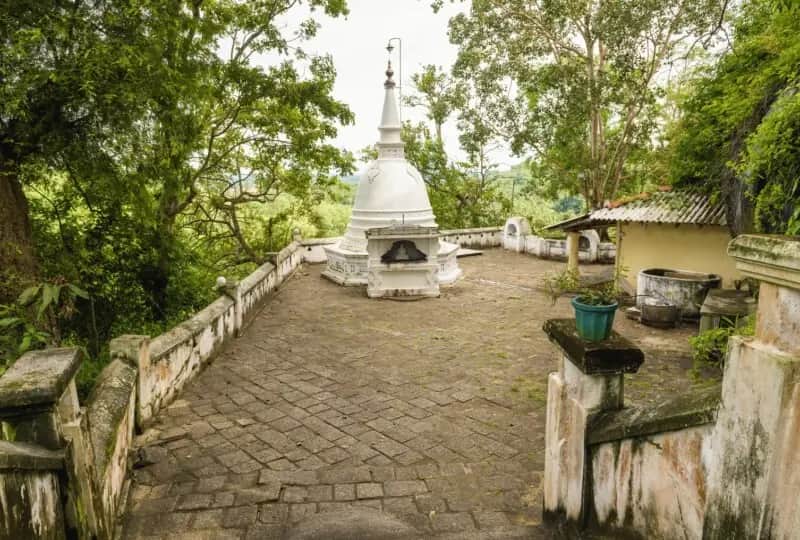
Mulkirigala Rajamaha Viharaya
Mulkirigala is a group of Buddhist cave temples on a tall rock inland from Tangalle. Steps lead up past shrines with paintings and reclining Buddhas to a summit with wide views.
ExploreImage Credit: ShutterStock

Kalametiya Bird Sanctuary
Kalametiya, east of Tangalle, is a protected area of coastal lagoons, mangroves and marsh. Boat trips at dawn show herons, storks, kingfishers and many other water birds.
ExploreImage Credit: ShutterStock
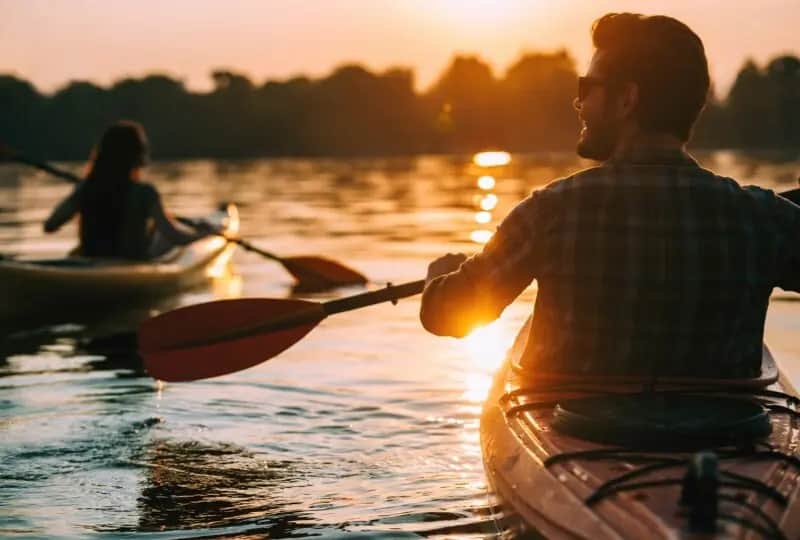
Kayaking in Tangalle Lagoon
Paddle a kayak through the lagoons and mangroves around Tangalle, looking for birds and monitor lizards. Early morning trips are cooler and best for wildlife.
ExploreImage Credit: ShutterStock

Tangalle Dutch Fort
Tangalle's Dutch fort is a small, plain structure near the harbour. The Dutch valued Tangalle as a trading post, and the fort is now used as a prison, seen from outside.
ExploreImage Credit: ShutterStock

Rekawa Lagoon
Rekawa lagoon, just east of Tangalle, is small and wrapped in mangroves. Boat trips here pass birds and fishing villages.
ExploreImage Credit: ShutterStock
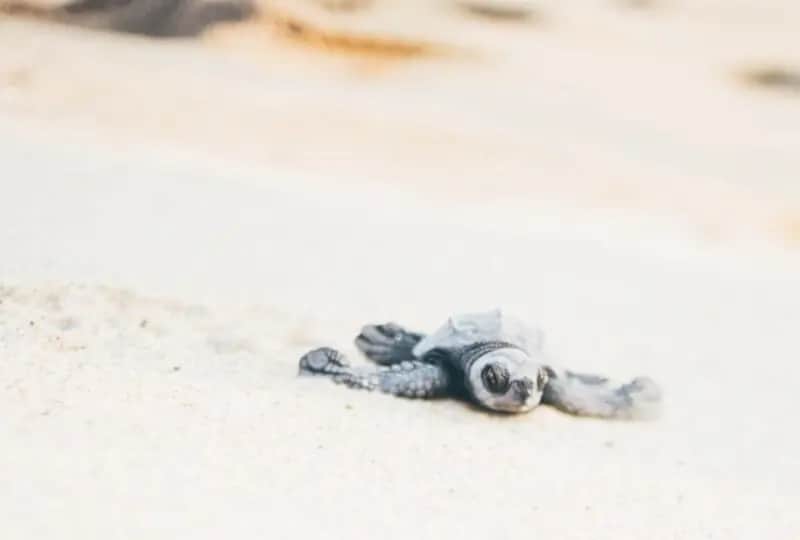
Turtle Watch Rekawa
Rekawa beach, about 10 km east of Tangalle, is one of the most important turtle nesting beaches in Sri Lanka. A community project leads night visits to see turtles come ashore to lay eggs.
ExploreImage Credit: ShutterStock
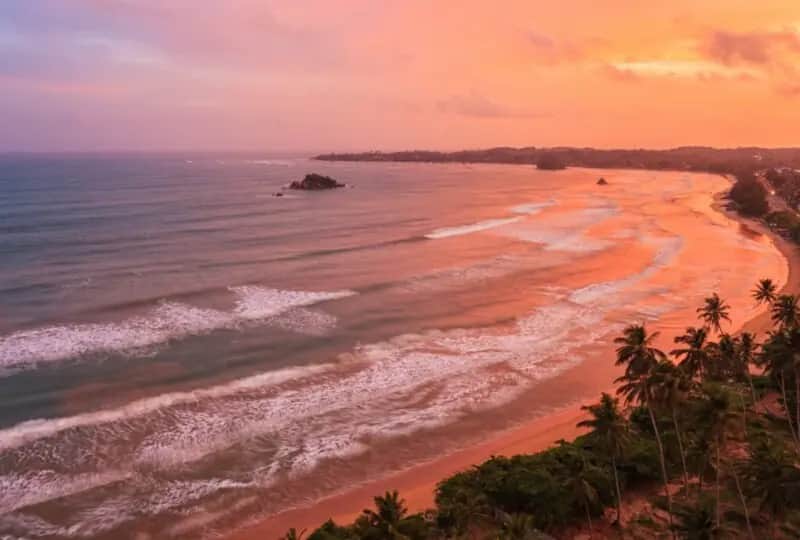
Weligama Bay and Beach
Weligama, meaning sandy village, lies on a wide, curving bay between Galle and Mirissa. Its long beach is lined with surf schools, cafes and fishing boats.
ExploreImage Credit: ShutterStock

Surfing in Weligama
Weligama's gentle, sandy-bottom waves make it one of the easiest places in Sri Lanka to learn to surf. Schools and board hire line the beach, and the season runs from about November to April.
ExploreImage Credit: ShutterStock
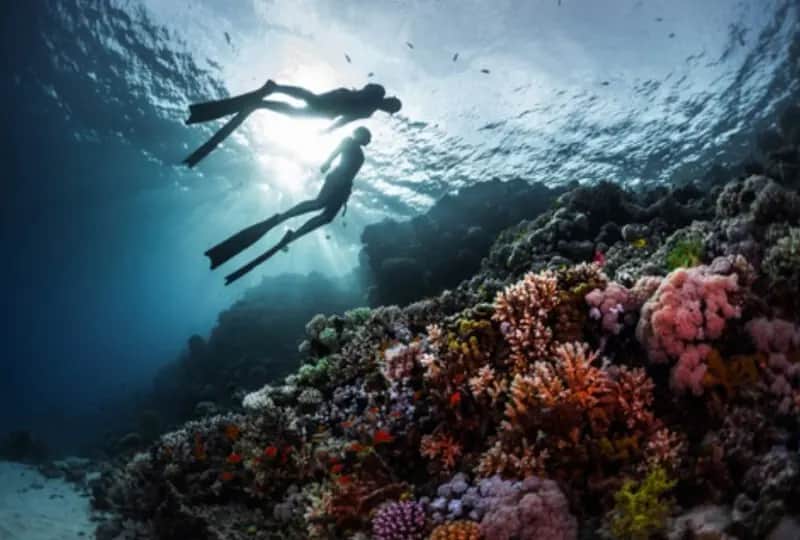
Diving & Snorkelling in Weligama
Weligama's bay has shallow reefs and rocks for snorkelling, and dive centres along the coast run trips to deeper sites. Turtles and reef fish are often seen in calm months.
ExploreImage Credit: ShutterStock

Taprobane Island
Taprobane is a tiny rocky island in Weligama bay, once owned by the Count de Mauny and later the writer Paul Bowles. It is now a private villa, seen from the beach.
ExploreImage Credit: ShutterStock

Batik Art of the South
Batik is a way of decorating cloth with wax and dye. Visit a workshop on the south coast to see how the patterns are made, and try it yourself.
ExploreImage Credit: ShutterStock
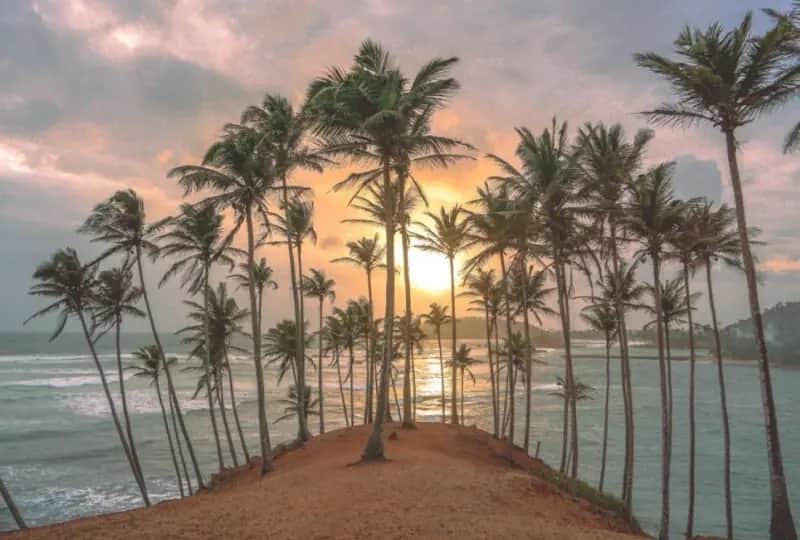
Coconut Tree Hill
Coconut Tree Hill is a small headland at the eastern end of Mirissa, covered in tall palms leaning over the sea. It is one of the most photographed spots on the south coast.
ExploreImage Credit: ShutterStock

Secret Beach
Secret Beach is a small cove on the western side of Mirissa, behind a rocky headland. It is quieter than the main bay and good for swimming in calm weather.
ExploreImage Credit: ShutterStock
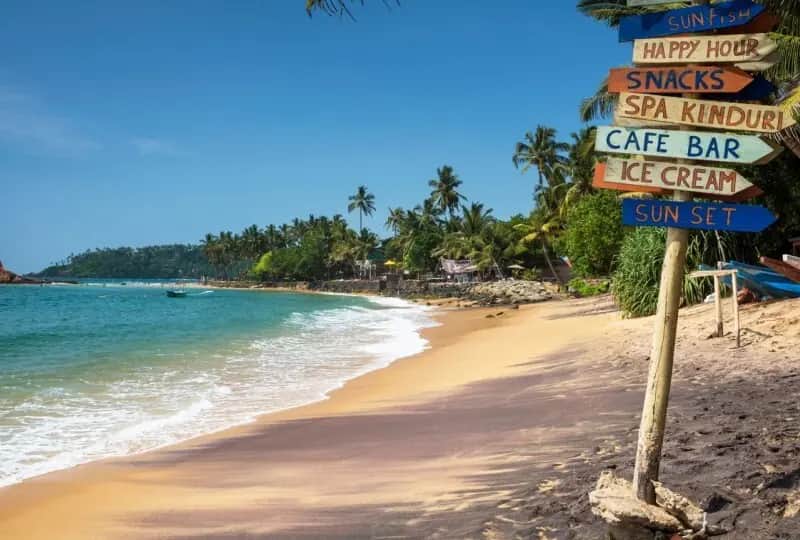
Mirissa Beach
Mirissa has a curved sandy beach backed by palms, restaurants and guesthouses. Swimming is best from about November to April, and the sunsets over the bay are a highlight.
ExploreImage Credit: ShutterStock
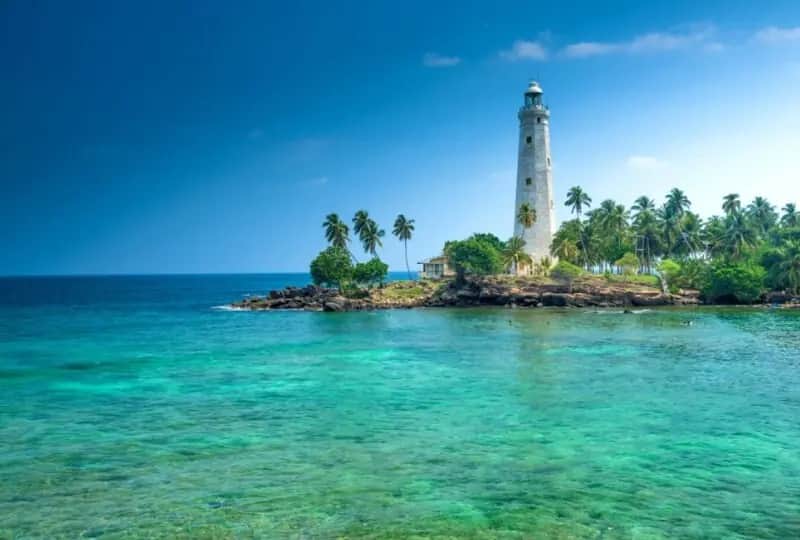
The Dondra Head Lighthouse
Dondra Head Lighthouse stands on the southern tip of Sri Lanka near Matara. At about 49 metres, it is one of the tallest lighthouses in South Asia.
ExploreImage Credit: ShutterStock
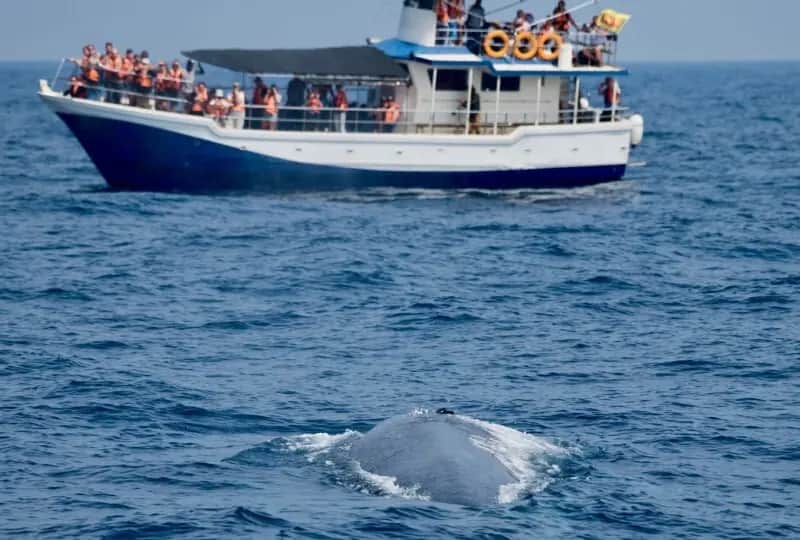
Whale & Dolphin watching in Mirissa
Mirissa is the main base for whale watching in Sri Lanka. From about November to April, boats look for blue whales, sperm whales and dolphins in the deep water offshore.
ExploreImage Credit: ShutterStock

Diving and Snorkelling in Mirissa
Mirissa has dive sites from shallow reefs to deeper rocks, with turtles, reef fish and sometimes wrecks. Diving is best in the calm months from about November to April.
ExploreImage Credit: ShutterStock
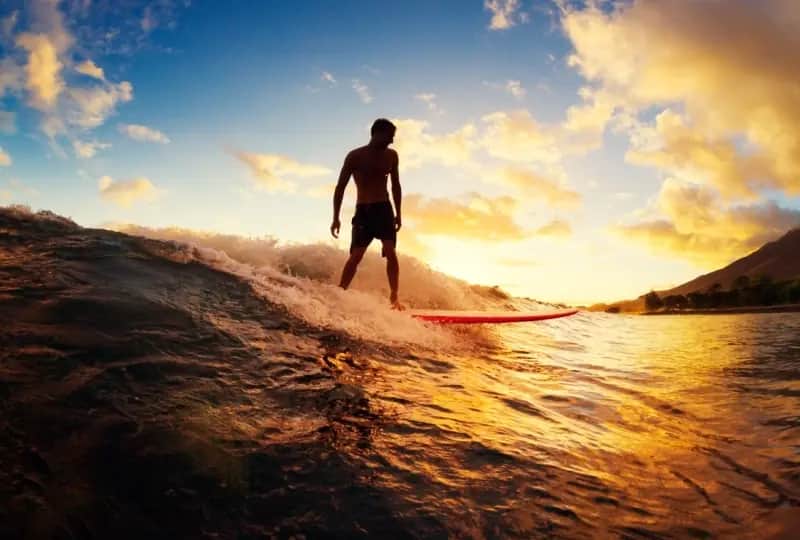
Surfing in Mirissa
Mirissa has a reef break at the western end of the bay that draws intermediate surfers. Beginners can head to the softer waves at Weligama nearby.
ExploreImage Credit: ShutterStock
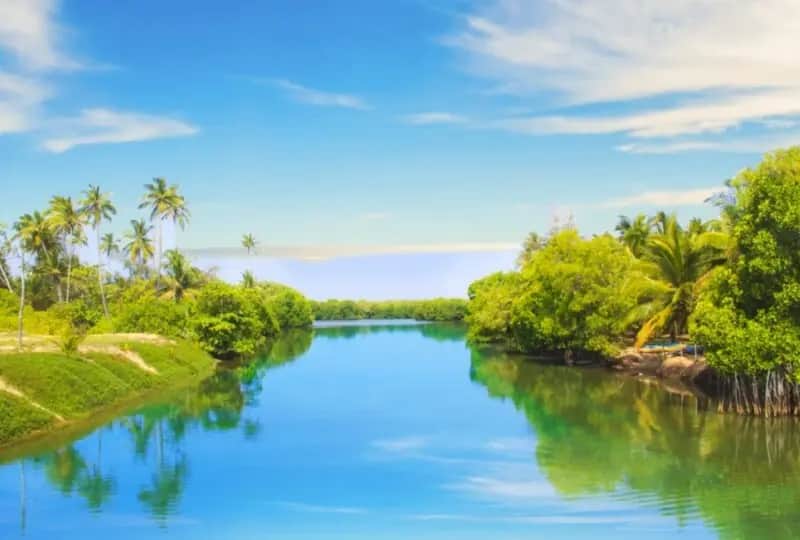
Koggala Lake
Koggala Lake is a large, calm lagoon inland from the coast east of Galle, dotted with small islands. Boat trips visit a temple island, a cinnamon island and mangroves.
ExploreImage Credit: ShutterStock

Stilt Fishermen of the South
Stilt fishing is a traditional way of fishing on the south coast, with fishermen perched on poles set in the shallows. Today many pose for photographs between Koggala and Weligama and expect a tip.
ExploreImage Credit: ShutterStock

Koggala Beach
Koggala beach is a long, quiet stretch of sand between Galle and Weligama, far less developed than Unawatuna. Currents can be strong, so ask locally before swimming.
ExploreImage Credit: ShutterStock
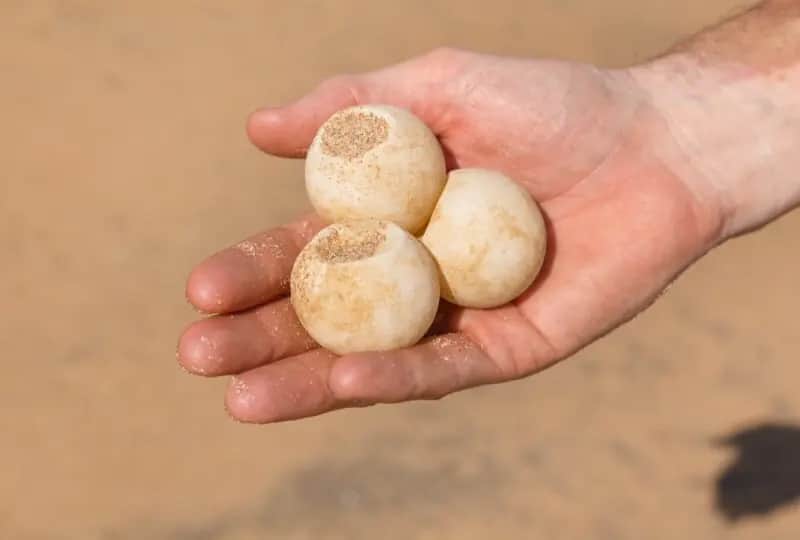
Habaraduwa Beach
Habaraduwa, on the coast road between Unawatuna and Koggala, has quiet, wide beaches with fewer hotels. A turtle hatchery is nearby.
ExploreImage Credit: ShutterStock
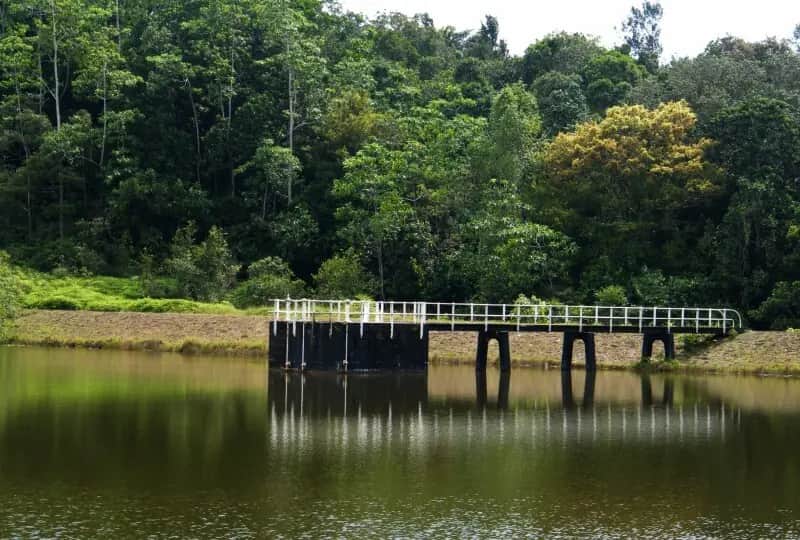
Hiyare rainforest and reservoir
Hiyare is a small lowland rainforest and reservoir about 20 km inland from Galle. Its trails are good for birds, butterflies and a quiet walk.
ExploreImage Credit: ShutterStock

The Jungle Beach
Jungle Beach is a small cove on the far side of Rumassala hill, between Unawatuna and Galle. Forest runs down almost to the sand, and the water is good for snorkelling in season.
ExploreImage Credit: ShutterStock
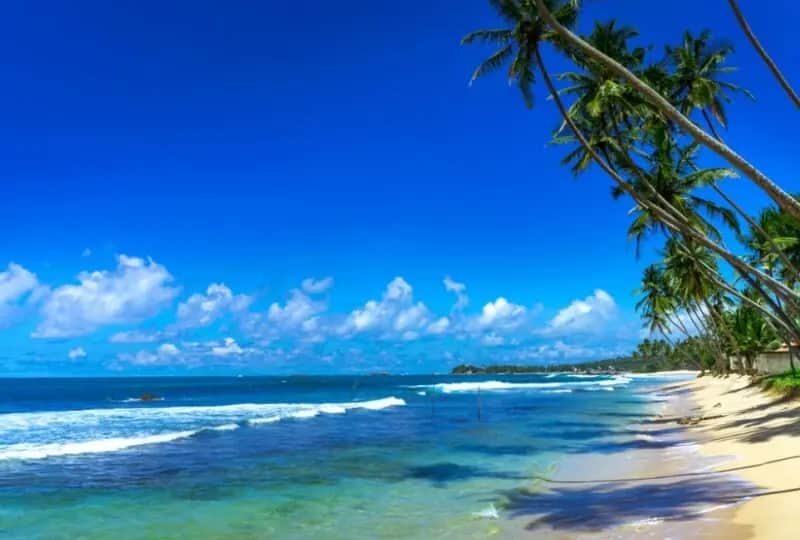
Unawatuna Beach
Unawatuna, about 6 km east of Galle, has one of the best known beaches in Sri Lanka. The curved bay is partly sheltered by a reef and good for swimming from about November to April.
ExploreImage Credit: ShutterStock
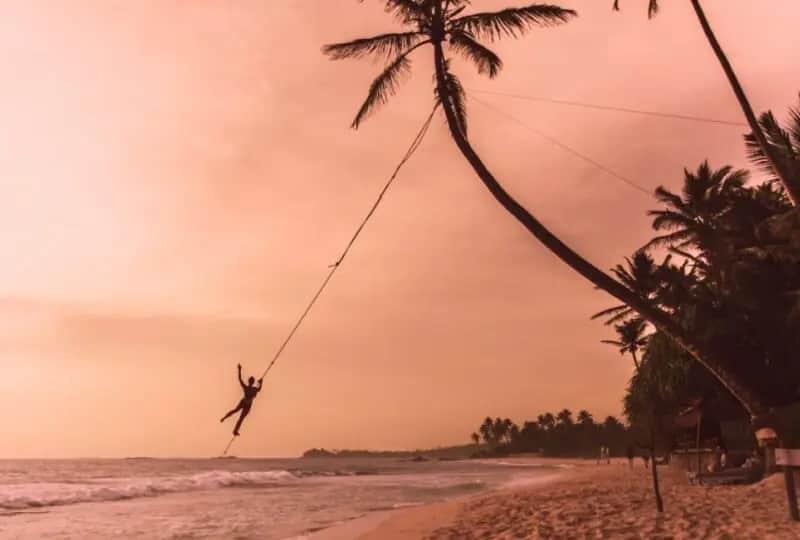
Unawatuna Beach Swing
The rope swings tied to leaning palms near Unawatuna became famous online and are now a popular photo stop. Go early or late to avoid the queues.
ExploreImage Credit: ShutterStock

Rumassala Japanese Peace Pagoda
The Japanese Peace Pagoda is a white stupa on Rumassala hill between Unawatuna and Galle, built by Japanese monks. It looks out over the sea and Galle harbour.
ExploreImage Credit: ShutterStock

Yatagala Raja Maha Viharaya
Yatagala Raja Maha Viharaya is a rock temple inland from Unawatuna, among large granite boulders. It has a reclining Buddha and old murals.
ExploreImage Credit: ShutterStock

Diving and Snorkelling in Unawatuna
Unawatuna is one of the main dive bases on the south coast. Shallow reefs close to shore suit snorkellers, and boats run to wrecks and deeper reefs.
ExploreImage Credit: ShutterStock

Visit a Tea Factory in Galle
A lot of Ceylon tea is grown in the low country inland from Galle. Visit a factory to see how the strong low-grown teas are made and taste them.
ExploreImage Credit: ShutterStock
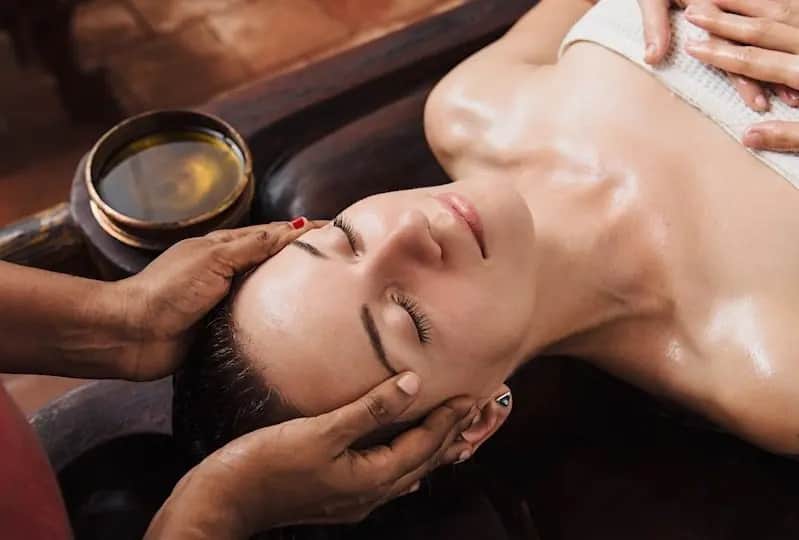
Yoga and Ayurveda in the South
The south coast around Galle, Koggala and Weligama has many yoga retreats and Ayurveda centres. Choose a single class or massage or a full programme.
ExploreImage Credit: ShutterStock
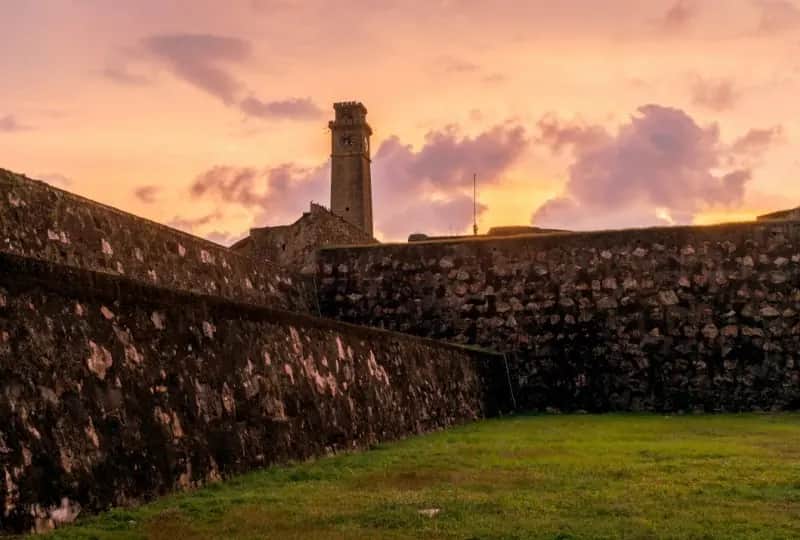
Galle Fort Experience
Galle Fort is the best preserved colonial fortified town in South and South-East Asia and a UNESCO World Heritage Site. Walk the ramparts and explore its churches, museums and streets of old houses.
ExploreImage Credit: ShutterStock
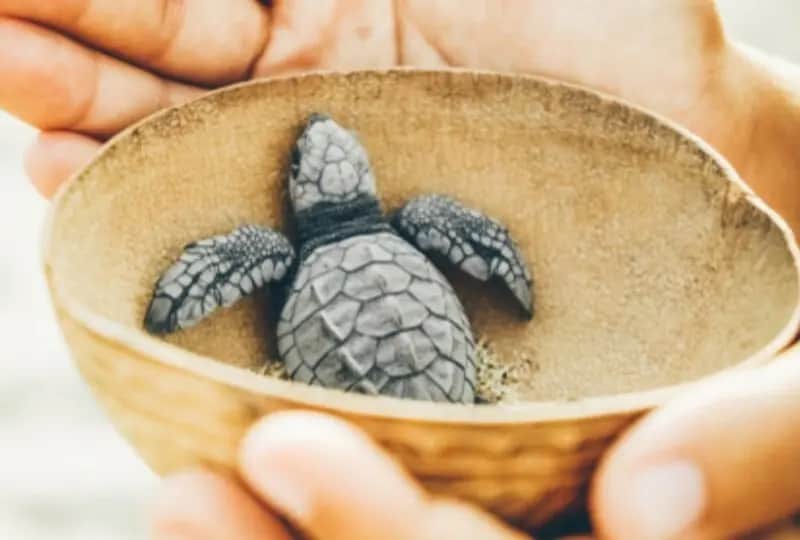
Habaraduwa Turtle Hatchery
The Habaraduwa turtle hatchery, between Galle and Koggala, was set up in 1986. Learn about the sea turtles that nest on the coast and see hatchlings before release.
ExploreImage Credit: ShutterStock
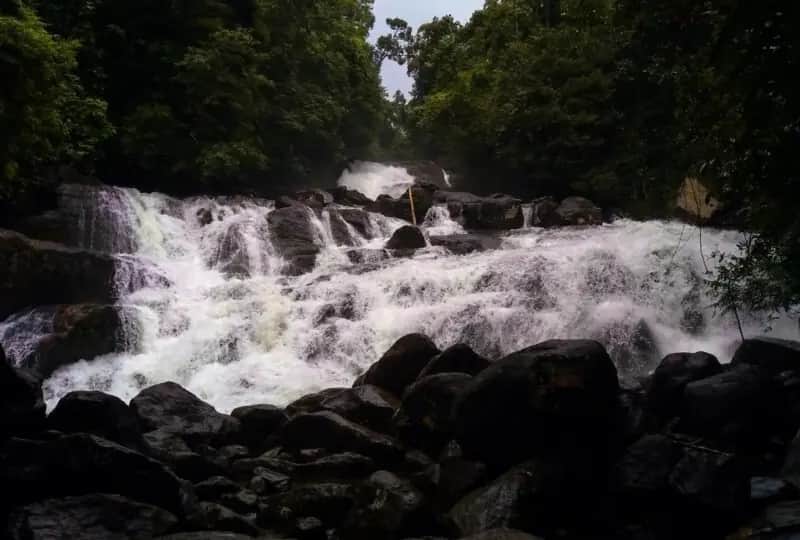
Kanneliya Rainforest
Kanneliya is a lowland rainforest about 35 km inland from Galle, part of a UNESCO biosphere reserve. Trails lead to streams and waterfalls with endemic birds and plants.
ExploreImage Credit: ShutterStock
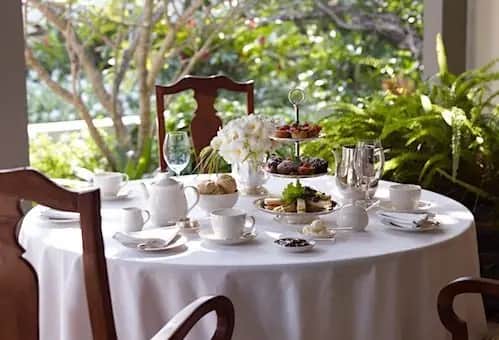
High Tea at Amangalla
Amangalla is a luxury hotel in a 17th century building inside Galle Fort, once the New Oriental Hotel. Afternoon tea on its veranda is a Galle tradition.
ExploreImage Credit: ShutterStock
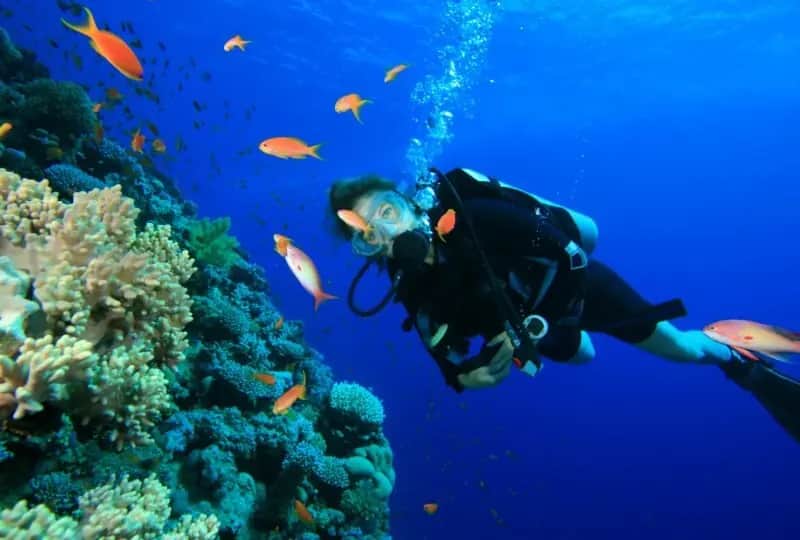
Diving in Galle
Galle has been a port for centuries, and the sea around its harbour holds many shipwrecks. Dive centres visit wrecks and reefs from about November to April.
ExploreImage Credit: ShutterStock
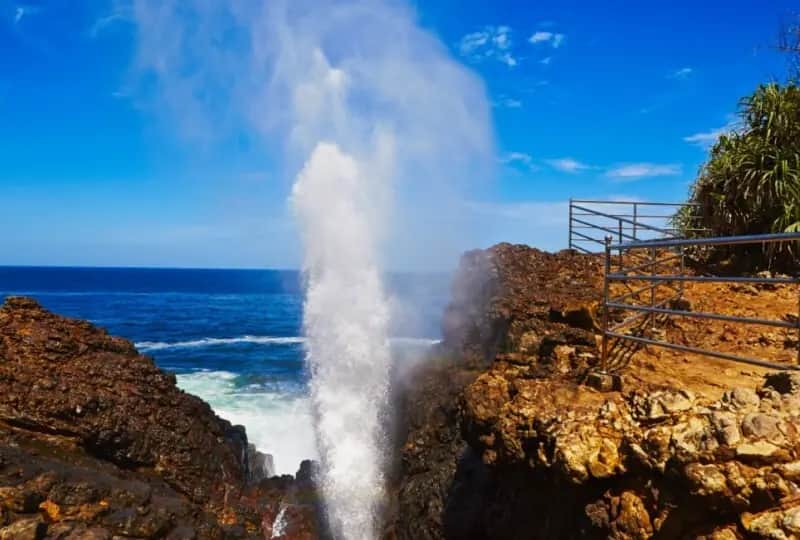
Hummanaya (Blowhole)
Hummanaya is a natural blowhole at Kudawella near Dikwella. When waves rush into a rock cleft, water shoots high into the air, most strongly in rough seas.
ExploreImage Credit: ShutterStock
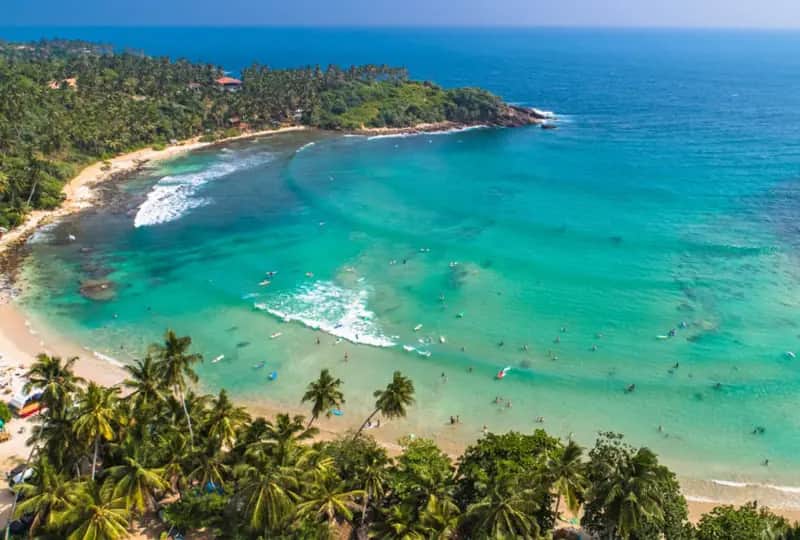
Surfing in Hiriketiya
Hiriketiya is a small horseshoe bay just east of Dikwella, with waves for beginners and intermediates and a relaxed beach scene. Boards and lessons are easy to find.
ExploreImage Credit: ShutterStock

Dikwella Beach
Dikwella, between Matara and Tangalle, has a bay partly sheltered by reefs and sand bars. It is one of the better swimming beaches on this part of the coast.
ExploreImage Credit: ShutterStock
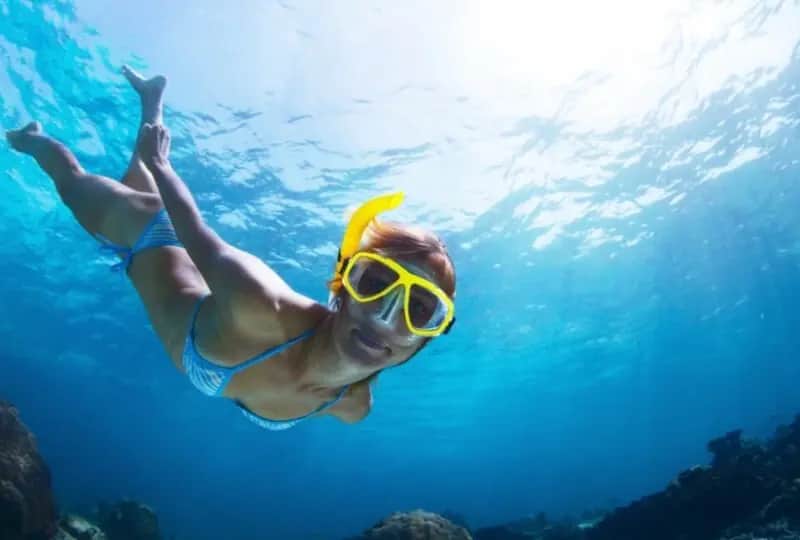
Diving And Snorkelling In Dikwella
The coast around Dikwella has shallow reefs with corals and reef fish, and the water is often clear in calm months. Snorkel from the shore or join a dive trip.
ExploreImage Credit: ShutterStock

Dikwella Beach Swing
Dikwella has its own palm-tree swing, hung from a tree leaning over the sea. It gets far fewer visitors than the swings near Unawatuna.
ExploreImage Credit: ShutterStock

Weherahena temple
Weherahena, near Matara, is a Buddhist temple known for its long underground tunnel shrine lined with paintings and a very large Buddha statue.
ExploreImage Credit: ShutterStock
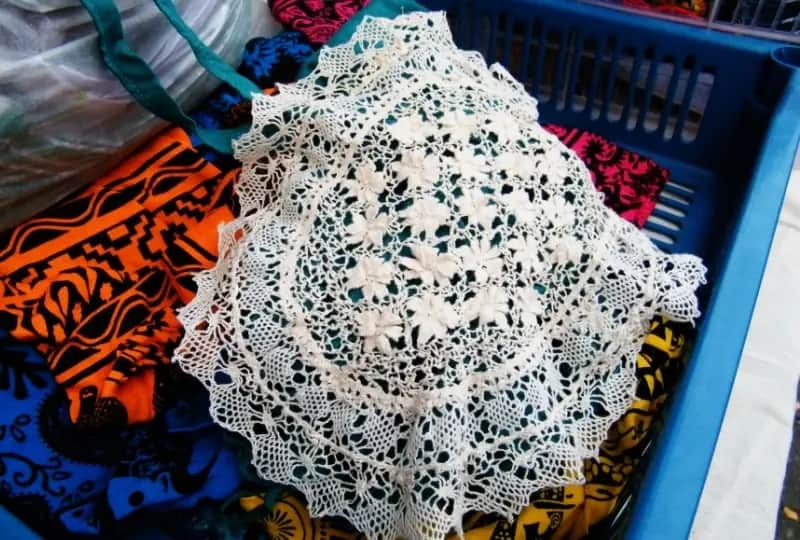
Dickwella Lace Centre
Beeralu is the traditional bobbin lace of the south coast, thought to have arrived with the Portuguese. At the Dickwella lace centre, local women show how it is made by hand.
ExploreImage Credit: ShutterStock
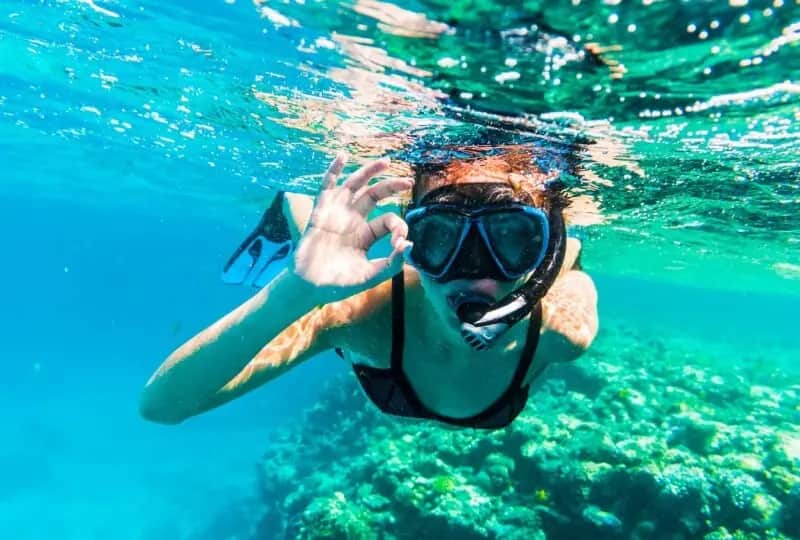
Diving and Snorkelling in Hikkaduwa
Hikkaduwa was one of the first places in Sri Lanka known for diving. A shallow reef runs along the shore for snorkelling, and dive centres visit wrecks and deeper reefs.
ExploreImage Credit: ShutterStock
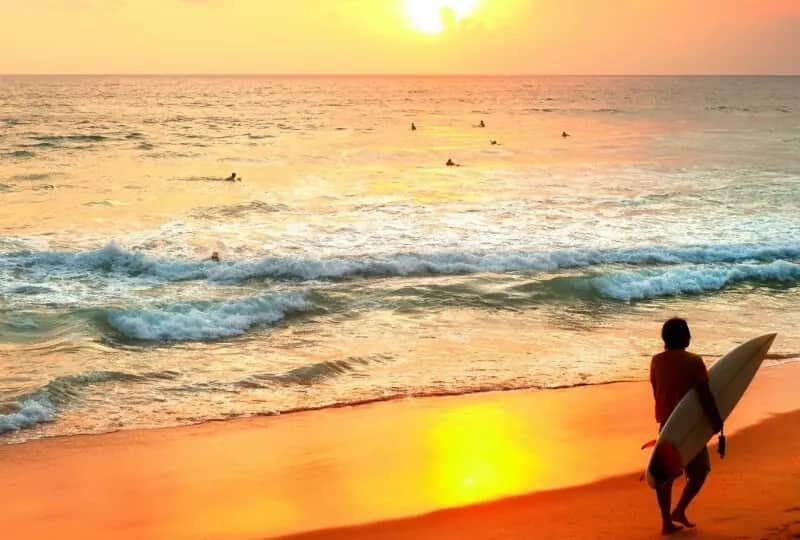
Surfing in Hikkaduwa
Hikkaduwa has been a surf town since the 1970s, with several breaks for different levels. The season runs from about November to April.
ExploreImage Credit: ShutterStock

Partying in Hikka
Hikkaduwa is one of the liveliest beach towns in Sri Lanka after dark, with beach bars, music and parties in season.
ExploreImage Credit: ShutterStock

Local Street Food in Hikkaduwa
Try Sri Lankan food at local prices in Hikkaduwa, from kottu and hoppers to fresh seafood at small roadside places.
ExploreImage Credit: ShutterStock
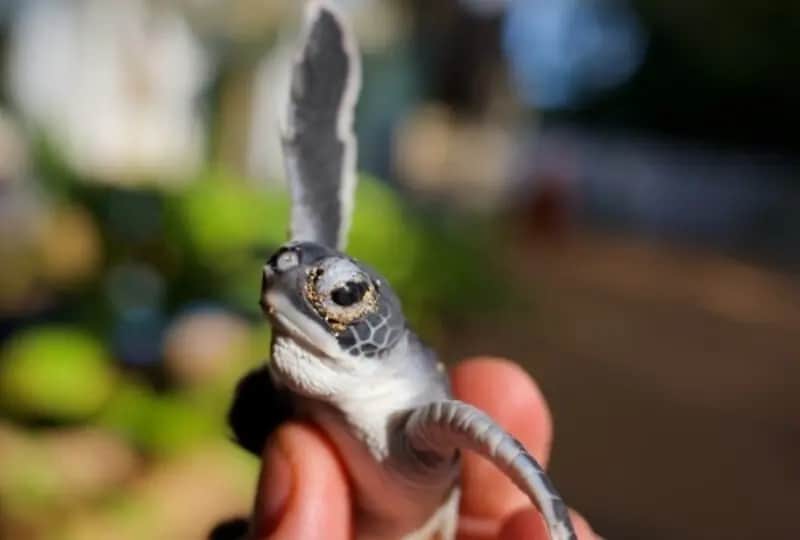
Turtle Hatchery
Kosgoda, about 4 km from Ahungalle, is known for its sea turtle hatcheries. Learn how eggs are collected and protected, and see hatchlings before release.
ExploreImage Credit: ShutterStock

Madu River Mangrove Safari and Fish spa
Take a boat through the Madu River lagoon near Balapitiya, past mangrove islands, a cinnamon island and a small temple. Many trips stop for a fish spa on the way.
ExploreImage Credit: ShutterStock

Spa, Ayurveda & Yoga in the South West
The south-west coast from Wadduwa to Bentota has one of the largest groups of Ayurveda resorts in Sri Lanka. Book a single treatment or a full programme with doctors, therapies and yoga.
ExploreImage Credit: ShutterStock

Bentota Beach
Bentota, about 1.5 to 2 hours from Colombo, has one of the best known resort beaches in Sri Lanka. The long beach meets the Bentota river, and the sea is calm from about November to April.
ExploreImage Credit: ShutterStock
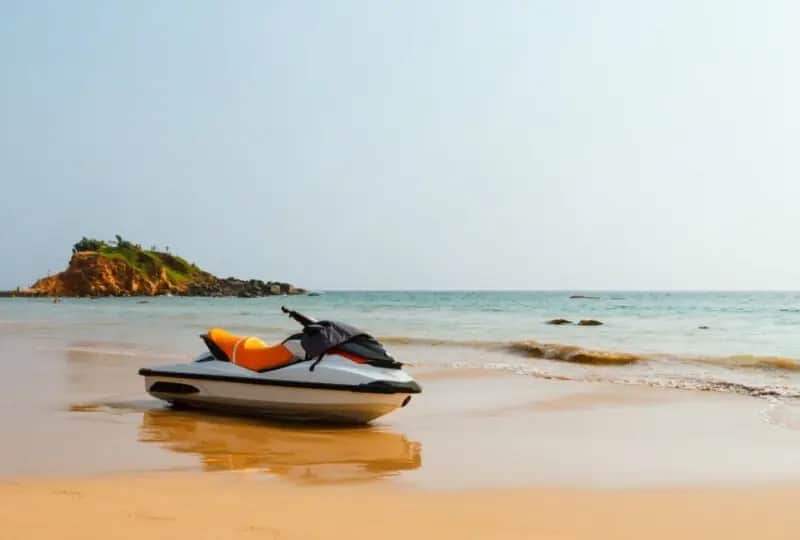
Water Sports in Bentota
Bentota is Sri Lanka's best known resort for water sports. The calm river is used for jet skiing, windsurfing, banana boats and wakeboarding.
ExploreImage Credit: ShutterStock
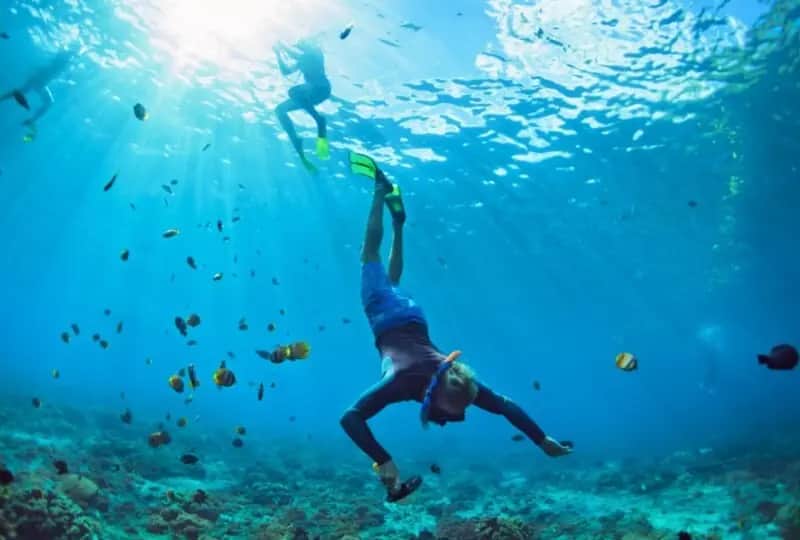
Diving and Snorkelling in Bentota
Bentota has dive sites a short boat ride offshore, including rocky reefs and wrecks. Diving is best in the calm months.
ExploreImage Credit: ShutterStock
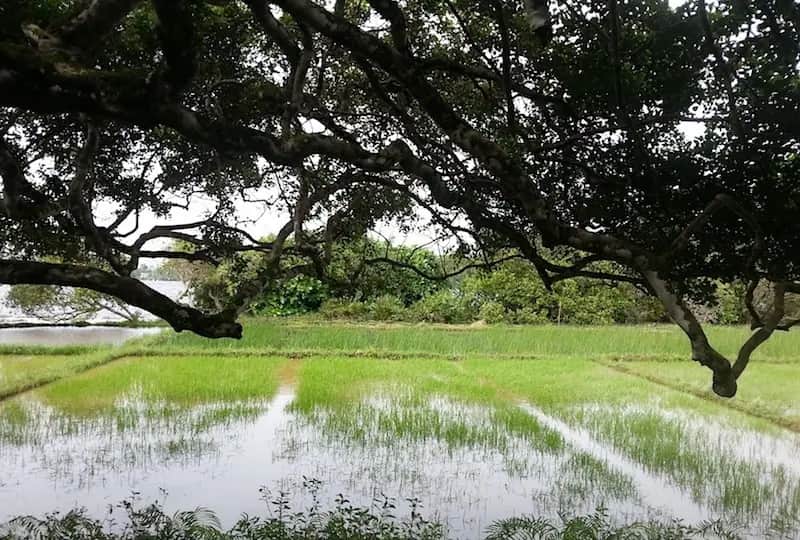
Lunuganga Estate
Lunuganga was the country estate of Geoffrey Bawa, Sri Lanka's most famous architect, who shaped its garden over about 50 years.
ExploreImage Credit: ShutterStock

Beruwela Beach
Beruwala, about 1.5 hours from Colombo, has a long sandy beach lined with resort hotels. The sea is calm from about November to April.
ExploreImage Credit: ShutterStock

Brief Gardens
Brief Garden was the home and garden of Bevis Bawa, the elder brother of Geoffrey Bawa, near Aluthgama. Walk through its terraces, sculptures and the house filled with art.
ExploreImage Credit: ShutterStock

Beruwala Harbour & Fish Market
Beruwala has one of the largest fishing harbours in the area. Come early in the morning to see colourful boats unload and the catch being sold.
ExploreImage Credit: ShutterStock

Richmond Castle
Richmond Castle is a grand early 20th century mansion near Kalutara, set in gardens by the Kalu Ganga. Built for a local Mudaliyar, it mixes Indian and European styles.
ExploreImage Credit: ShutterStock
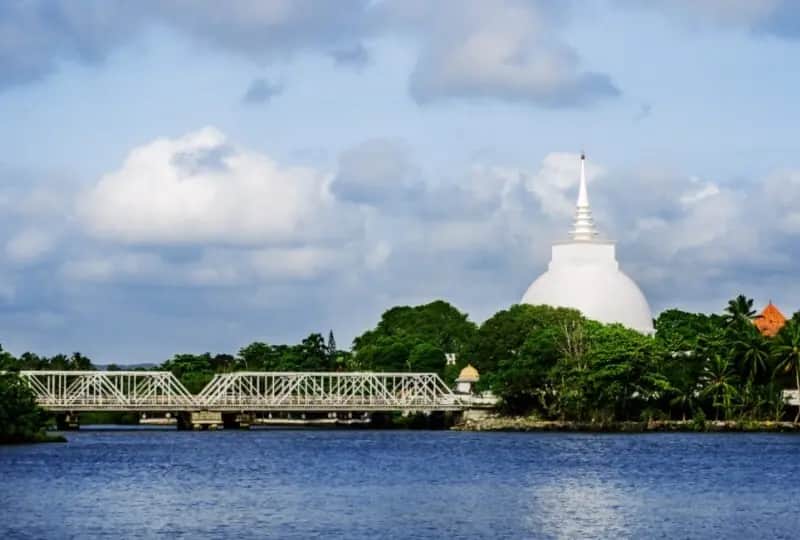
Kalutara Bodhiya
The Kalutara Bodhiya, beside the Galle Road at the mouth of the Kalu Ganga, is one of the most visited Buddhist sites on the west coast. Visitors can enter its hollow white stupa.
ExploreImage Credit: ShutterStock

Water Sports in Kalutara
Kalutara sits where the Kalu Ganga meets the sea, and operators along the coast offer jet skiing, banana boats and river trips in season.
ExploreImage Credit: ShutterStock
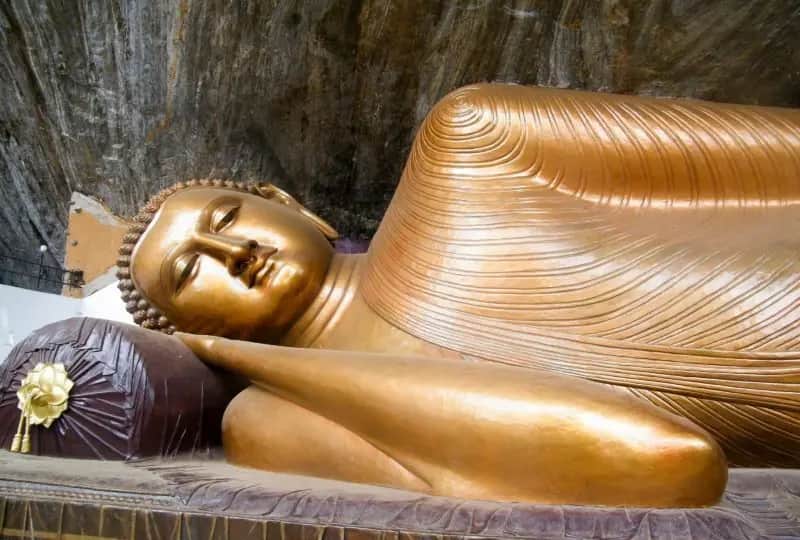
Fa Hien Cave
Fa Hien Cave, or Pahiyangala, is a huge rock shelter near Bulathsinhala, inland from Kalutara. It has evidence of prehistoric human occupation, and a temple now stands in the cave.
ExploreImage Credit: ShutterStock
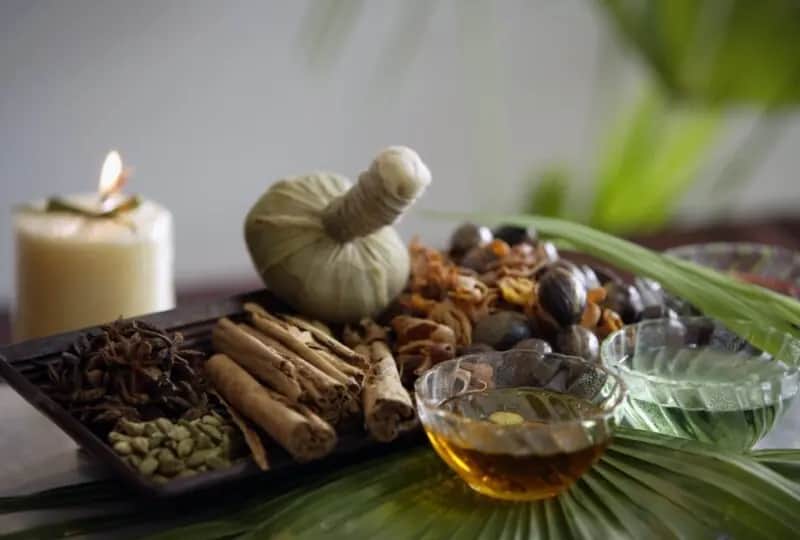
Siddhalepa Ayurveda Spa
Siddhalepa Ayurveda Health Resort is a beachside resort at Wadduwa, south of Colombo, run by a well-known herbal medicine maker. Programmes combine doctors' consultations, herbal treatments and yoga.
ExploreImage Credit: ShutterStock
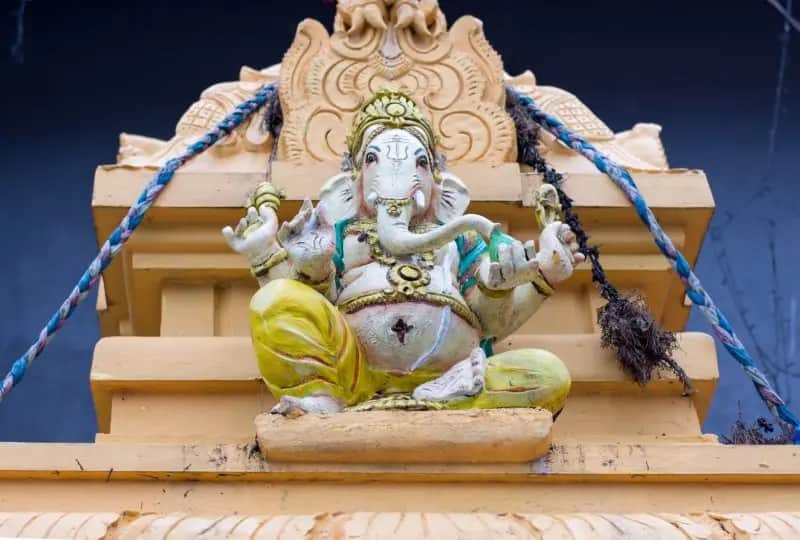
Manavari Kovil
Manavari is a Hindu temple north of Chilaw, an important stop on the Ramayana trail. Tradition holds that Rama installed a lingam here.
ExploreImage Credit: ShutterStock

Munneswaram Kovil
Munneswaram, just east of Chilaw, is one of the most important Hindu temples in Sri Lanka, dedicated to Shiva. It draws large crowds at its festival in August or September.
ExploreImage Credit: ShutterStock
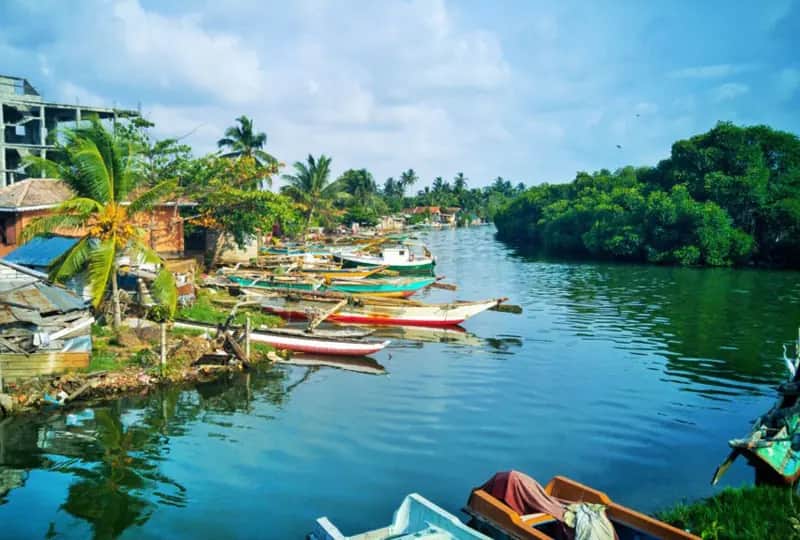
Negombo Lagoon
The Negombo lagoon is a large estuary just south of the town. Boat trips pass mangroves, fishing villages and traditional outrigger canoes.
ExploreImage Credit: ShutterStock
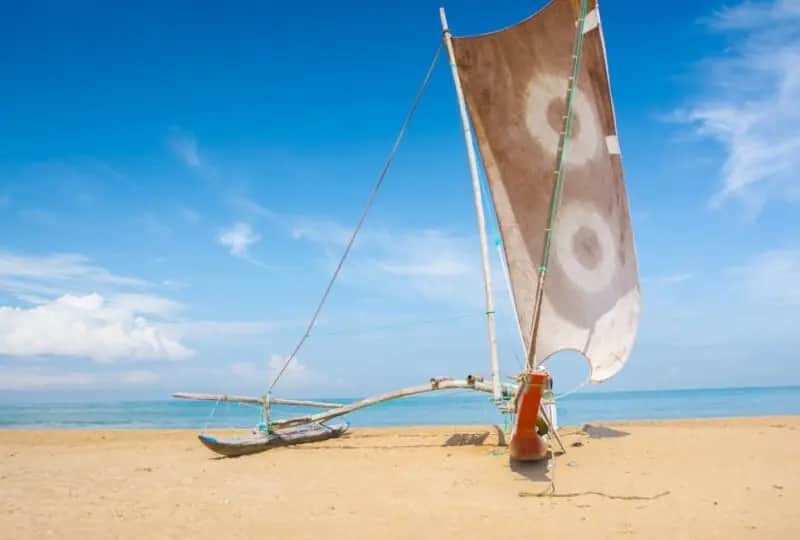
Negombo Beach
Negombo beach runs north from the town along the main hotel strip, 20 to 30 minutes from the airport. It is a convenient place to rest at the start or end of a trip.
ExploreImage Credit: ShutterStock

Muthurajawela wetlands
Muthurajawela is a large coastal marsh between Negombo and Colombo. Boat trips look for water birds, monitor lizards and crocodiles.
ExploreImage Credit: ShutterStock

Negombo "Lellama'' Fish Market
Lellama is Negombo's main fish market, near the lagoon mouth. Come early in the morning when the boats unload and the auctions are at their busiest.
ExploreImage Credit: ShutterStock

Angurukaramulla Temple
Angurukaramulla temple is the best known Buddhist temple in Negombo, with a dragon entrance and a large seated Buddha.
ExploreImage Credit: ShutterStock

Negombo Dutch Fort
Negombo's fort stands near the lagoon mouth. Not much is left, but the gate and clock tower recall the Portuguese and Dutch periods.
ExploreImage Credit: ShutterStock

St. Mary´s Church
St Mary's Church on Grand Street is the best known church in Negombo, a town so Catholic it is called Little Rome. Its painted ceiling is the highlight.
ExploreImage Credit: ShutterStock

Negombo City Tour
See Negombo in a day, from the fish market and lagoon to the Dutch fort, churches and the canal, close to the airport.
ExploreImage Credit: ShutterStock

Whale & Dolphin Watching in Kalpitiya
Kalpitiya is one of the best places in Sri Lanka to see spinner dolphins, sometimes in pods of hundreds. Boats leave early in the morning from about November to April.
ExploreImage Credit: ShutterStock

Kite surfing in Kalpitiya
Kalpitiya is Sri Lanka's leading spot for kitesurfing, with strong, steady winds from about May to October. The lagoon suits beginners, and schools offer courses and trips.
ExploreImage Credit: ShutterStock
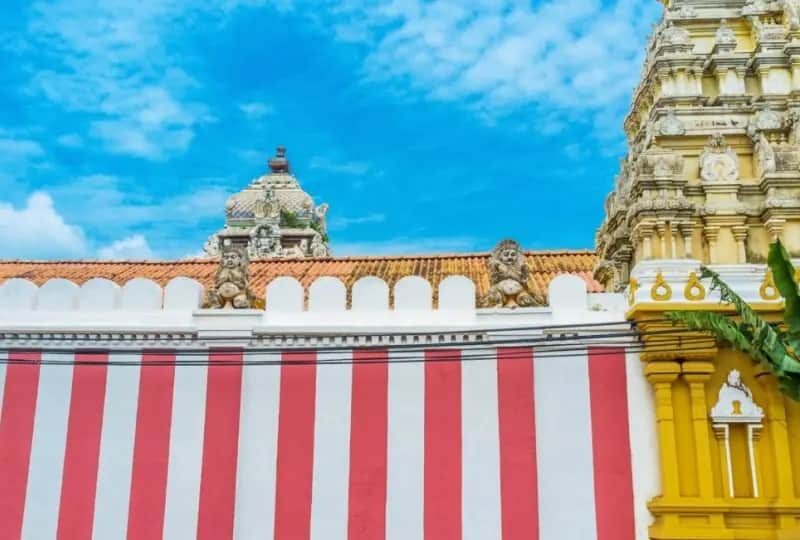
Day Trip To Munneswaram Temple
Visit Munneswaram, near Chilaw, one of the most important Hindu temples in Sri Lanka, dedicated to Shiva and linked to the Ramayana.
ExploreImage Credit: ShutterStock
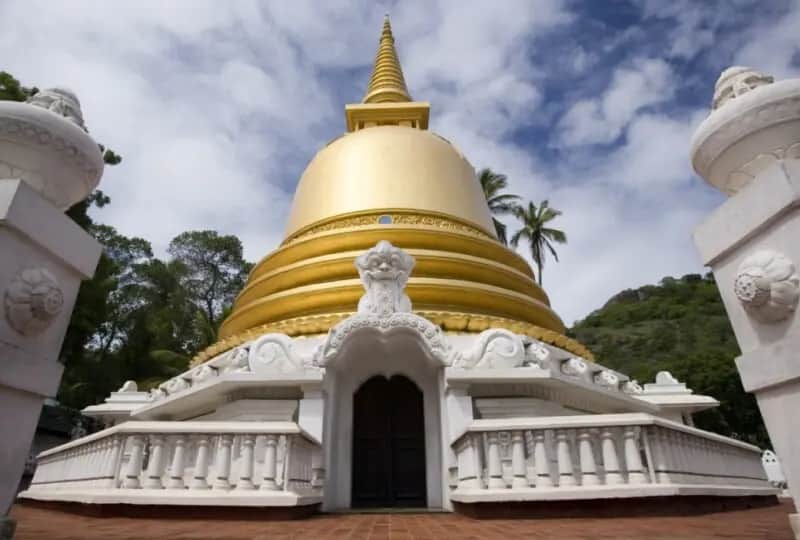
Golden Cave Temple of Dambulla
The Dambulla cave temple is the largest and best preserved cave temple complex in Sri Lanka and a UNESCO World Heritage Site. Five caves hold more than 150 Buddha statues and painted ceilings.
ExploreImage Credit: ShutterStock
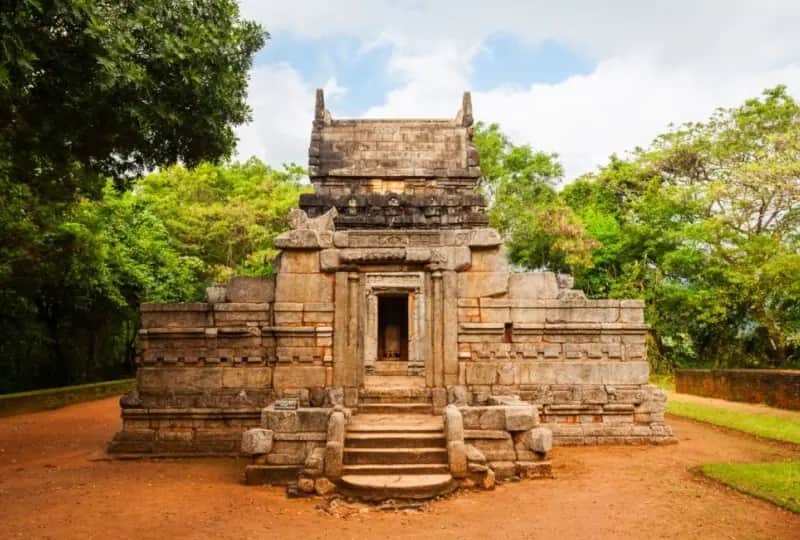
Nalanda Gedige
Nalanda Gedige is an ancient stone shrine near Matale, in the centre of Sri Lanka. It mixes Hindu and Buddhist styles and stands beside a reservoir.
ExploreImage Credit: ShutterStock
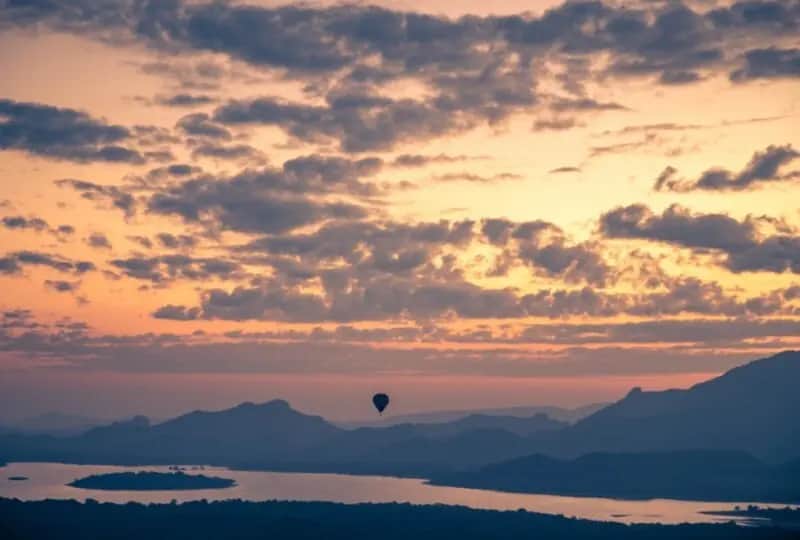
Hot Air Ballooning in Dambulla
Fly over the Cultural Triangle at dawn in a hot air balloon, looking down on forest, lakes and rocks such as Sigiriya. Flights run in the drier months.
ExploreImage Credit: ShutterStock

Sigiriya Rock Fortress
Sigiriya, the Lion Rock, is a 5th century rock fortress and UNESCO World Heritage Site. Climb past water gardens, frescoes and the Lion Gate to the palace ruins on the summit.
ExploreImage Credit: ShutterStock

Spa and Ayurveda in Sigiriya
After climbing rocks and touring ruins in the Cultural Triangle, relax with a spa or Ayurveda treatment at one of the hotels around Sigiriya.
ExploreImage Credit: ShutterStock
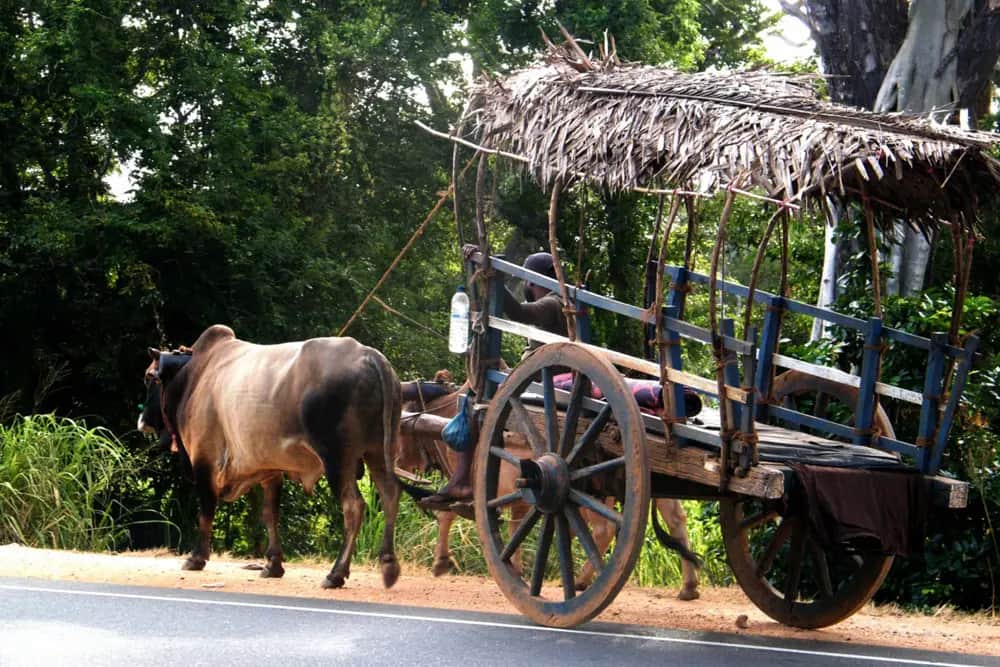
Village tour
A village tour near Habarana is a half-day look at rural life in the dry zone. Ride a bullock cart, cross a lake by canoe and share a home-cooked meal.
ExploreImage Credit: ShutterStock

Ritigala Mountains and Monastery
Ritigala is an isolated mountain range between Anuradhapura and Habarana. Its forested slopes hide the ruins of an ancient forest monastery with stone paths and meditation platforms.
ExploreImage Credit: ShutterStock

Parakrama Samudraya
Parakrama Samudra, the Sea of Parakrama, is a vast reservoir beside Polonnaruwa built by King Parakramabahu I in the 12th century. It still irrigates the fields around the city.
ExploreImage Credit: ShutterStock
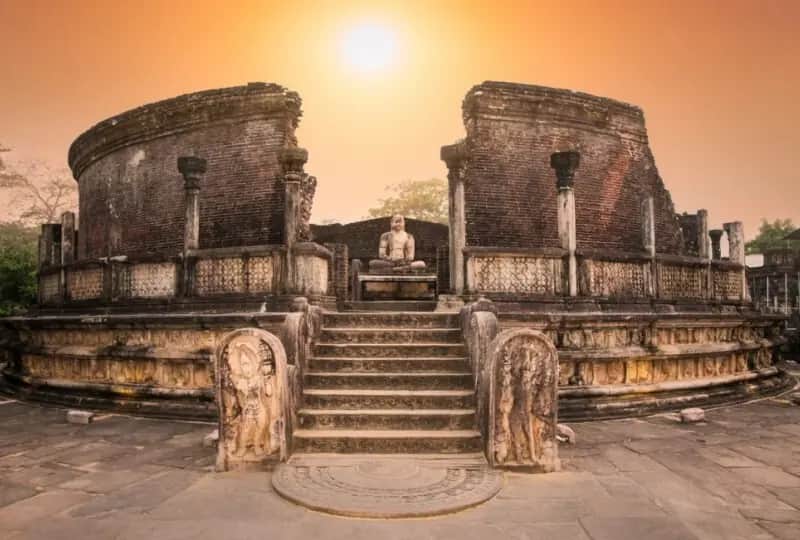
Polonnaruwa Vatadage and the Quadrangle
The Quadrangle is the sacred heart of ancient Polonnaruwa. Its circular Vatadage, with guardstones and moonstones, is one of the finest buildings of the period.
ExploreImage Credit: ShutterStock

Gal Viharaya and the Alahana Pirivena group
The northern part of Polonnaruwa holds the Gal Vihara, four Buddha images carved from a single granite face, and the monastery buildings of the Alahana Pirivena.
ExploreImage Credit: ShutterStock

Polonnaruwa Day Tour
Polonnaruwa was Sri Lanka's capital from the 11th to the 13th centuries. A guided day covers its palaces, temples, stupas and the Gal Vihara.
ExploreImage Credit: ShutterStock

Isinbassagala Ruwangiri Rajamaha Viharaya
Isinbassagala Ruwangiri Rajamaha Viharaya is a Buddhist temple on a rock outcrop beside the A9 road near Medawachchiya. Climb to the top for wide views over the dry zone.
ExploreImage Credit: ShutterStock
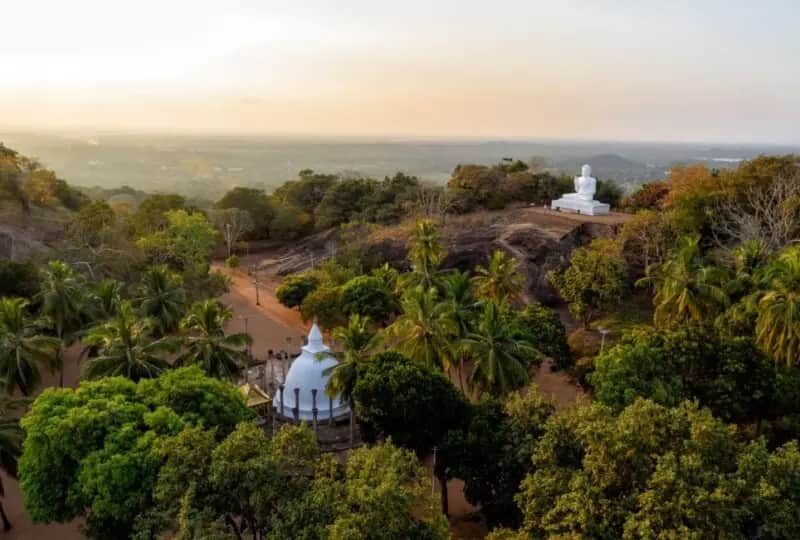
Mihintale
Mihintale, about 12 km east of Anuradhapura, is where Buddhism is said to have come to Sri Lanka. Steps lead up to stupas, caves and a rock summit with wide views.
ExploreImage Credit: ShutterStock
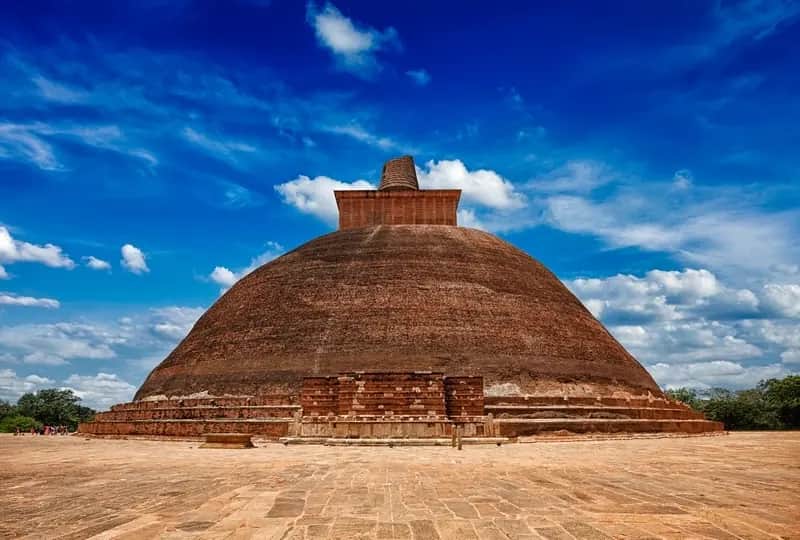
Jetavanaramaya Stupa
Jetavanaramaya is a huge brick stupa in Anuradhapura, begun by King Mahasena in the 3rd century AD. It was once among the tallest structures in the ancient world.
ExploreImage Credit: ShutterStock
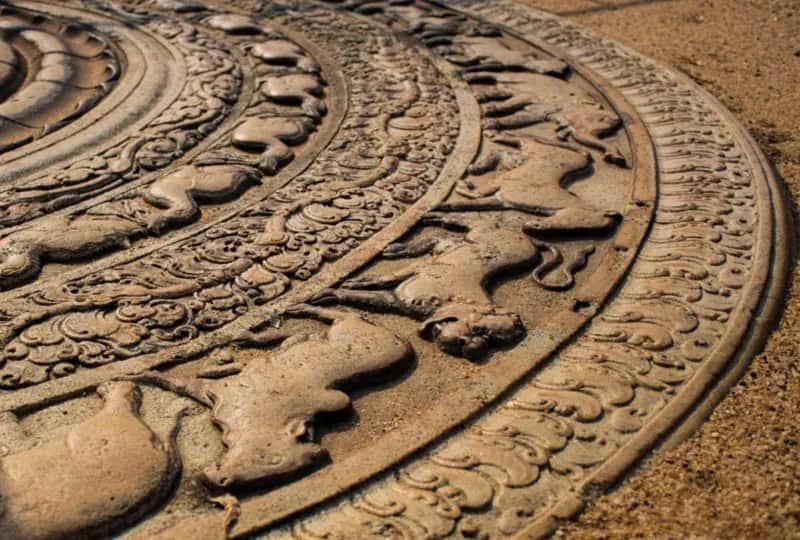
Abhayagiri Monastery Complex
Abhayagiri was the largest monastery of ancient Anuradhapura, covering around 200 hectares. See its great stupa, the Twin Ponds and the Samadhi Buddha.
ExploreImage Credit: ShutterStock

Mahamewna Park
Mahamewna Uyana was a royal pleasure garden of ancient Anuradhapura, later given to the Buddhist order. The sacred city's main shrines stand within it.
ExploreImage Credit: ShutterStock

Sri Jaya Sri Maha Bodhi
The Jaya Sri Maha Bodhi in Anuradhapura is a sacred fig tree grown from a cutting of the tree under which the Buddha reached enlightenment. It is one of the holiest sites in Sri Lanka.
ExploreImage Credit: ShutterStock

Ruwanwelisaya Dagoba
Ruwanwelisaya, the Great Stupa, is one of the most sacred stupas in Sri Lanka, built by King Dutugemunu. Its white dome is surrounded by a wall of elephant sculptures.
ExploreImage Credit: ShutterStock

Aukana Buddha Statue
The Aukana Buddha is a standing statue about 12 metres tall, carved from a granite rock face near the Kala Wewa reservoir. It is one of the finest ancient statues in Sri Lanka.
ExploreImage Credit: ShutterStock
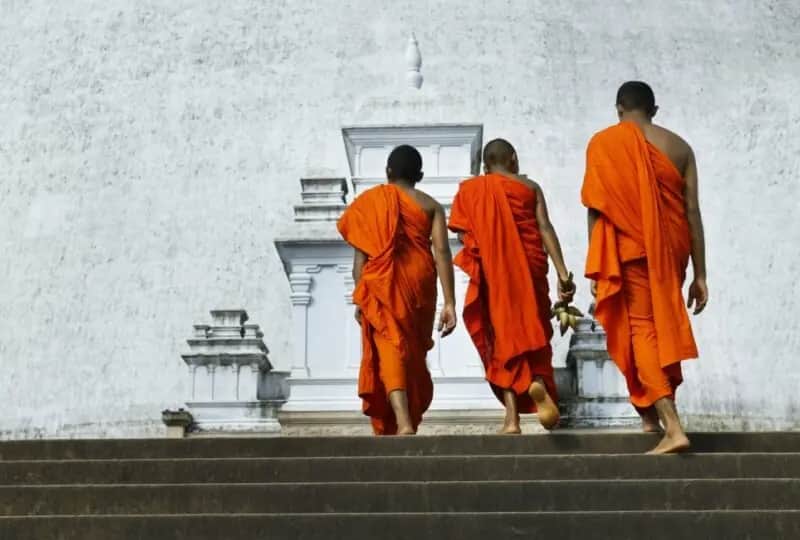
Anuradhapura Day Tour
Anuradhapura was Sri Lanka's first great capital, and its sacred city is a UNESCO World Heritage Site. A guided day covers the Sri Maha Bodhi, the great stupas and monasteries.
ExploreImage Credit: ShutterStock
Seetha Kotuwa
Seetha Kotuwa, meaning Sita's fort, is one of the Ramayana sites of Sri Lanka, in the hills near Gurulupotha. Tradition says Sita was first kept here by King Ravana.
ExploreImage Credit: ShutterStock
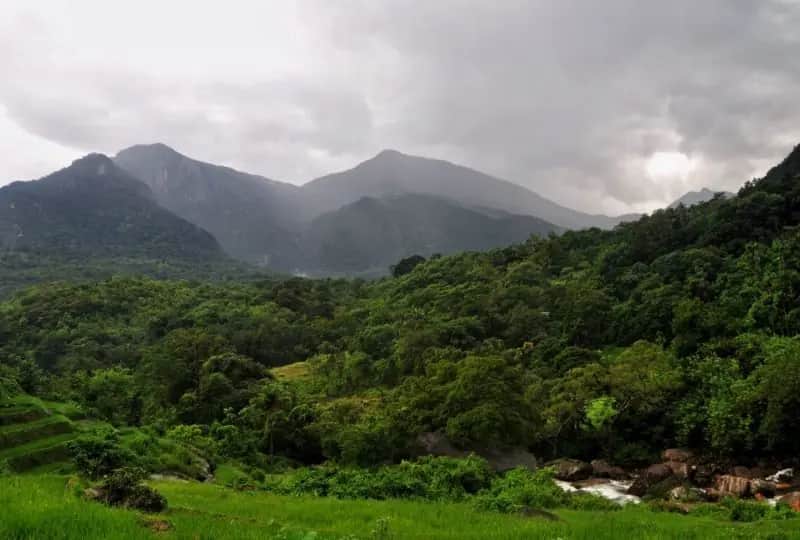
Weragantota
Weragantota, near Mahiyangana on the Mahaweli river, features in Sri Lanka's Ramayana tradition. Local belief holds that Ravana first brought Sita here, and the name is linked to the landing of his aerial chariot.
ExploreImage Credit: ShutterStock

Kandy Temple of the Tooth Relic
The Temple of the Sacred Tooth Relic in Kandy houses a tooth relic of the Buddha and is the most important Buddhist shrine in Sri Lanka. Visit during a puja, with shoulders and knees covered.
ExploreImage Credit: ShutterStock

Kandy Esala Perahera
The Kandy Esala Perahera is Sri Lanka's best known festival, held each year in July or August. Over about ten nights, decorated elephants, dancers, drummers and fire performers parade through the city.
ExploreImage Credit: ShutterStock
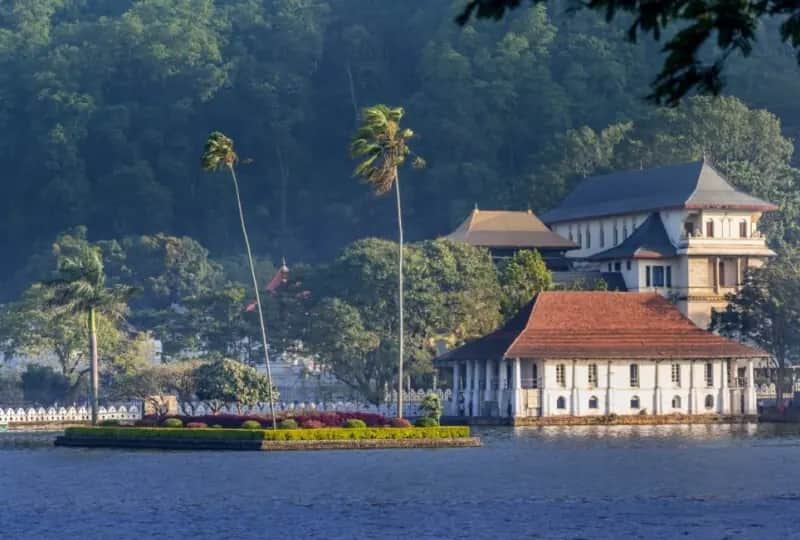
Royal Palace of Kandy
The Royal Palace of Kandy was the seat of the last independent kingdom in Sri Lanka, which fell to the British in 1815. Its buildings stand beside the Temple of the Tooth.
ExploreImage Credit: ShutterStock

Lankatilaka Temple
Lankatilaka Raja Maha Viharaya stands on a rock outcrop west of Kandy, built in 1344 under King Bhuvanekabahu IV. Its tall image house and valley views make it one of the finest temples near the city.
ExploreImage Credit: ShutterStock
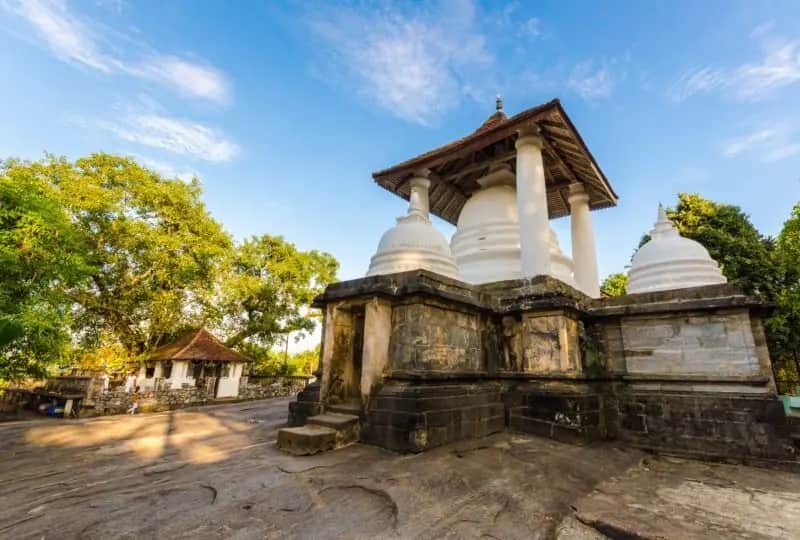
Gadaladeniya Temple
Gadaladeniya Raja Maha Viharaya is a 14th century stone temple on a flat rock at Pilimathalawa, west of Kandy. Its design shows South Indian influence.
ExploreImage Credit: ShutterStock
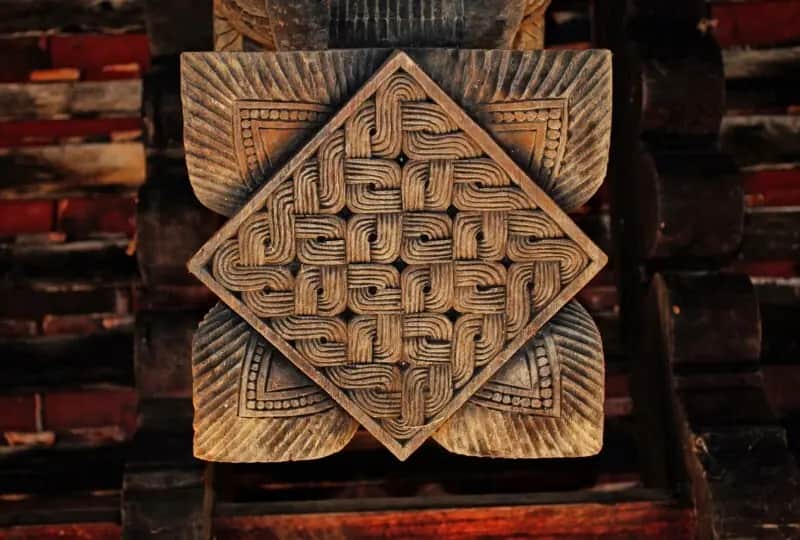
Embekke Devalaya
Embekke Devalaya, west of Kandy, is a shrine to the god Kataragama. It is best known for the carved wooden pillars of its drummers' hall, among the finest wood carvings in Sri Lanka.
ExploreImage Credit: ShutterStock

Royal Botanical Gardens
The Royal Botanical Gardens at Peradeniya, about 6 km west of Kandy, are the largest in Sri Lanka. See the orchid house, avenues of palms, a spice garden and a giant Javan fig tree.
ExploreImage Credit: ShutterStock
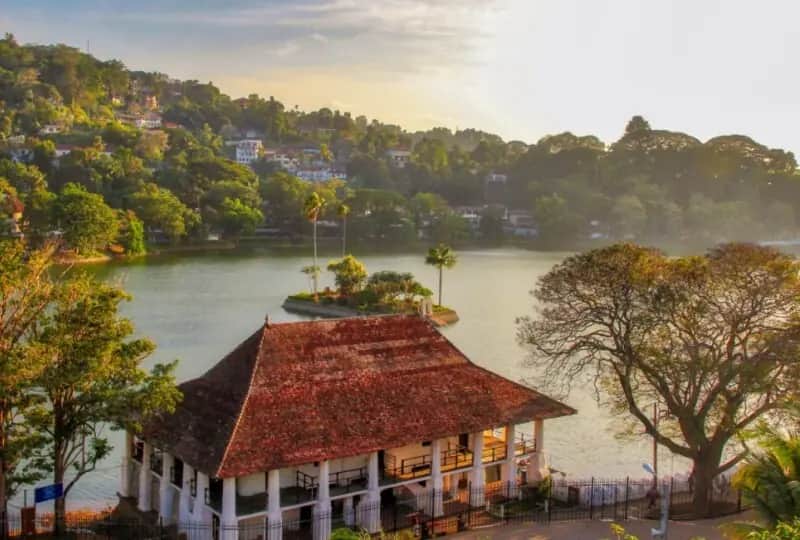
Kandy Lake
Kandy Lake lies beside the Temple of the Tooth and was created in 1807 by Sri Vikrama Rajasinha, the last king of Kandy. A shaded path runs around it.
ExploreImage Credit: ShutterStock
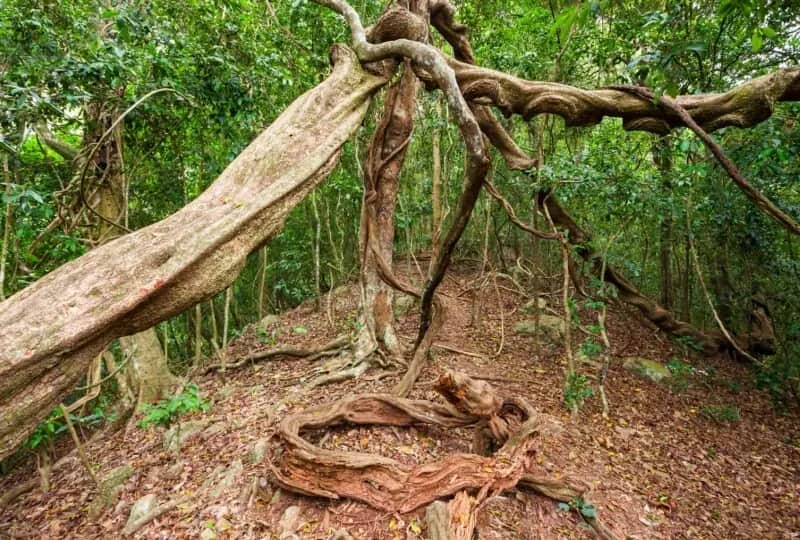
Udawattakele Forest Reserve
Udawattakele is a forest reserve on the ridge just behind the Temple of the Tooth, once the royal pleasure garden. Paths lead through tall trees with monkeys and birds, minutes from the town centre.
ExploreImage Credit: ShutterStock

Kandyan Dancing and Cultural Shows
Kandyan dance is the best known classical dance of Sri Lanka. Evening shows in Kandy present dance, drumming and fire walking in about an hour.
ExploreImage Credit: ShutterStock

Victoria Golf & Country Resort
Victoria Golf and Country Resort, at Digana about 30 to 40 minutes east of Kandy, has an 18-hole course on rolling hills above the Victoria reservoir.
ExploreImage Credit: ShutterStock
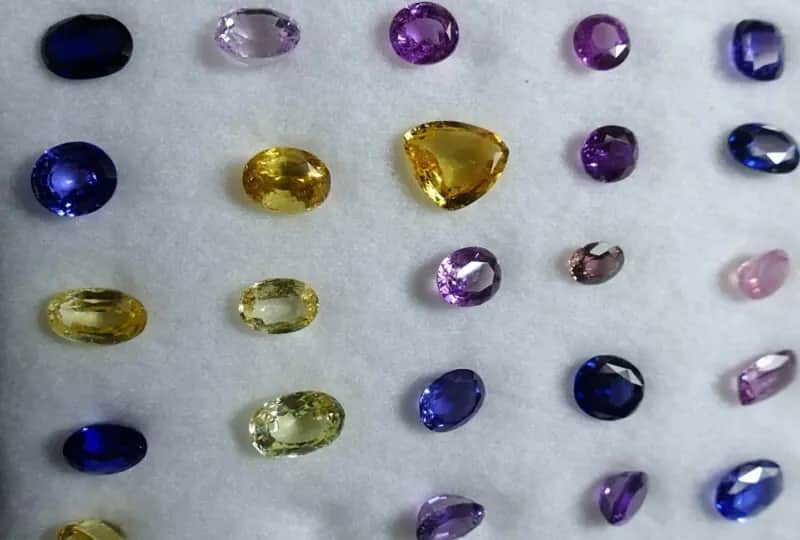
Gem Shopping in Kandy
Sri Lanka has been known for gems for over two thousand years, and Kandy has many gem shops and a small gem museum. A visit shows how sapphires and other stones are mined and cut.
ExploreImage Credit: ShutterStock
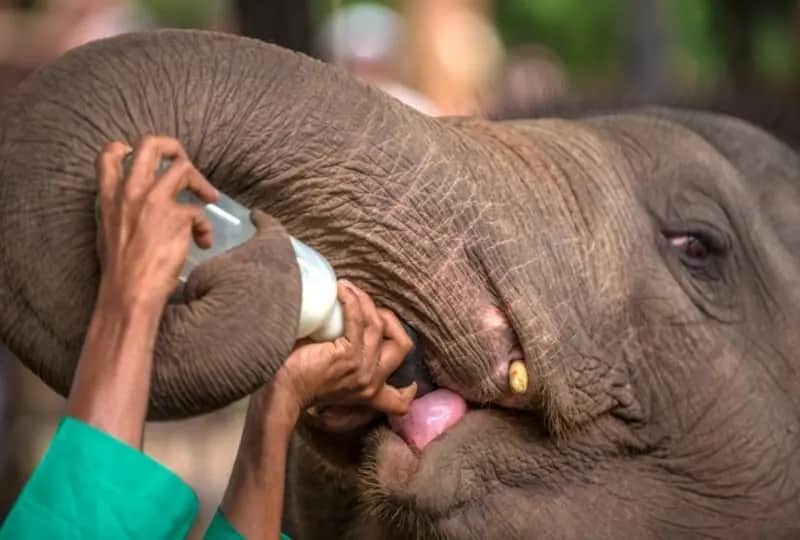
Pinnawela Elephant Orphanage
Pinnawala Elephant Orphanage, near Kegalle on the road between Colombo and Kandy, is run by the Department of Wildlife. Visitors watch the elephants feed and bathe in the river.
ExploreImage Credit: ShutterStock

Hiking and Trekking in Kandy
Kandy makes a good base for walking. The Hantana range near the city offers half-day hikes through tea and forest, and the Knuckles range is within reach for longer treks.
ExploreImage Credit: ShutterStock

Kandy City Tour
See the last royal capital in a day, from the Temple of the Tooth and the lake to the Peradeniya gardens, the market and a Kandyan dance show.
ExploreImage Credit: ShutterStock
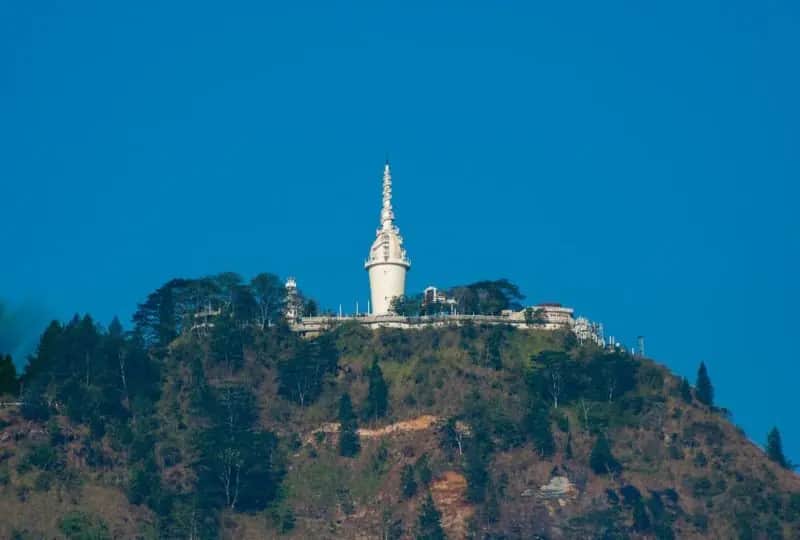
Ambuluwawa Temple & Campaign Site
Ambuluwawa is a mountain beside Gampola, about 20 km south of Kandy. Its summit holds a biodiversity complex with a tall spiral tower and wide views over the hills.
ExploreImage Credit: ShutterStock
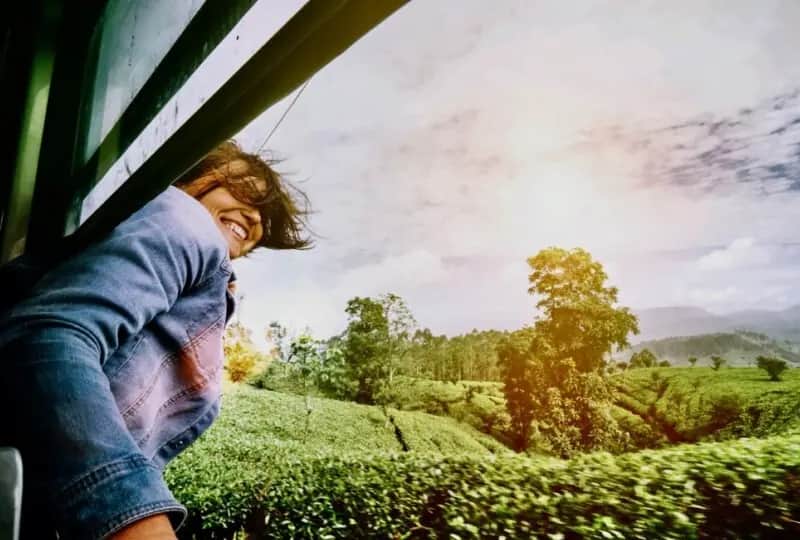
Kandy / Nuwara Eliya - Ella Train Excursions
The hill country railway to Nanu Oya, Ella and Badulla is one of the most scenic train rides in Asia. As of October 2026, trains run between Nanu Oya, Ella and Badulla, but not between Kandy and Nanu Oya.
ExploreImage Credit: ShutterStock
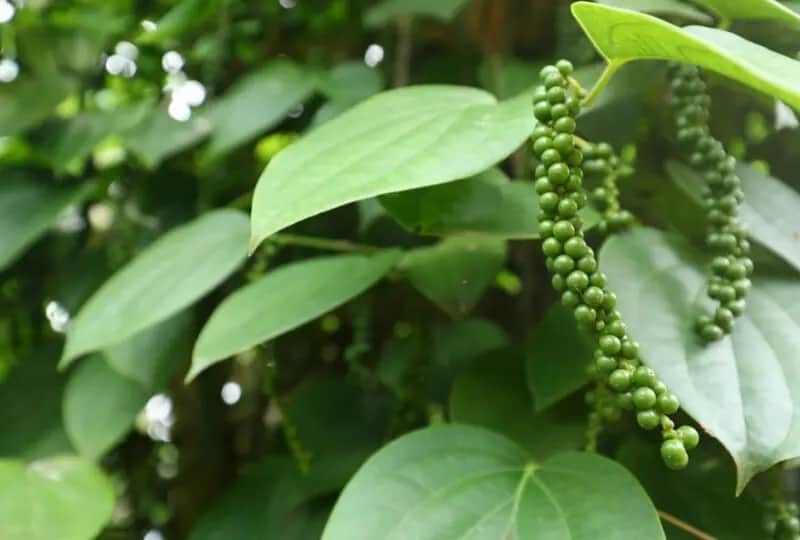
Visit a Spice Garden
Spices drew traders to Sri Lanka for centuries. A spice garden visit near Kandy shows how cinnamon, cardamom, pepper and nutmeg are grown and used in cooking and Ayurveda.
ExploreImage Credit: ShutterStock

Bahirawakanda Vihara Buddha Statue
Bahirawakanda Vihara is the temple on the hill above Kandy, with a large white statue of the Buddha in meditation. The views over the city are best in the late afternoon.
ExploreImage Credit: ShutterStock

Colombo City Tour
See the best of Colombo in a day, from colonial Fort and the markets of Pettah to temples, parks, Galle Face Green and the new towers by the sea.
ExploreImage Credit: ShutterStock

Tuk Tuk rides
Tuk tuks, called three-wheelers in Sri Lanka, are the quickest and most fun way around Colombo. Take a guided tuk tuk tour or use a ride app for short trips.
ExploreImage Credit: ShutterStock

National Museum
The Colombo National Museum, opened in 1877, is Sri Lanka's largest museum. It displays royal regalia, ancient sculpture, masks and colonial-era objects in a white Italianate building.
ExploreImage Credit: ShutterStock

Colombo Fort and its Colonial Heritage
Colombo Fort is the city's historic core and business district. Walk among colonial buildings such as the Cargills store, the Old Dutch Hospital and the old lighthouse clock tower.
ExploreImage Credit: ShutterStock

The Beira Lake
Beira Lake lies in the centre of Colombo, bordered by Fort, Slave Island and Pettah. The Seema Malaka shrine stands on the water, and paths and swan boats line its shore.
ExploreImage Credit: ShutterStock

The Galle Face Green
Galle Face Green is a long lawn and promenade beside the sea in central Colombo, laid out in the 1850s. Come in the late afternoon for kites, sunsets and street food.
ExploreImage Credit: ShutterStock

Gangarama Temple and Seema Malaka Meditation Centre
Gangaramaya is one of Colombo's best known Buddhist temples, with a museum full of gifts from devotees. Across the road, Geoffrey Bawa's Seema Malaka shrine sits on Beira Lake.
ExploreImage Credit: ShutterStock
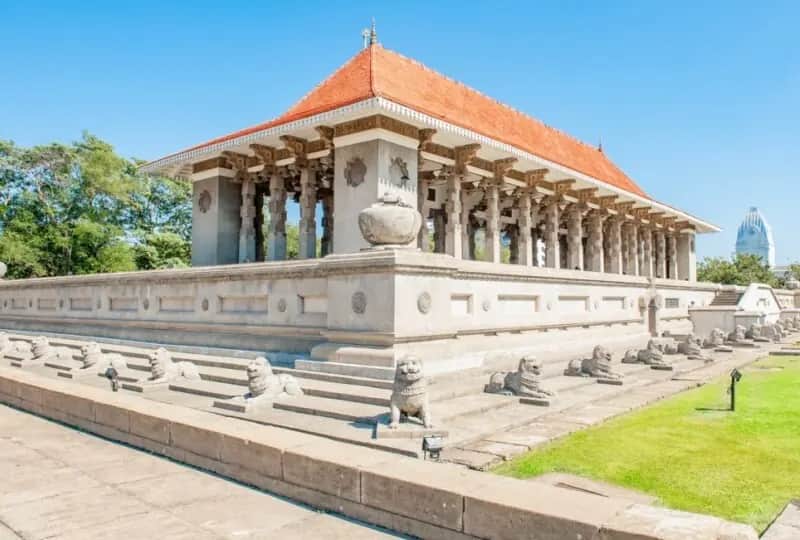
Independence Square and Park
Independence Square, in Cinnamon Gardens, is the national monument to Sri Lanka's independence in 1948. The surrounding park and the Arcade make it a pleasant place to walk.
ExploreImage Credit: ShutterStock

Viharamahadevi Park & Street Art
Viharamahadevi Park is the largest and one of the oldest public parks in Colombo, opposite the Town Hall. Artists often display their work on the railings nearby.
ExploreImage Credit: ShutterStock

Royal Colombo Golf Club and Course
The Royal Colombo Golf Club, founded in 1879, is one of the oldest golf clubs outside Britain. Its course lies in the heart of the city.
ExploreImage Credit: ShutterStock
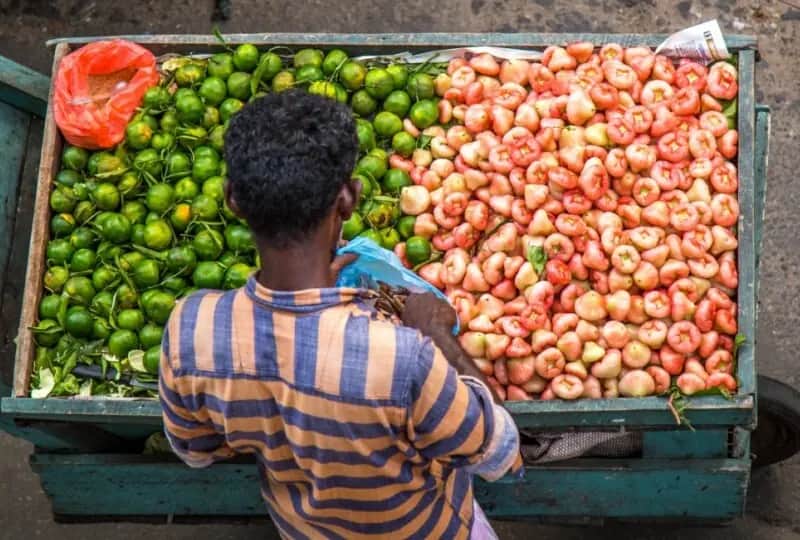
Streets of Pettah
Pettah, just east of Colombo Fort, is the city's oldest and busiest market district. Each street specialises in something, from spices and fabrics to electronics.
ExploreImage Credit: ShutterStock

Best Places to shop in Colombo
Shopping in Colombo ranges from the street markets of Pettah to design shops such as Barefoot, Paradise Road and Odel, and Laksala for crafts.
ExploreImage Credit: ShutterStock

Best Cafes in Colombo
Independent cafes have opened all over Colombo, from colonial buildings to garden courtyards, serving good coffee, cakes and light meals.
ExploreImage Credit: ShutterStock

National Art Gallery
The National Art Gallery stands on Green Path in Colombo 7, next to the National Museum. It shows works by Sri Lankan artists, including portraits and landscapes.
ExploreImage Credit: ShutterStock

New Parliament and the Diyawanna
The Parliament of Sri Lanka stands on an island in Diyawanna Lake at Sri Jayewardenepura Kotte, designed by Geoffrey Bawa. The lakeside paths around it are popular for walks.
ExploreImage Credit: ShutterStock

Visit the Geoffrey Bawa House
Number 11, the Colombo home of architect Geoffrey Bawa, can be visited on guided tours. It shows how he joined small houses into one with courtyards, light and art.
ExploreImage Credit: ShutterStock

Visit the Geoffrey Bawa Office (Present: Gallery Café)
Geoffrey Bawa's former office on Alfred House Road is now the Gallery Cafe, run by Paradise Road. Its courtyards make a calm place for a meal.
ExploreImage Credit: ShutterStock

Zoological Gardens (Dehiwala Zoo)
The National Zoological Gardens at Dehiwala, south of central Colombo, are among the oldest zoos in Asia, with animals from Sri Lanka and around the world.
ExploreImage Credit: ShutterStock

Kelaniya Raja Maha Viharaya
Kelaniya Raja Maha Viharaya, about 10 km north-east of central Colombo, is one of the most sacred temples in Sri Lanka. Its murals and the Duruthu Perahera in January draw many visitors.
ExploreImage Credit: ShutterStock

Colombo Lotus Tower
The Colombo Lotus Tower, about 350 metres tall, dominates the city skyline. Its observation deck gives views over the city and coast.
ExploreImage Credit: ShutterStock

Sri Kailawasanathan Swami Devasthanam Kovil
Sri Kailawasanathan Swami Devasthanam, also known as the Captain's Garden temple, is widely described as the oldest Hindu temple in Colombo.
ExploreImage Credit: ShutterStock

Anjaneyar Temple-Dehiwela
The Sri Anjaneyar temple in Dehiwala is dedicated to Hanuman, known here as Anjaneyar. It is a stop on the Ramayana trail close to Colombo.
ExploreImage Credit: ShutterStock
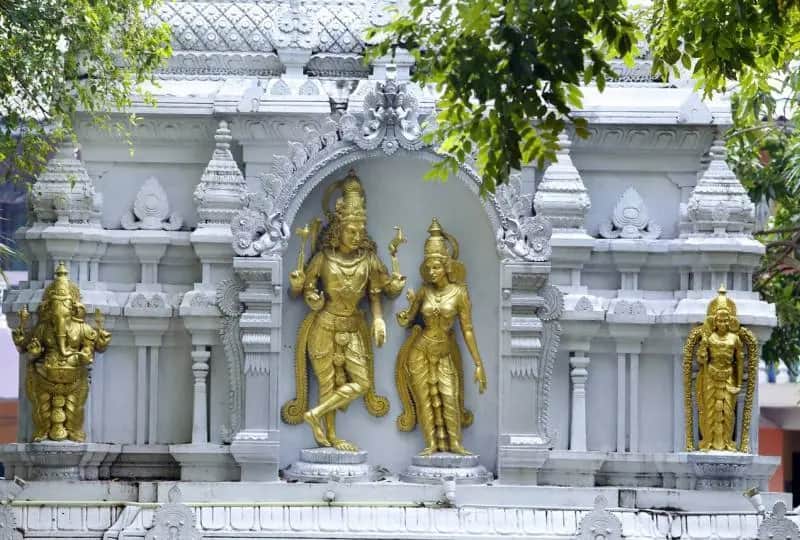
Shri Ponnambalawaneswaram Kovil
Sri Ponnambalawaneswaram is a Shiva temple in Kotahena, unusual in Sri Lanka for being built entirely of granite in the South Indian style.
ExploreImage Credit: ShutterStock

St. Anthony's Church Kochikade
St Anthony's Shrine in Kochchikade, near the harbour, is one of the best loved churches in Sri Lanka. People of all faiths come to pray here, especially on Tuesdays.
ExploreImage Credit: ShutterStock

St. Lucia's Cathedral
St Lucia's Cathedral in Kotahena is the seat of the Catholic Archbishop of Colombo and one of the largest churches in Sri Lanka.
ExploreImage Credit: ShutterStock

Jami Ul-Alfar Mosque (Red Mosque)
The Jami Ul-Alfar Mosque, known as the Red Mosque, stands on Second Cross Street in Pettah. Built in 1909, its red and white brickwork is one of Colombo's best known sights.
ExploreImage Credit: ShutterStock

Traditional Puppet Art Museum
The Traditional Puppet Art Museum in Colombo displays rukada, the string puppets of Sri Lanka, and explains the families who have kept the craft alive.
ExploreImage Credit: ShutterStock

Saskia Fernando Gallery
Saskia Fernando Gallery, founded in 2009, is one of Colombo's leading contemporary art galleries, showing Sri Lankan artists.
ExploreImage Credit: ShutterStock
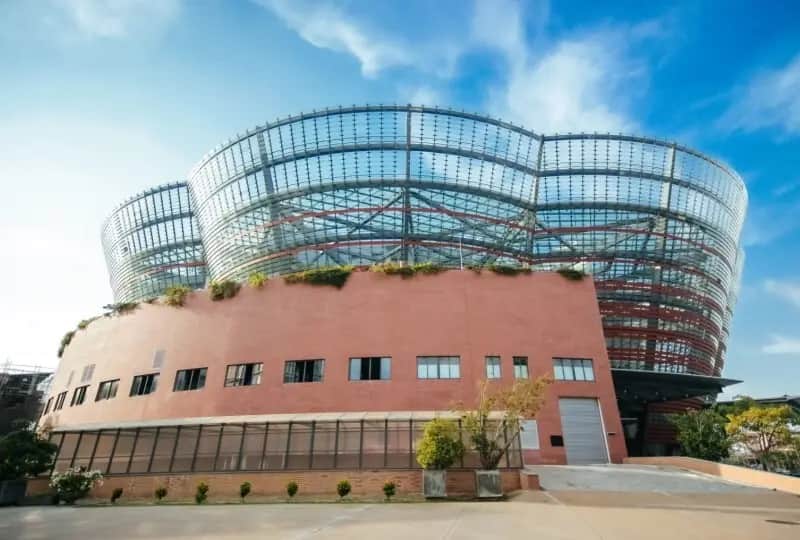
Nelum Pokuna
Nelum Pokuna, meaning lotus pond, is Colombo's main venue for large performances. The theatre opened in 2011 and hosts concerts, dance and drama.
ExploreImage Credit: ShutterStock

Mount Lavinia Beach
Mount Lavinia is the nearest proper beach to central Colombo, about 12 km south of Fort. Come for sunset dinners at the beach restaurants.
ExploreImage Credit: ShutterStock
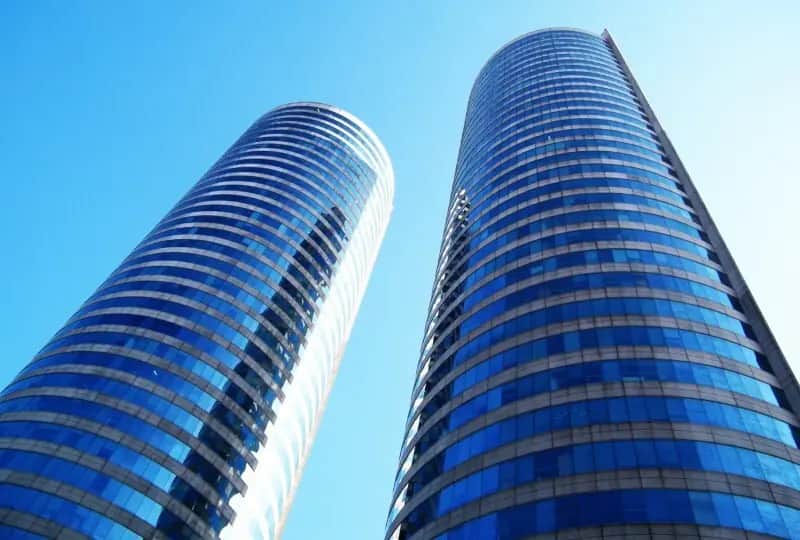
World Trade Centre
The World Trade Centre in Colombo Fort is a pair of 39-storey glass towers, one of the city's landmarks.
ExploreImage Credit: ShutterStock
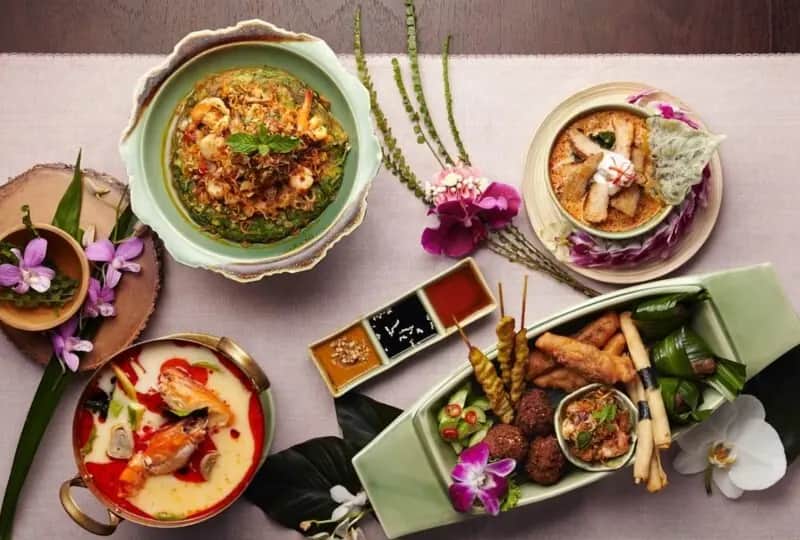
Best Places to eat in Colombo
Colombo has the widest choice of restaurants in Sri Lanka, from rice and curry and seafood to fine dining and international food.
ExploreImage Credit: ShutterStock

Spa & Ayurveda in Colombo
Colombo has a wide range of spas, from hotel spas to Ayurveda centres following traditional Sri Lankan methods.
ExploreImage Credit: ShutterStock

Best Places to have Sri Lankan food in Colombo
Sri Lankan food is full of spices and coconut. Try rice and curry, hoppers, kottu and string hoppers at local restaurants across Colombo.
ExploreImage Credit: ShutterStock

Diving in Colombo
The sea off Colombo hides many shipwrecks and reefs from centuries of shipping. Dive centres run trips in the calm months.
ExploreImage Credit: ShutterStock
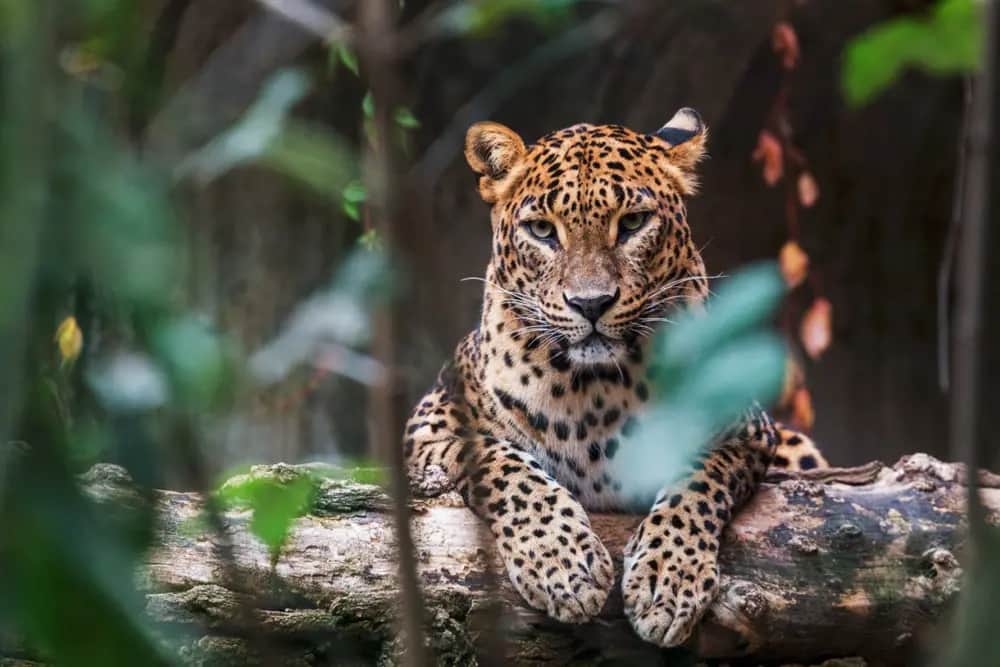
Yala National Park Safari
Yala National Park in the south-east is Sri Lanka's most visited park and one of the best places in Asia to see leopards. Elephants, sloth bears, crocodiles and many birds live among its scrub and lagoons.
ExploreImage Credit: ShutterStock

Pidurangala Rock
Pidurangala is a large rock about 1 km north of Sigiriya. Its summit, reached past an old cave temple, gives the classic view of the Sigiriya Rock Fortress, best at sunrise.
ExploreImage Credit: ShutterStock

Wasgamuwa National Park
Wasgamuwa is one of Sri Lanka's quieter national parks, covering dry forest, scrub and grassland between the Mahaweli and Amban rivers. It is known for elephants and sloth bears and sees few jeeps.
ExploreImage Credit: ShutterStock