

What you can see
Endemic species include junglefowl, pigeons, parakeets, a malkoha, a coucal, owls, a hornbill, barbets, a blue magpie, bulbuls, babblers, thrushes, a white-eye, a myna, flycatchers and flamebacks. In the dry zone, kingfishers, spoonbills, storks and cormorants gather at reservoirs and lakes. Migrants include openbills, ibises, herons, egrets, pelicans, ducks, stilts and grebes, and flamingos flock to the lagoons of Jaffna and Mannar.
Best places
Bundala, at the southern end of the migratory route, is known for flamingos, storks and herons. Kumana in the east has important breeding grounds for water birds. The rainforest of Sinharaja is the place for mixed flocks and many endemics, and Victoria Park in Nuwara Eliya attracts Himalayan migrants. Other good areas include Kalametiya, Bodinagala and Kitulgala, the parks of Yala, Wilpattu, Udawalawe, Wasgamuwa, Minneriya and Horton Plains, and the island's many tanks and lagoons.
When to go
Migrants are present from about October to April. January to March usually brings the most settled weather. For other wildlife, see Sri Lanka wildlife.
Tips for birders
Start at first light, when birds are most active, and hire a local guide in rainforest areas such as Sinharaja, where many endemics move in mixed flocks high in the canopy. Binoculars are essential, and a field guide to the birds of Sri Lanka helps with the many similar species. In the wet zone, leech socks are useful after rain.
Combining birding with a tour
Many of the best birding sites are also good for other wildlife, so a trip can easily combine parks such as Bundala and Yala on the south coast, or Kumana and the lagoons of the east.
Related posts

Kalametiya Bird Sanctuary
Kalametiya, east of Tangalle, is a protected area of coastal lagoons, mangroves and marsh. Boat trips at dawn show herons, storks, kingfishers and many other water birds.
Image Credit: ShutterStock
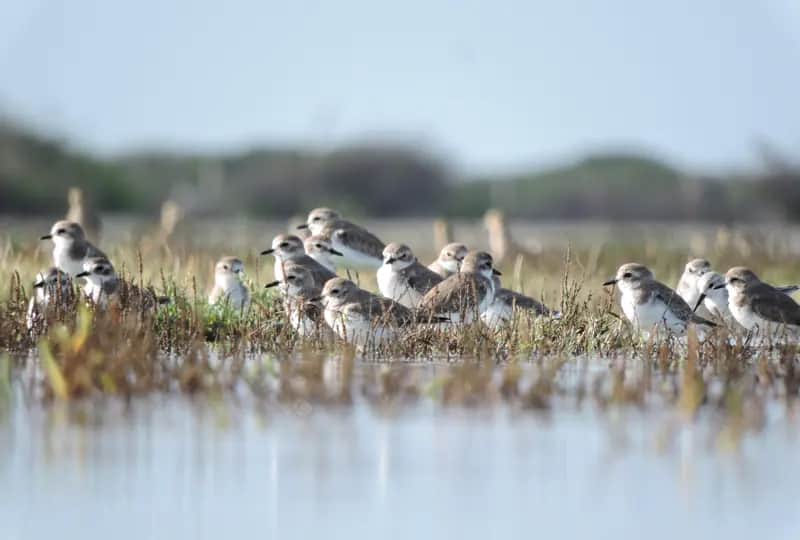
Bird Watching in Mannar
Mannar is one of the best places in Sri Lanka for wintering water birds. From about October to March its lagoons, mudflats and salt pans hold flamingos, waders, gulls and terns.
Image Credit: ShutterStock

Weerawila Tissa Sanctuary
The old tanks and wetlands around Weerawila and Tissamaharama are some of the best bird areas in the south. Visit early in the morning for water birds, raptors and waders close to Bundala and Yala.
Image Credit: ShutterStock