
Highlights
- A major source of water for farming in the region
- Formed by building the Udawalawe Dam on the Walawe river
- The dam generates hydroelectric power
- It feeds valuable power into the national grid
Overview
The Udawalawe reservoir was created by damming the Walawe river, and it lies along the edge of Udawalawe National Park in the south of Sri Lanka. It supplies water to farms across the region and feeds a hydropower station. For visitors, the lake and its shores are part of what makes Udawalawe such a good place to see elephants.
What you see
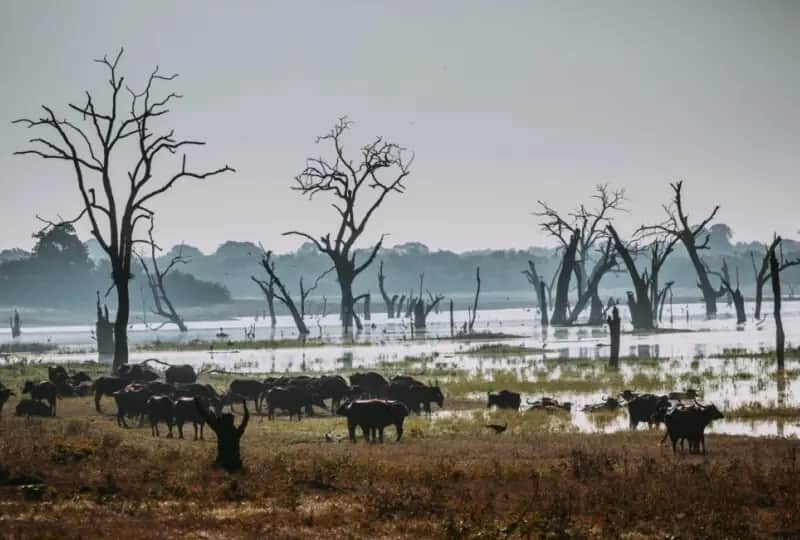
The main road across the dam gives wide views over the water to the hills beyond. Dead trees stand in the shallows, and birds such as cormorants, darters, egrets and fish eagles are common. From the park side, elephant herds often come down to drink and bathe in the reservoir, especially in the dry months. Crocodiles and water buffalo are seen along the edges.
A working reservoir
The reservoir is a key part of the Walawe irrigation scheme, supporting rice and other crops downstream. Its water also generates electricity for the national grid. Water levels vary greatly between seasons.
How long it takes
A short stop at the dam takes 15 to 20 minutes. To see wildlife by the water, join a game drive.
When to go
Early morning and late afternoon are best for wildlife and light. In the dry season, more animals gather near the water.
Getting there
The dam is on the road between Embilipitiya and the Udawalawe area, close to the park entrance and about 4 to 5 hours from Colombo.
Practical tips
- Do not stop to feed elephants along the road; it is dangerous and harmful to them.
- Stay in your vehicle where elephants are near the road.
- Do not photograph dam installations where signs prohibit it.
Plan an Udawalawe safari or visit the Elephant Transit Home. See things to do in Udawalawe and Udawalawe hotels.