

Highlights
- Believed to be where the Buddha came on his third visit to Sri Lanka
- Tradition links this visit to the footprint on Adam's Peak
- The stupa was built to mark the Buddha's visit
- Prince Uttiya, brother of King Devanampiyatissa, is said to have rebuilt it
- The Duruthu Perahera takes place here each January
- Its procession honours the relics and the temple's guardian gods
Overview
Kelaniya Raja Maha Viharaya is a Buddhist temple on the banks of the Kelani river, about 10 km north-east of central Colombo. It is one of the most sacred temples in Sri Lanka. According to tradition, the Buddha visited Kelaniya on his third and last visit to the island, at the invitation of a Naga king.
History
The temple has been rebuilt many times. It was destroyed by the Portuguese in the 16th century and restored in the Kandyan period and again in the 20th century. Its present image house dates largely from the 20th century, when it was rebuilt with support from Helena Wijewardene, a patron of the temple.
What you see
- The stupa: a large white stupa said to enshrine a gem-studded throne used by the Buddha.
- The image house: its walls are painted with murals by the artist Solias Mendis, showing the life of the Buddha and events in Sri Lankan history, such as the arrival of the Sacred Tooth Relic and Sanghamitta.
- Bodhi tree, shrines and carvings, including figures of gods and guardians.
Duruthu Perahera
A large procession, the Duruthu Perahera, is held each January around the Duruthu poya, marking the Buddha's first visit to Sri Lanka.
How long it takes
About an hour.
When to go
Morning or evening, when it is cooler and worship is active. Poya days are busy.
Getting there
Kelaniya is about 30 minutes by road from Colombo Fort, depending on traffic.
Practical tips
- Remove shoes and hats; wear white or modest clothes.
- Do not use flash on murals.
Also visit the Gangaramaya Temple. Join our Colombo city tour, or see things to do in Colombo and Colombo hotels.
Related posts
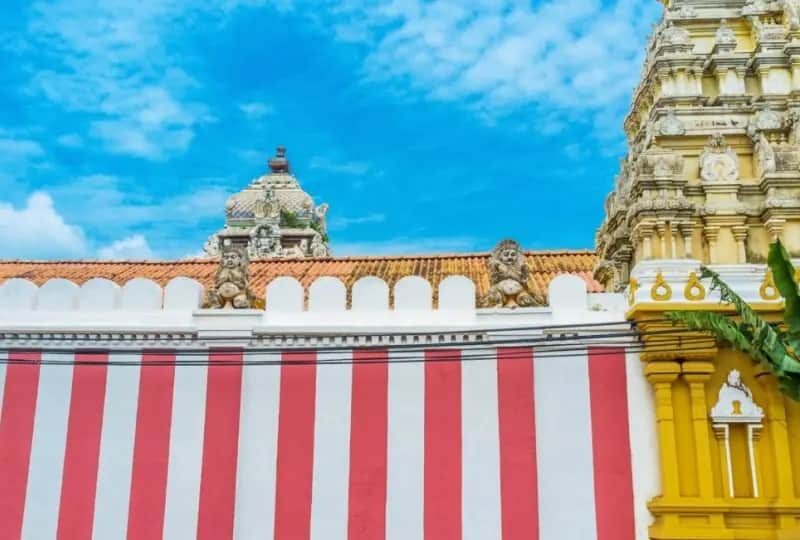
Day Trip To Munneswaram Temple
Visit Munneswaram, near Chilaw, one of the most important Hindu temples in Sri Lanka, dedicated to Shiva and linked to the Ramayana.
Image Credit: ShutterStock

Elephant Pass
Elephant Pass is the causeway that carries the A9 road and the railway across the lagoon between the Jaffna peninsula and the mainland. It was a key battleground in the civil war and has a war memorial.
Image Credit: ShutterStock
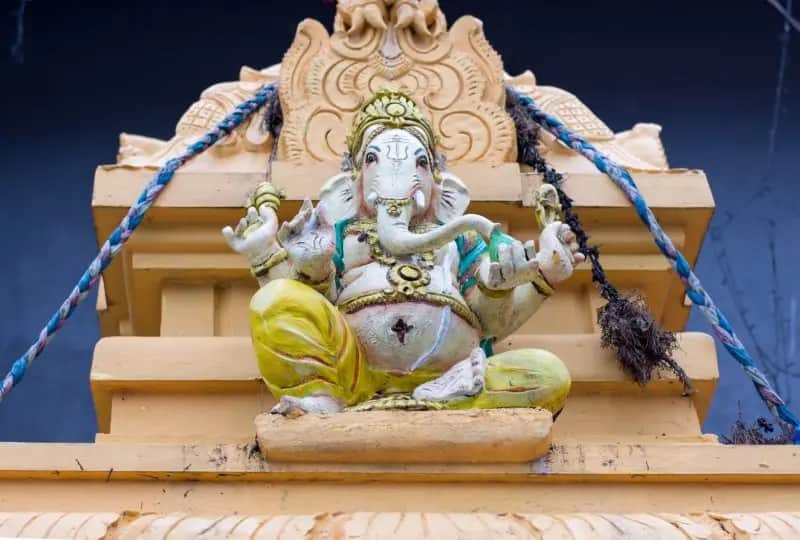
Manavari Kovil
Manavari is a Hindu temple north of Chilaw, an important stop on the Ramayana trail. Tradition holds that Rama installed a lingam here.
Image Credit: ShutterStock

Gal Viharaya and the Alahana Pirivena group
The northern part of Polonnaruwa holds the Gal Vihara, four Buddha images carved from a single granite face, and the monastery buildings of the Alahana Pirivena.
Image Credit: ShutterStock

Anjaneyar Temple-Dehiwela
The Sri Anjaneyar temple in Dehiwala is dedicated to Hanuman, known here as Anjaneyar. It is a stop on the Ramayana trail close to Colombo.
Image Credit: ShutterStock

Akurugoda Stone Inscriptions
Akurugoda, near Tissamaharama, is one of the places in the old kingdom of Ruhuna where early writing cut in stone can be seen. The inscriptions are an important source for the island's early history.
Image Credit: ShutterStock
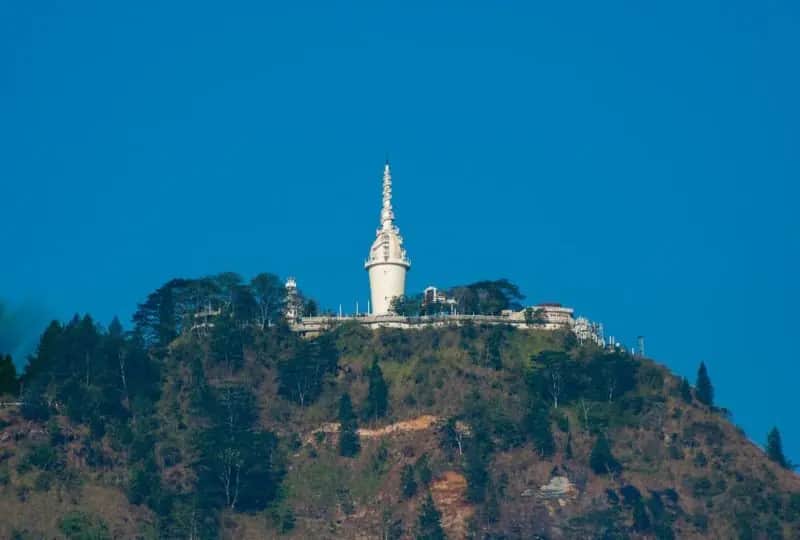
Ambuluwawa Temple & Campaign Site
Ambuluwawa is a mountain beside Gampola, about 20 km south of Kandy. Its summit holds a biodiversity complex with a tall spiral tower and wide views over the hills.
Image Credit: ShutterStock

Munneswaram Kovil
Munneswaram, just east of Chilaw, is one of the most important Hindu temples in Sri Lanka, dedicated to Shiva. It draws large crowds at its festival in August or September.
Image Credit: ShutterStock
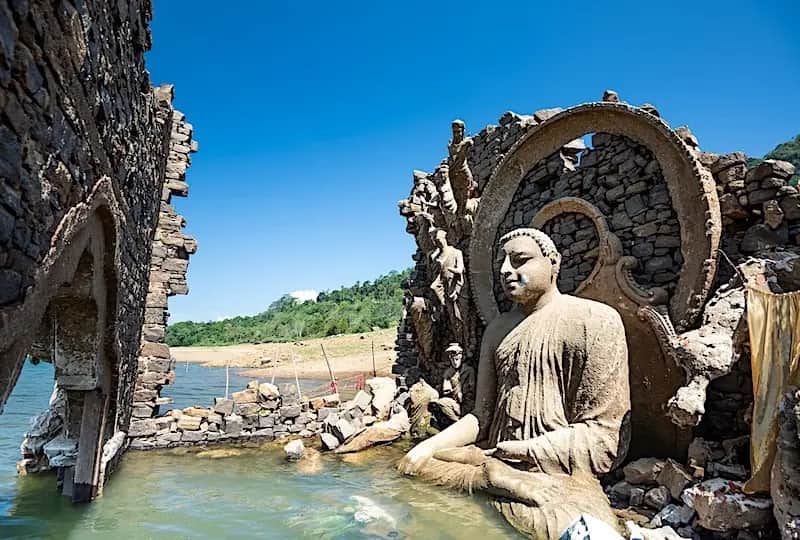
Kadadora
Kadadora, in the Kotmale area, is known as the hiding temple. The old temple was submerged by the Kotmale reservoir and appears again when the water level falls.
Image Credit: ShutterStock
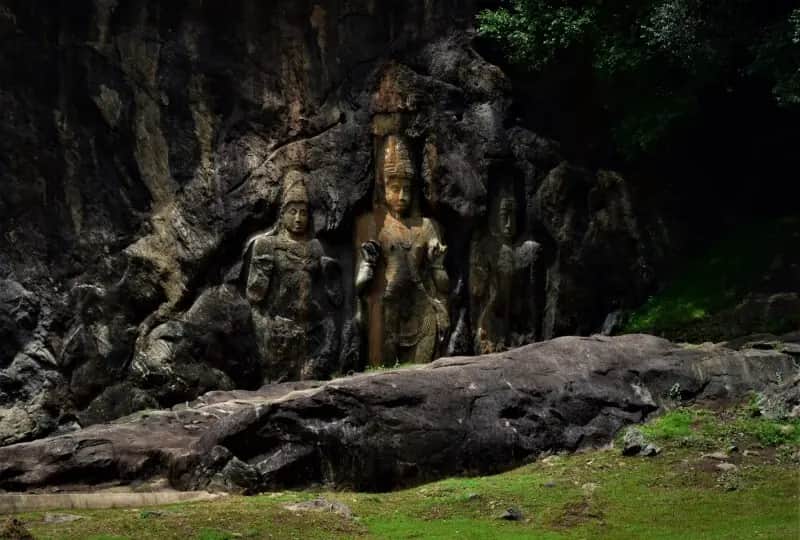
Buduruwayaya Archaeological Site
Buduruwayaya is an ancient Buddhist site near Wasgamuwa, set in quiet dry-zone forest. Its best-known feature is a large reclining Buddha among old ruins.
Image Credit: ShutterStock

Weherahena temple
Weherahena, near Matara, is a Buddhist temple known for its long underground tunnel shrine lined with paintings and a very large Buddha statue.
Image Credit: ShutterStock

Batticaloa Lighthouse
Batticaloa Lighthouse stands where the lagoon opens to the sea. It is a good spot to watch fishing boats and the sunset over the water.
Image Credit: ShutterStock
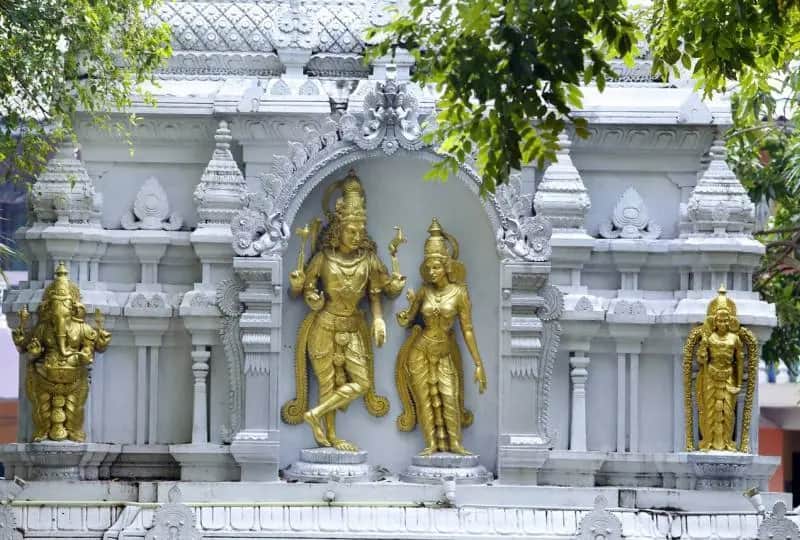
Shri Ponnambalawaneswaram Kovil
Sri Ponnambalawaneswaram is a Shiva temple in Kotahena, unusual in Sri Lanka for being built entirely of granite in the South Indian style.
Image Credit: ShutterStock

Ritigala Mountains and Monastery
Ritigala is an isolated mountain range between Anuradhapura and Habarana. Its forested slopes hide the ruins of an ancient forest monastery with stone paths and meditation platforms.
Image Credit: ShutterStock

Taprobane Island
Taprobane is a tiny rocky island in Weligama bay, once owned by the Count de Mauny and later the writer Paul Bowles. It is now a private villa, seen from the beach.
Image Credit: ShutterStock
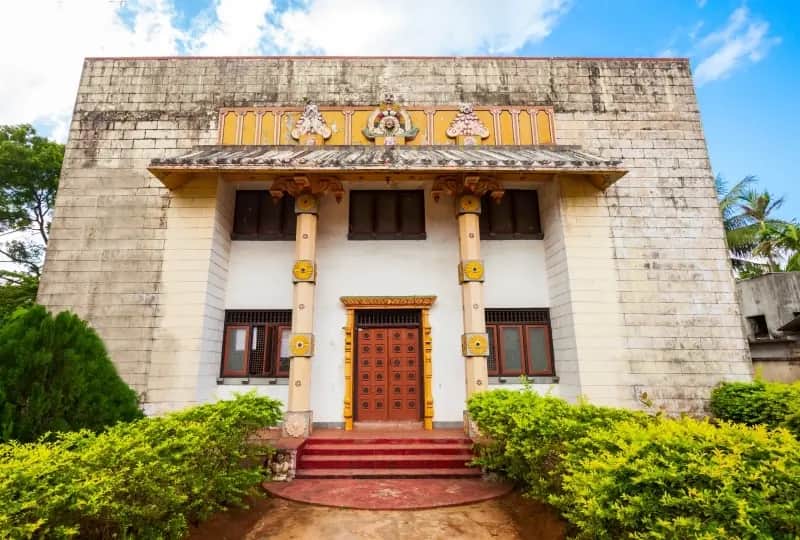
Jaffna Archaeological Museum
The Jaffna Archaeological Museum in Nallur displays finds from the north, including Buddhist and Hindu statues, coins and pottery. It is a short visit that adds depth to a day in the city.
Image Credit: ShutterStock

Telulla Archaeological Site
Telulla is a small, little-visited archaeological site near Bundala. It has the remains of eleven small stupas, an image house and other buildings that were part of an old monastery.
Image Credit: ShutterStock

Kudumbigala Monastery
Kudumbigala is an ancient forest monastery among rocky outcrops between Arugam Bay and Kumana. Climb past cave shelters and small stupas to a rock summit with views over the jungle.
Image Credit: ShutterStock
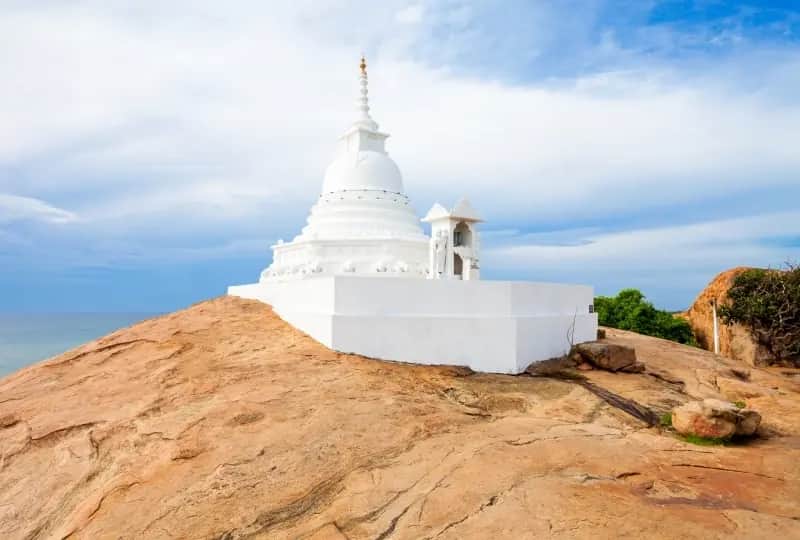
Kirinda Vihara Maha Devi Temple
Kirinda Raja Maha Viharaya is a Buddhist temple on a large rock by the sea at Kirinda, near Yala. It is linked to Viharamahadevi, the mother of King Dutugemunu, who in legend came ashore here.
Image Credit: ShutterStock
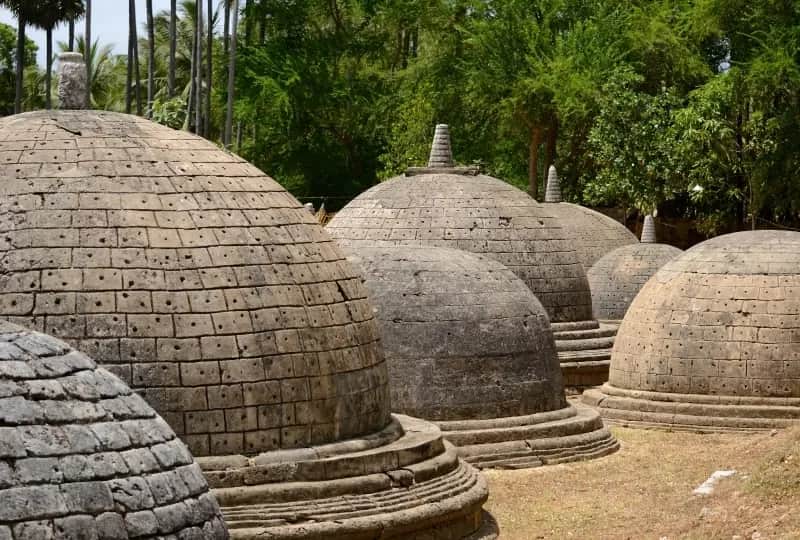
Kandarodai Viharaya
Kandarodai, near Chunnakam, is an archaeological site known for a cluster of small, dome-shaped stupas among palmyra palms. It is one of the most unusual ancient sites in the north.
Image Credit: ShutterStock