
Highlights
- Colombo's historic centre and main business district
- The Old Dutch Hospital now holds shops, bars and restaurants
- Walk to landmarks such as Cargills and the old clock tower
Overview
Colombo Fort is the city's historic core and its central business district, home to the harbour, the Central Bank, the stock exchange, the World Trade Center and many government offices. The fort walls themselves are gone, but many colonial buildings remain among the modern towers, and a walk here takes you through four centuries of history.
History
The Portuguese first set up a trading post here in the early 16th century, and later expanded it into a fortified base. The Dutch took Colombo in 1656, rebuilt the fort and strengthened it, using its natural position between the sea and the Beira Lake. After the British took control in 1796, the walls were gradually demolished during the 19th century as the city grew. With the expansion of the harbour, the Fort became the commercial centre of Ceylon. After independence, it remained the centre of government until Parliament and some ministries moved to Sri Jayawardenepura Kotte from the 1980s.
Sights to see
Old clock tower and lighthouse
At the junction of Chatham Street and Janadhipathi Mawatha, near the President's House and the Central Bank, this tower served as both a clock tower and a lighthouse. It was designed by Lady Ward, wife of Governor Sir Henry Ward, and completed in the 1850s. When built, it was the tallest structure in Colombo, but as taller buildings rose around it, its light became hard to see, and in 1952 the new Galle Buck lighthouse took over. Its first clock mechanism was made by Dent, the London clockmakers linked to Big Ben, and the clock was replaced in 2013. After the 1996 Central Bank bombing, the area became a high security zone, and the public was only allowed close again in recent years.
President's House
The official residence and workplace of the President of Sri Lanka, in the heart of the Fort. It was built in the late 18th century by Johan van Angelbeek, the last Dutch governor, on the site of a Portuguese church of St Francis. It was later sold to the British government and became the residence of British governors, known as King's House or Queen's House. After independence, it was the residence of the governor-general, and it became the President's House when Sri Lanka became a republic. The adjoining Gordon Gardens, laid out by Governor Sir Arthur Gordon to mark Queen Victoria's golden jubilee, became part of the grounds and are closed to the public. The house is guarded at all times, but you can see it from the street.
Old Parliament building
Facing the sea at Galle Face, this neo-Baroque building was built for the Legislative Council of Ceylon and opened in 1930. It later housed Parliament until the move to Kotte, and it is now the Presidential Secretariat. The British coat of arms on top was replaced after independence with the arms of Ceylon, and in 1972 with those of the republic. Statues of statesmen stand in the front garden, including D.S. Senanayake, the first prime minister, Dudley Senanayake, Sir John Kotelawala and Sir Ponnambalam Ramanathan.
Sambodhi Chaitya
A stupa raised high above the road near the harbour on two crossed concrete arches, built as a landmark for ships entering the port. Unlike most stupas in Sri Lanka, which are dome-shaped, it is shaped like a bell. Over 250 steps lead up to it, and the inside is decorated with paintings of the Buddha's life. From the top, there are wide views of the sea and the harbour.
Galle Buck lighthouse
Built in 1952 on Chaithya Road, opposite the Navy headquarters, this lighthouse is about 29 metres tall and stands on a concrete base with four lion statues around it. Few visitors come here, but it is a good spot for sea views and sunsets.
Central Point and the Economic History Museum
Behind the Dutch Hospital on Chatham Street, this building from 1914, in a Greco-Roman style, was once among the tallest in Colombo. It was damaged by the 1996 Central Bank bombing, abandoned and used by soldiers as a barracks. The Central Bank acquired and restored it, and opened the Economic History Museum here. Exhibits include currency from as far back as the 3rd century BC, a display explaining the problems of barter, coins of Commonwealth countries, a rare Dutch copper coin, old banknote printing machines and paintings. Our earlier guide noted that entry was free and that coins were on sale; check the current hours.
Old Dutch Hospital
Built by the Dutch in the 17th century to treat soldiers of the Dutch East India Company, and thought to be one of the oldest buildings in Colombo Fort. It has large courtyards, thick walls, square pillars and red clay roof tiles. The botanist Paul Hermann, often called the father of Sri Lankan botany, worked here. Under the British, the building was used for other purposes, including as the Fort police station. It was restored in 2011 and is now a precinct of upmarket restaurants, bars and shops, popular in the evening.
Lloyd's Buildings
On Sir Baron Jayathilaka Mawatha, this building was completed in 1908 as the Freudenberg Building, designed by architect E. Skinner, with Renaissance and Baroque features. It housed many companies over the years, including Freudenberg and Co. and the consulate of the United States. The Central Bank later bought it and has refurbished it to conserve its architecture.
St Peter's Church
On Church Street, this is one of the oldest functioning churches in Sri Lanka. A Portuguese Dominican monastery once stood on the site; the Dutch replaced it with the governor's residence, used for council meetings and to receive envoys of the Kandyan kingdom. In 1804, under Governor Frederick North, it was converted into an Anglican church, and it was rebuilt in 1832. Known as the seafarers' church because naval officers and sailors worshipped here, it holds many plaques and memorials, including those to William Tolfrey, who translated the Bible into Pali and Sinhala, Sir Charles Peter Layard, the first Mayor of Colombo, and soldiers of the Worcestershire Regiment who died while serving in Ceylon.
Cargills
Cargills began in 1844 as a small shop in Colombo Fort, known as the House of Cargills, and its red brick building on York Street housed what is often described as the first department store in Sri Lanka. The business became a limited company in 1896 and a public company in 1946, and was acquired by Ceylon Theatres in 1981. Under that ownership, it opened the country's first supermarket chain, and today it also makes food under its own labels. The York Street building is one of the Fort's most recognisable landmarks.
A suggested walking route
Start at the Old Parliament building facing Galle Face, then walk north along Janadhipathi Mawatha to the President's House and the old clock tower. Turn into Chatham Street for Central Point and the Economic History Museum, then continue to the Old Dutch Hospital for a drink or lunch in its courtyard. From there, walk past Lloyd's Buildings and along York Street to Cargills, and on to St Peter's Church on Church Street near the harbour. Finish at the Sambodhi Chaitya and the Galle Buck lighthouse for the sea views, or cross into Pettah for its markets. Roads around the President's House and the harbour may be closed for security, so be ready to take a different route.
How long it takes
Two to three hours on foot.
When to go
Early morning or late afternoon, to avoid the heat. Weekends are quieter, with less traffic.
Getting there
Colombo Fort railway station is at the edge of the district, and the area is easy to reach by tuk-tuk from anywhere in Colombo.
Practical tips
- Some government buildings do not allow photography; follow signs and guards.
- Combine the walk with the streets of Pettah next door.
Join our Colombo city tour, or see Galle Face Green and Colombo hotels.
Related posts
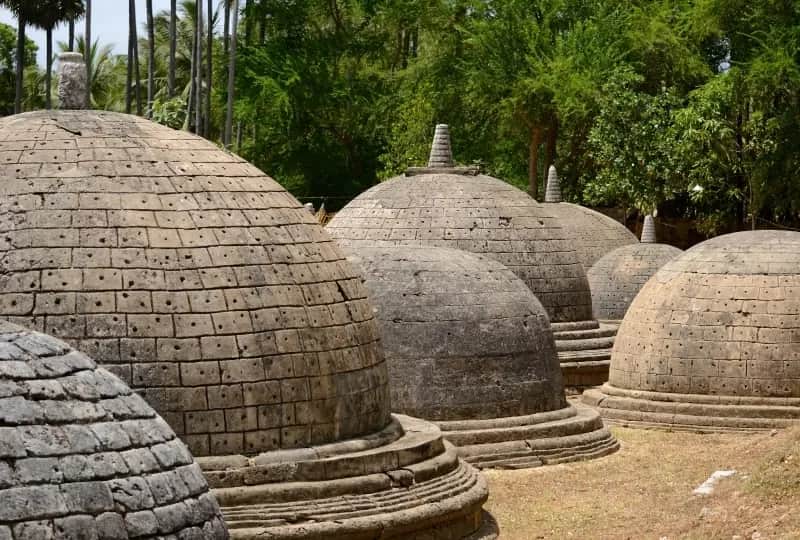
Kandarodai Viharaya
Kandarodai, near Chunnakam, is an archaeological site known for a cluster of small, dome-shaped stupas among palmyra palms. It is one of the most unusual ancient sites in the north.
Image Credit: ShutterStock

Kudumbigala Monastery
Kudumbigala is an ancient forest monastery among rocky outcrops between Arugam Bay and Kumana. Climb past cave shelters and small stupas to a rock summit with views over the jungle.
Image Credit: ShutterStock

Rumassala Japanese Peace Pagoda
The Japanese Peace Pagoda is a white stupa on Rumassala hill between Unawatuna and Galle, built by Japanese monks. It looks out over the sea and Galle harbour.
Image Credit: ShutterStock
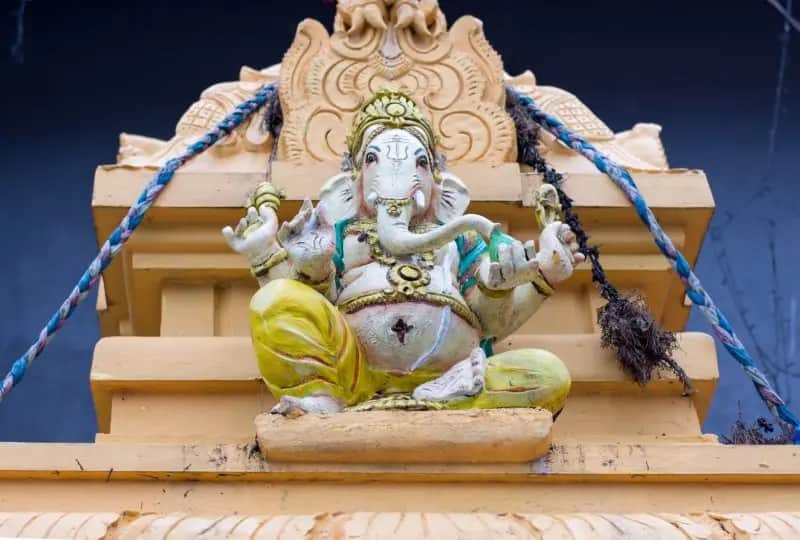
Manavari Kovil
Manavari is a Hindu temple north of Chilaw, an important stop on the Ramayana trail. Tradition holds that Rama installed a lingam here.
Image Credit: ShutterStock
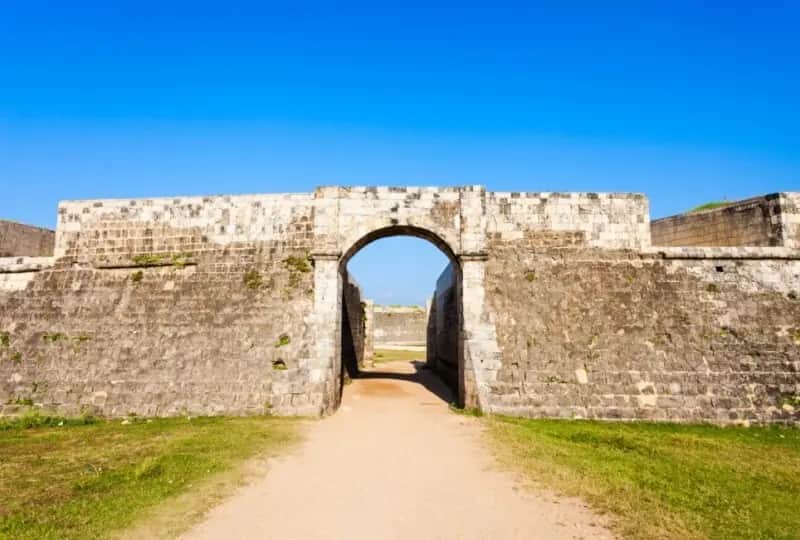
Jaffna Fort
Jaffna Fort stands beside the lagoon at the edge of town. Built by the Portuguese and rebuilt by the Dutch after 1658 as a large star-shaped fort, its ramparts give wide views over the water.
Image Credit: ShutterStock

Isinbassagala Ruwangiri Rajamaha Viharaya
Isinbassagala Ruwangiri Rajamaha Viharaya is a Buddhist temple on a rock outcrop beside the A9 road near Medawachchiya. Climb to the top for wide views over the dry zone.
Image Credit: ShutterStock
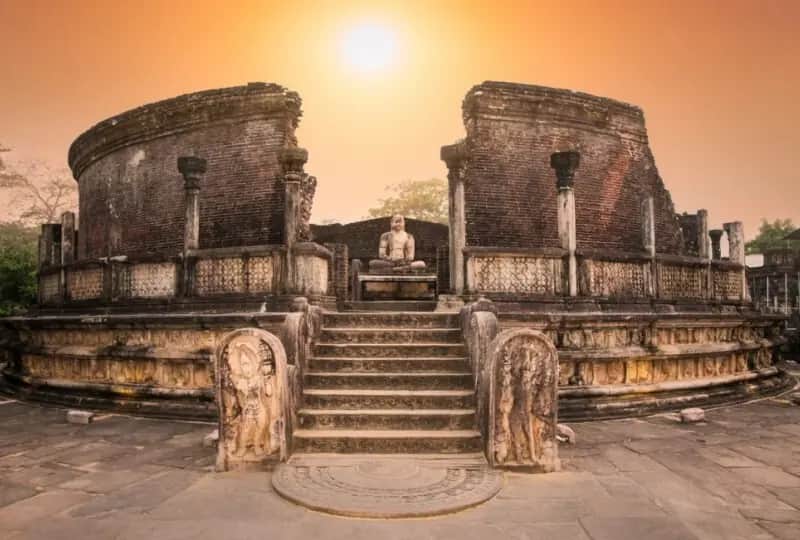
Polonnaruwa Vatadage and the Quadrangle
The Quadrangle is the sacred heart of ancient Polonnaruwa. Its circular Vatadage, with guardstones and moonstones, is one of the finest buildings of the period.
Image Credit: ShutterStock

Tangalle Dutch Fort
Tangalle's Dutch fort is a small, plain structure near the harbour. The Dutch valued Tangalle as a trading post, and the fort is now used as a prison, seen from outside.
Image Credit: ShutterStock

Telulla Archaeological Site
Telulla is a small, little-visited archaeological site near Bundala. It has the remains of eleven small stupas, an image house and other buildings that were part of an old monastery.
Image Credit: ShutterStock

Taprobane Island
Taprobane is a tiny rocky island in Weligama bay, once owned by the Count de Mauny and later the writer Paul Bowles. It is now a private villa, seen from the beach.
Image Credit: ShutterStock
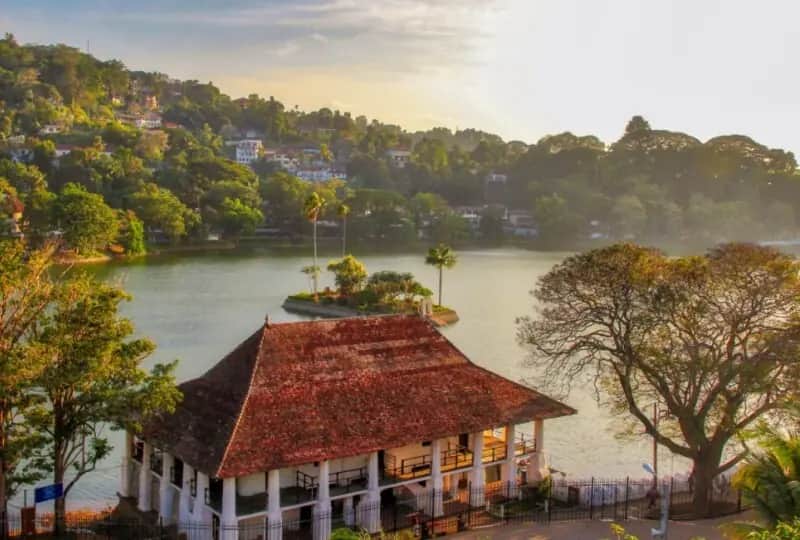
Kandy Lake
Kandy Lake lies beside the Temple of the Tooth and was created in 1807 by Sri Vikrama Rajasinha, the last king of Kandy. A shaded path runs around it.
Image Credit: ShutterStock
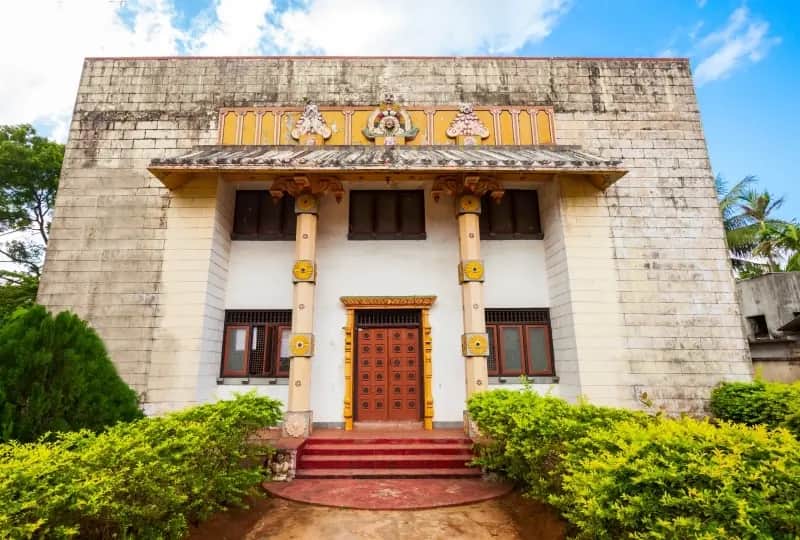
Jaffna Archaeological Museum
The Jaffna Archaeological Museum in Nallur displays finds from the north, including Buddhist and Hindu statues, coins and pottery. It is a short visit that adds depth to a day in the city.
Image Credit: ShutterStock

Situlpawwa Monastery
Situlpawwa is an ancient Buddhist monastery on a large rock in the Yala area, believed to date from the 2nd century BC. Climb to the stupa on top for views over the jungle.
Image Credit: ShutterStock

Parakrama Samudraya
Parakrama Samudra, the Sea of Parakrama, is a vast reservoir beside Polonnaruwa built by King Parakramabahu I in the 12th century. It still irrigates the fields around the city.
Image Credit: ShutterStock

Sri Kailawasanathan Swami Devasthanam Kovil
Sri Kailawasanathan Swami Devasthanam, also known as the Captain's Garden temple, is widely described as the oldest Hindu temple in Colombo.
Image Credit: ShutterStock

Kataragama Kiri Vehera
Kiri Vehera is an ancient white stupa at Kataragama, one of the 16 most sacred Buddhist sites in Sri Lanka. Kataragama is also sacred to Hindus and draws pilgrims of many faiths.
Image Credit: ShutterStock
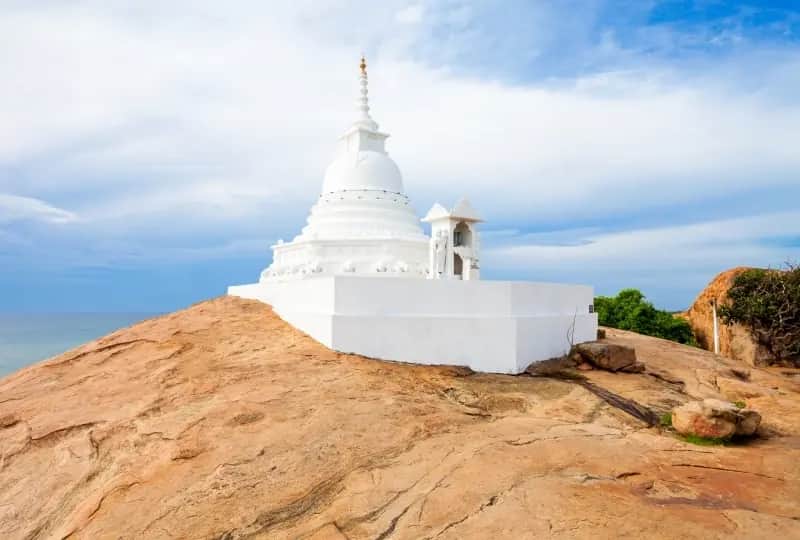
Kirinda Vihara Maha Devi Temple
Kirinda Raja Maha Viharaya is a Buddhist temple on a large rock by the sea at Kirinda, near Yala. It is linked to Viharamahadevi, the mother of King Dutugemunu, who in legend came ashore here.
Image Credit: ShutterStock

Anjaneyar Temple-Dehiwela
The Sri Anjaneyar temple in Dehiwala is dedicated to Hanuman, known here as Anjaneyar. It is a stop on the Ramayana trail close to Colombo.
Image Credit: ShutterStock
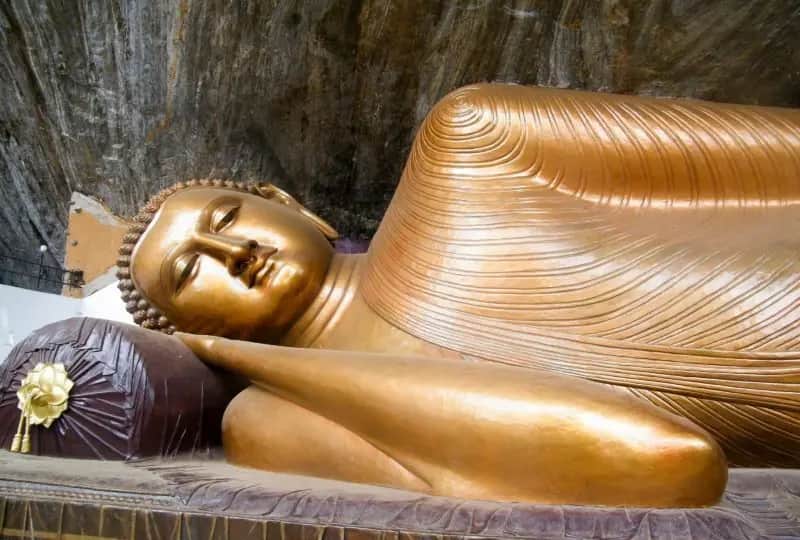
Fa Hien Cave
Fa Hien Cave, or Pahiyangala, is a huge rock shelter near Bulathsinhala, inland from Kalutara. It has evidence of prehistoric human occupation, and a temple now stands in the cave.
Image Credit: ShutterStock
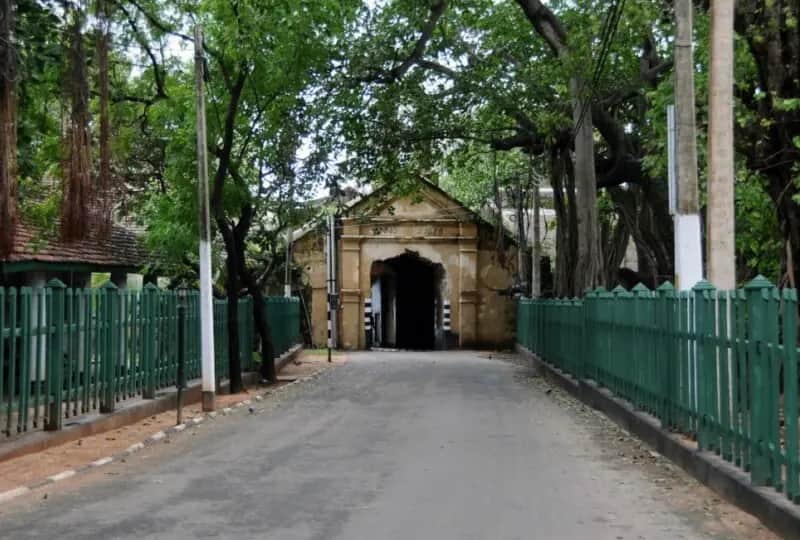
Fort Frederick
Fort Frederick guards the headland between Trincomalee town and its harbour. Still used by the army, it is open to visitors walking through to the Koneswaram temple, with spotted deer grazing inside.
Image Credit: ShutterStock