

Ancient kingdoms
Buddhism arrived in the 3rd century BC and shaped writing, art and building. Anuradhapura, the first great capital, survives as a large area of dagobas and monasteries. The rock fortress at Sigiriya still impresses with its engineering, and the painted caves of Dambulla are around two thousand years old. In Kandy, the Temple of the Tooth Relic remains the centre of Buddhist life.
Traders and colonial rule
Arab traders brought Islam, and the Portuguese, Dutch and British brought Christianity, new languages and new food, which is why mosques, churches, kovils and temples stand side by side across the island. The Portuguese built forts along the coasts that the Dutch later strengthened. Galle Fort is a UNESCO World Heritage Site.
The British era
The British started the tea industry that made Ceylon tea known worldwide, and built the railway that links the hill country with the rest of the island. They also introduced cricket, now the country's favourite sport.
Seeing it
City tours, walking tours and village visits are good ways in. The art and architecture page covers temples, murals and modern buildings in more detail.
Visiting temples
At Buddhist sites, cover shoulders and knees, remove shoes and hats before entering, and never pose with your back to a Buddha statue. Hindu kovils have similar rules, and some ask men to remove shirts in the inner shrine. Early morning visits are cooler and quieter.
Planning a heritage route
The classic route runs through the Cultural Triangle, linking Anuradhapura, Polonnaruwa, Sigiriya and Dambulla, then south to Kandy. Galle is easy to add on the south coast. A ticket for each major site is bought separately at the entrance.
Related posts
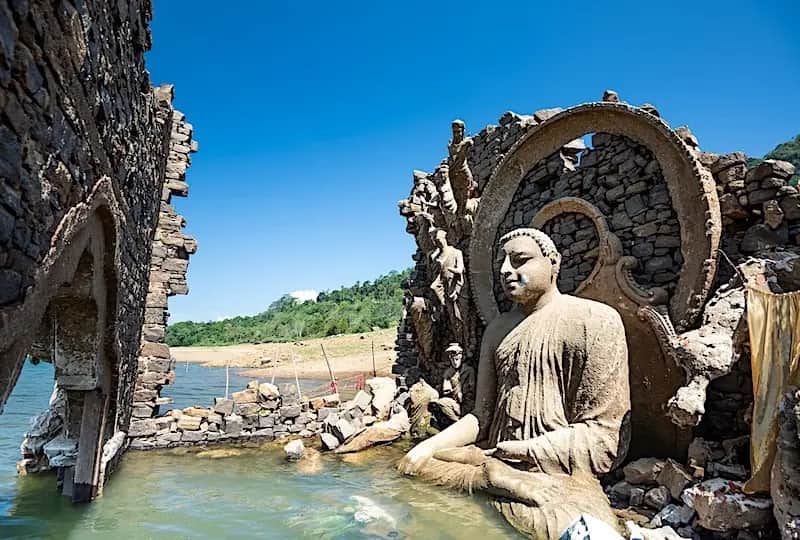
Kadadora
Kadadora, in the Kotmale area, is known as the hiding temple. The old temple was submerged by the Kotmale reservoir and appears again when the water level falls.
Image Credit: ShutterStock

Talaimannar
Talaimannar, at the north-western tip of Mannar Island, is the closest point in Sri Lanka to India and was once the ferry gateway between the two. Today it is a quiet, windswept place with a lighthouse and old pier.
Image Credit: ShutterStock

Isinbassagala Ruwangiri Rajamaha Viharaya
Isinbassagala Ruwangiri Rajamaha Viharaya is a Buddhist temple on a rock outcrop beside the A9 road near Medawachchiya. Climb to the top for wide views over the dry zone.
Image Credit: ShutterStock
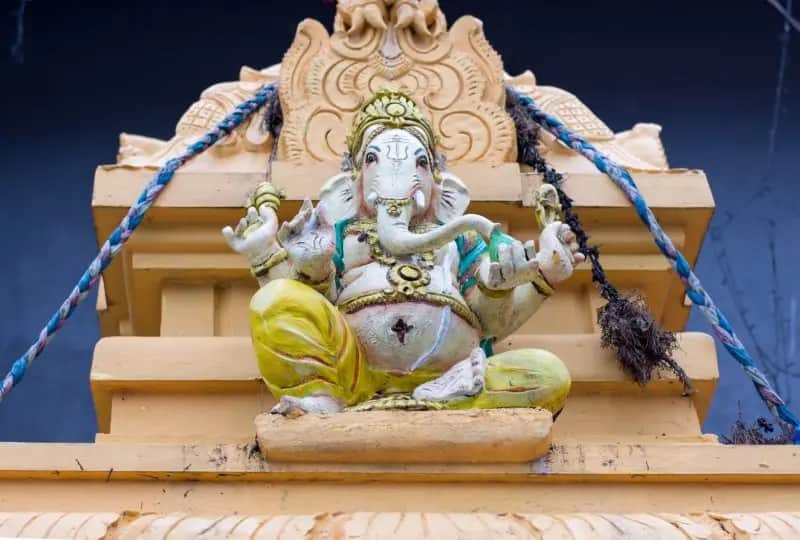
Manavari Kovil
Manavari is a Hindu temple north of Chilaw, an important stop on the Ramayana trail. Tradition holds that Rama installed a lingam here.
Image Credit: ShutterStock

Munneswaram Kovil
Munneswaram, just east of Chilaw, is one of the most important Hindu temples in Sri Lanka, dedicated to Shiva. It draws large crowds at its festival in August or September.
Image Credit: ShutterStock

Yahangala
Yahangala is a rock in the northern Knuckles area where, in local Ramayana tradition, King Ravana's body was laid after his death. It can be seen from around Laggala and Dunuwila.
Image Credit: ShutterStock

National Museum
The Colombo National Museum, opened in 1877, is Sri Lanka's largest museum. It displays royal regalia, ancient sculpture, masks and colonial-era objects in a white Italianate building.
Image Credit: ShutterStock

Colombo Fort and its Colonial Heritage
Colombo Fort is the city's historic core and business district. Walk among colonial buildings such as the Cargills store, the Old Dutch Hospital and the old lighthouse clock tower.
Image Credit: ShutterStock

The Beira Lake
Beira Lake lies in the centre of Colombo, bordered by Fort, Slave Island and Pettah. The Seema Malaka shrine stands on the water, and paths and swan boats line its shore.
Image Credit: ShutterStock

Gangarama Temple and Seema Malaka Meditation Centre
Gangaramaya is one of Colombo's best known Buddhist temples, with a museum full of gifts from devotees. Across the road, Geoffrey Bawa's Seema Malaka shrine sits on Beira Lake.
Image Credit: ShutterStock
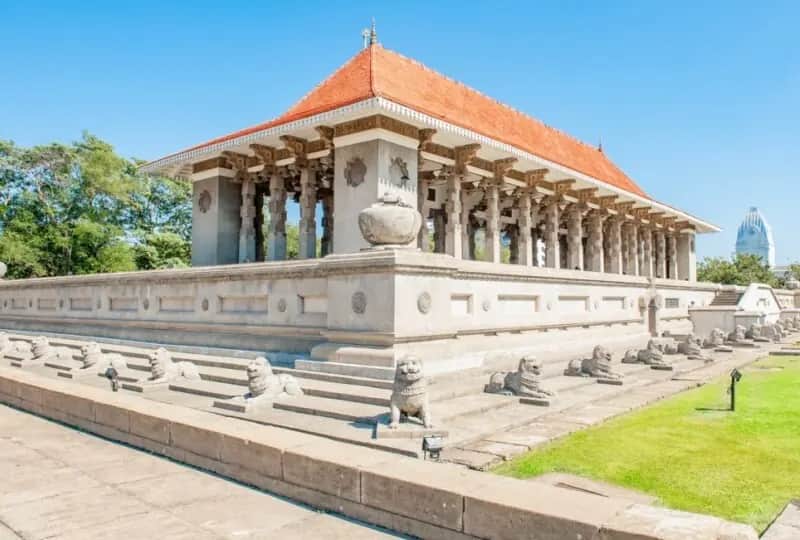
Independence Square and Park
Independence Square, in Cinnamon Gardens, is the national monument to Sri Lanka's independence in 1948. The surrounding park and the Arcade make it a pleasant place to walk.
Image Credit: ShutterStock

Viharamahadevi Park & Street Art
Viharamahadevi Park is the largest and one of the oldest public parks in Colombo, opposite the Town Hall. Artists often display their work on the railings nearby.
Image Credit: ShutterStock

Visit the Geoffrey Bawa House
Number 11, the Colombo home of architect Geoffrey Bawa, can be visited on guided tours. It shows how he joined small houses into one with courtyards, light and art.
Image Credit: ShutterStock

Kelaniya Raja Maha Viharaya
Kelaniya Raja Maha Viharaya, about 10 km north-east of central Colombo, is one of the most sacred temples in Sri Lanka. Its murals and the Duruthu Perahera in January draw many visitors.
Image Credit: ShutterStock

Sri Kailawasanathan Swami Devasthanam Kovil
Sri Kailawasanathan Swami Devasthanam, also known as the Captain's Garden temple, is widely described as the oldest Hindu temple in Colombo.
Image Credit: ShutterStock

Anjaneyar Temple-Dehiwela
The Sri Anjaneyar temple in Dehiwala is dedicated to Hanuman, known here as Anjaneyar. It is a stop on the Ramayana trail close to Colombo.
Image Credit: ShutterStock
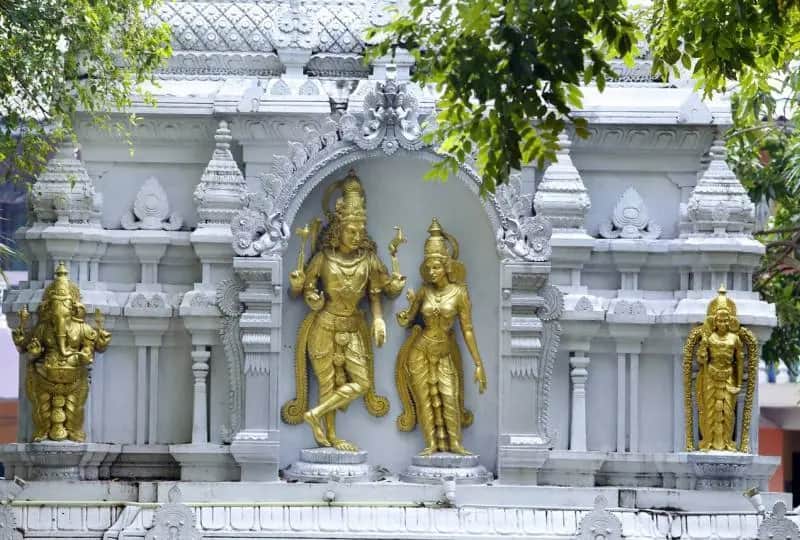
Shri Ponnambalawaneswaram Kovil
Sri Ponnambalawaneswaram is a Shiva temple in Kotahena, unusual in Sri Lanka for being built entirely of granite in the South Indian style.
Image Credit: ShutterStock

St. Anthony's Church Kochikade
St Anthony's Shrine in Kochchikade, near the harbour, is one of the best loved churches in Sri Lanka. People of all faiths come to pray here, especially on Tuesdays.
Image Credit: ShutterStock

St. Lucia's Cathedral
St Lucia's Cathedral in Kotahena is the seat of the Catholic Archbishop of Colombo and one of the largest churches in Sri Lanka.
Image Credit: ShutterStock

Jami Ul-Alfar Mosque (Red Mosque)
The Jami Ul-Alfar Mosque, known as the Red Mosque, stands on Second Cross Street in Pettah. Built in 1909, its red and white brickwork is one of Colombo's best known sights.
Image Credit: ShutterStock
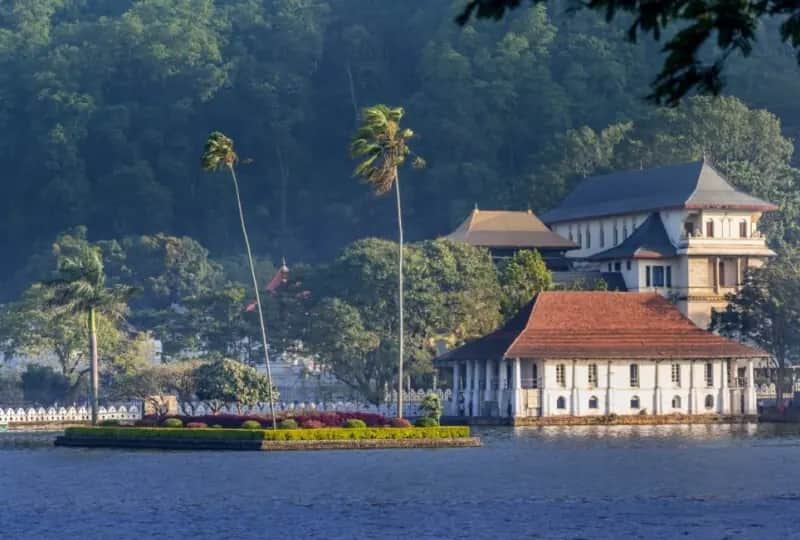
Royal Palace of Kandy
The Royal Palace of Kandy was the seat of the last independent kingdom in Sri Lanka, which fell to the British in 1815. Its buildings stand beside the Temple of the Tooth.
Image Credit: ShutterStock
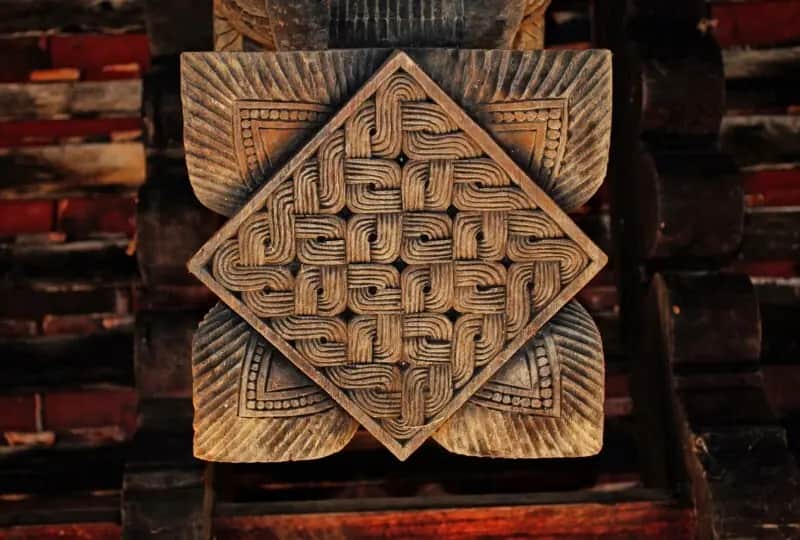
Embekke Devalaya
Embekke Devalaya, west of Kandy, is a shrine to the god Kataragama. It is best known for the carved wooden pillars of its drummers' hall, among the finest wood carvings in Sri Lanka.
Image Credit: ShutterStock
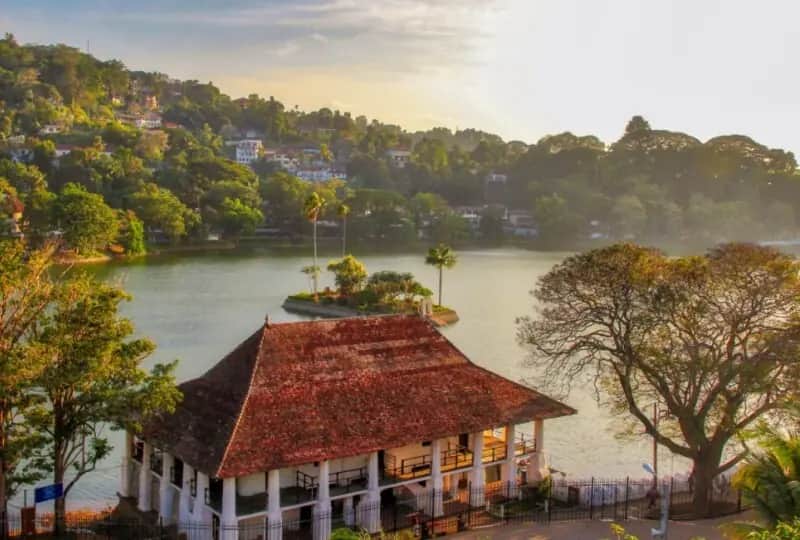
Kandy Lake
Kandy Lake lies beside the Temple of the Tooth and was created in 1807 by Sri Vikrama Rajasinha, the last king of Kandy. A shaded path runs around it.
Image Credit: ShutterStock
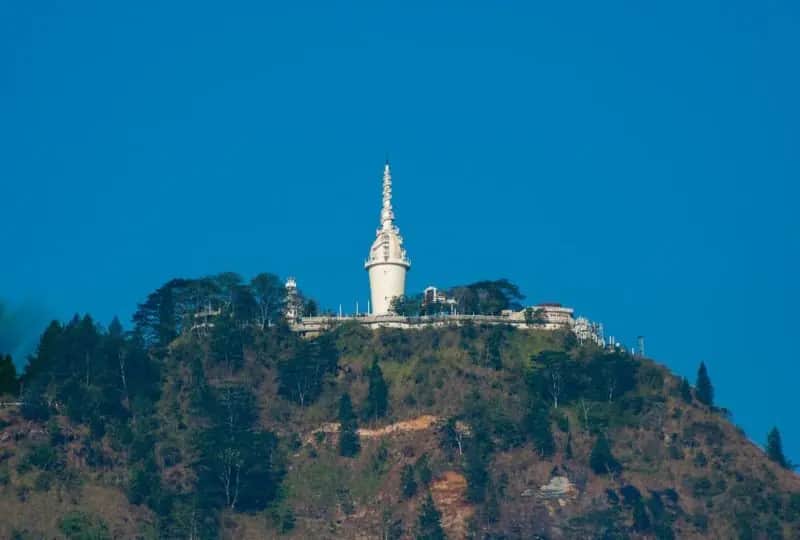
Ambuluwawa Temple & Campaign Site
Ambuluwawa is a mountain beside Gampola, about 20 km south of Kandy. Its summit holds a biodiversity complex with a tall spiral tower and wide views over the hills.
Image Credit: ShutterStock

Richmond Castle
Richmond Castle is a grand early 20th century mansion near Kalutara, set in gardens by the Kalu Ganga. Built for a local Mudaliyar, it mixes Indian and European styles.
Image Credit: ShutterStock
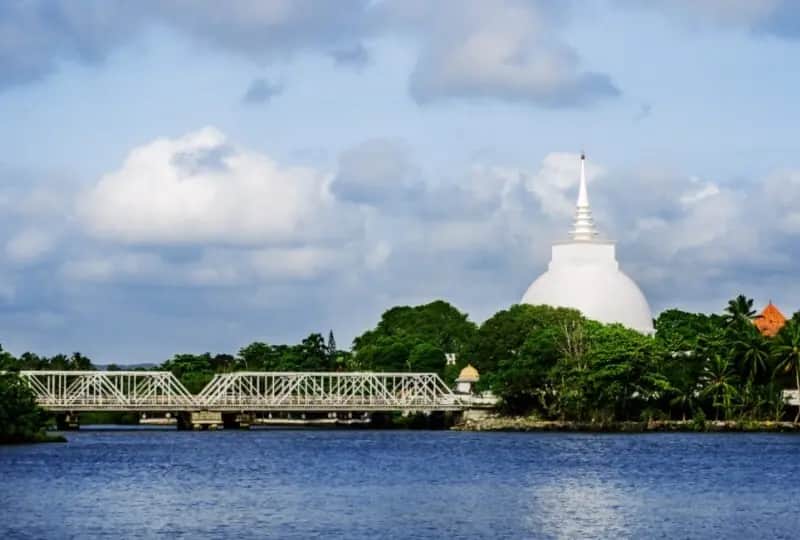
Kalutara Bodhiya
The Kalutara Bodhiya, beside the Galle Road at the mouth of the Kalu Ganga, is one of the most visited Buddhist sites on the west coast. Visitors can enter its hollow white stupa.
Image Credit: ShutterStock
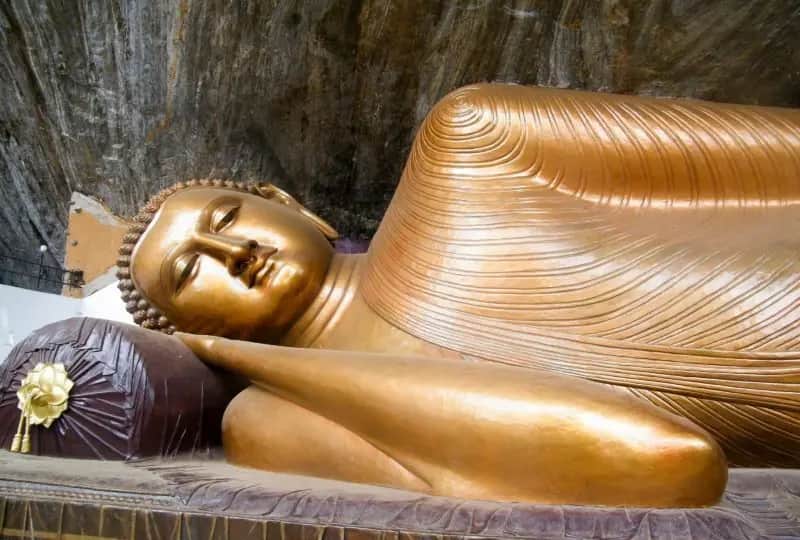
Fa Hien Cave
Fa Hien Cave, or Pahiyangala, is a huge rock shelter near Bulathsinhala, inland from Kalutara. It has evidence of prehistoric human occupation, and a temple now stands in the cave.
Image Credit: ShutterStock
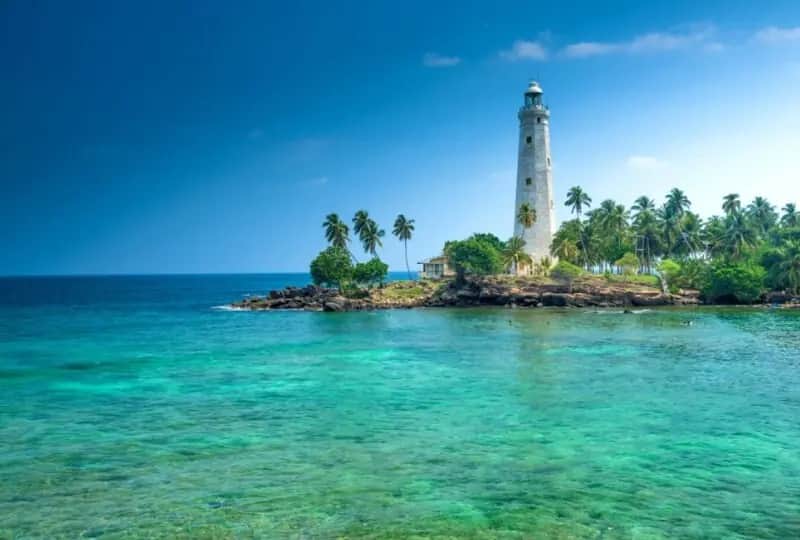
The Dondra Head Lighthouse
Dondra Head Lighthouse stands on the southern tip of Sri Lanka near Matara. At about 49 metres, it is one of the tallest lighthouses in South Asia.
Image Credit: ShutterStock

Taprobane Island
Taprobane is a tiny rocky island in Weligama bay, once owned by the Count de Mauny and later the writer Paul Bowles. It is now a private villa, seen from the beach.
Image Credit: ShutterStock

Rumassala Japanese Peace Pagoda
The Japanese Peace Pagoda is a white stupa on Rumassala hill between Unawatuna and Galle, built by Japanese monks. It looks out over the sea and Galle harbour.
Image Credit: ShutterStock

Yatagala Raja Maha Viharaya
Yatagala Raja Maha Viharaya is a rock temple inland from Unawatuna, among large granite boulders. It has a reclining Buddha and old murals.
Image Credit: ShutterStock
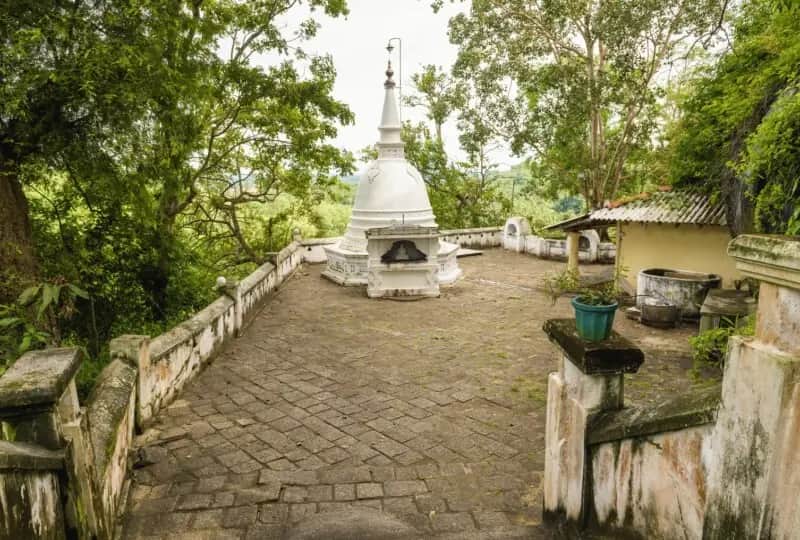
Mulkirigala Rajamaha Viharaya
Mulkirigala is a group of Buddhist cave temples on a tall rock inland from Tangalle. Steps lead up past shrines with paintings and reclining Buddhas to a summit with wide views.
Image Credit: ShutterStock

Tangalle Dutch Fort
Tangalle's Dutch fort is a small, plain structure near the harbour. The Dutch valued Tangalle as a trading post, and the fort is now used as a prison, seen from outside.
Image Credit: ShutterStock

Angurukaramulla Temple
Angurukaramulla temple is the best known Buddhist temple in Negombo, with a dragon entrance and a large seated Buddha.
Image Credit: ShutterStock
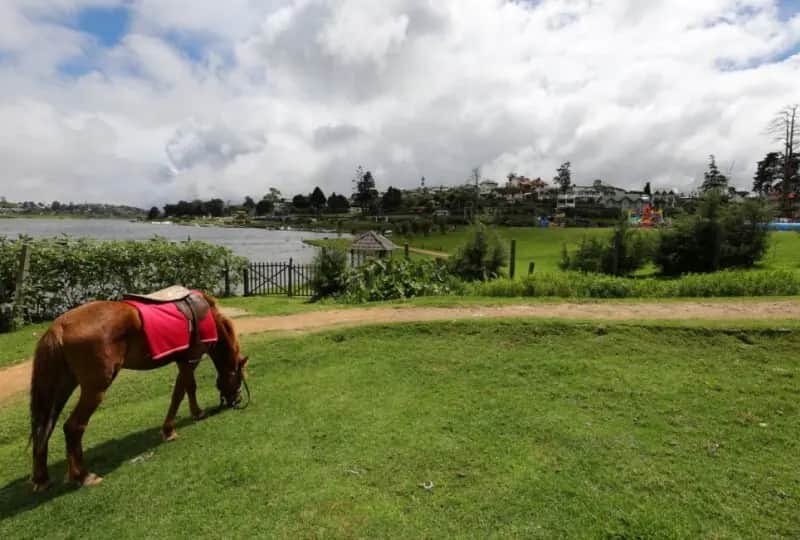
Nuwara Eliya Horse Racing Course
The Nuwara Eliya racecourse lies in the centre of town at about 1,868 metres, one of the highest in the world. Races are held in the April holiday season.
Image Credit: ShutterStock

Seetha Amman Temple
Seetha Amman Temple, at Seetha Eliya near Hakgala, is a small Hindu temple dedicated to Sita. Tradition places the Ramayana's Ashok Vatika here.
Image Credit: ShutterStock
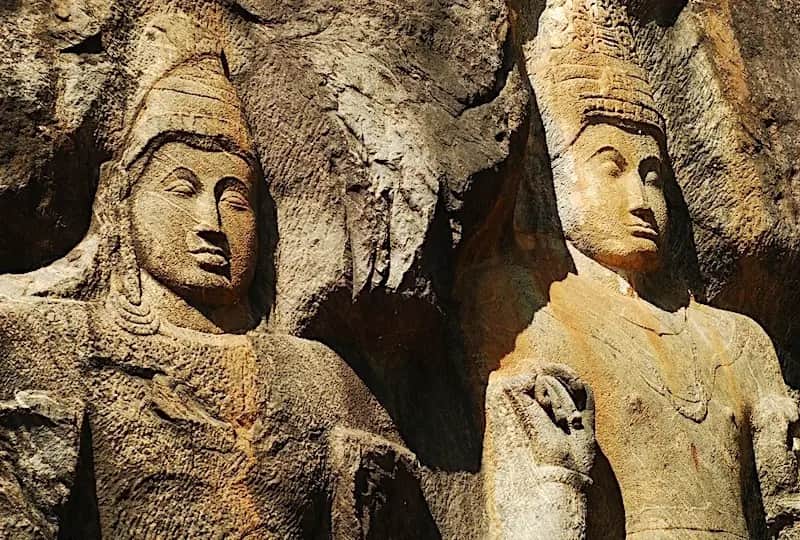
Dhowa Rock Temple and Cave
Dowa Raja Maha Viharaya is a cave temple beside the road between Ella and Bandarawela. An unfinished standing Buddha is carved into the rock face, and the cave has old paintings.
Image Credit: ShutterStock

Lipton’s Seat
Lipton's Seat is a viewpoint above the Dambatenne tea estate near Haputale, named after the tea merchant Sir Thomas Lipton. Go early in the morning for clear views over the hills.
Image Credit: ShutterStock

Adisham Bungalow
Adisham Bungalow is a stone country house in the forest near Haputale, built in the early 20th century for Sir Thomas Lester Villiers. It is now a Benedictine monastery, with gardens open to visitors on certain days.
Image Credit: ShutterStock

Parakrama Samudraya
Parakrama Samudra, the Sea of Parakrama, is a vast reservoir beside Polonnaruwa built by King Parakramabahu I in the 12th century. It still irrigates the fields around the city.
Image Credit: ShutterStock
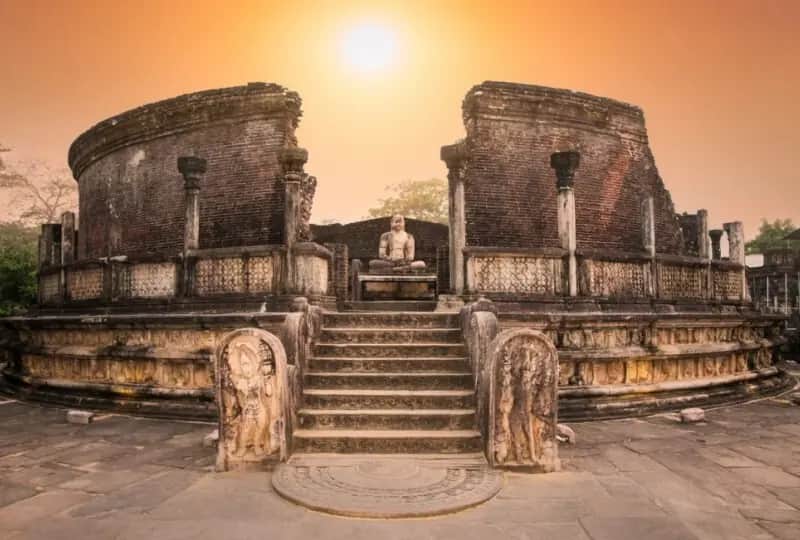
Polonnaruwa Vatadage and the Quadrangle
The Quadrangle is the sacred heart of ancient Polonnaruwa. Its circular Vatadage, with guardstones and moonstones, is one of the finest buildings of the period.
Image Credit: ShutterStock

Gal Viharaya and the Alahana Pirivena group
The northern part of Polonnaruwa holds the Gal Vihara, four Buddha images carved from a single granite face, and the monastery buildings of the Alahana Pirivena.
Image Credit: ShutterStock
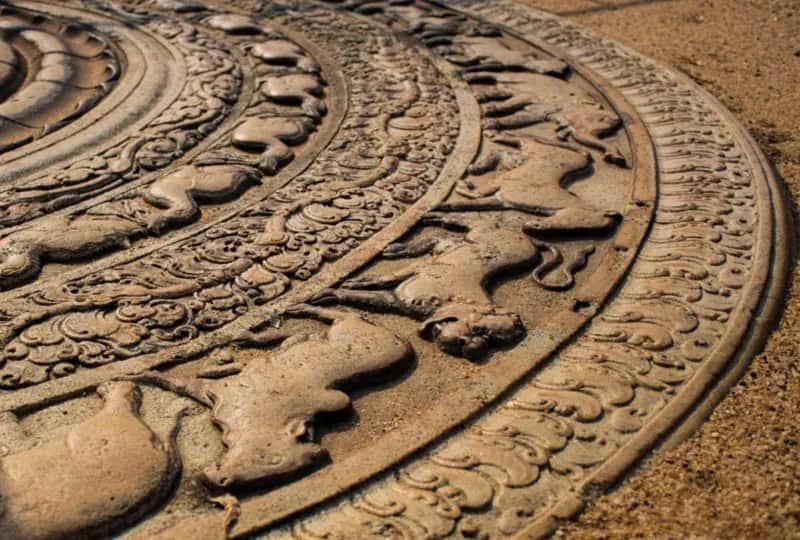
Abhayagiri Monastery Complex
Abhayagiri was the largest monastery of ancient Anuradhapura, covering around 200 hectares. See its great stupa, the Twin Ponds and the Samadhi Buddha.
Image Credit: ShutterStock

Sri Jaya Sri Maha Bodhi
The Jaya Sri Maha Bodhi in Anuradhapura is a sacred fig tree grown from a cutting of the tree under which the Buddha reached enlightenment. It is one of the holiest sites in Sri Lanka.
Image Credit: ShutterStock

Ruwanwelisaya Dagoba
Ruwanwelisaya, the Great Stupa, is one of the most sacred stupas in Sri Lanka, built by King Dutugemunu. Its white dome is surrounded by a wall of elephant sculptures.
Image Credit: ShutterStock

Aukana Buddha Statue
The Aukana Buddha is a standing statue about 12 metres tall, carved from a granite rock face near the Kala Wewa reservoir. It is one of the finest ancient statues in Sri Lanka.
Image Credit: ShutterStock

Ritigala Mountains and Monastery
Ritigala is an isolated mountain range between Anuradhapura and Habarana. Its forested slopes hide the ruins of an ancient forest monastery with stone paths and meditation platforms.
Image Credit: ShutterStock

Weherahena temple
Weherahena, near Matara, is a Buddhist temple known for its long underground tunnel shrine lined with paintings and a very large Buddha statue.
Image Credit: ShutterStock

Batticaloa Lighthouse
Batticaloa Lighthouse stands where the lagoon opens to the sea. It is a good spot to watch fishing boats and the sunset over the water.
Image Credit: ShutterStock
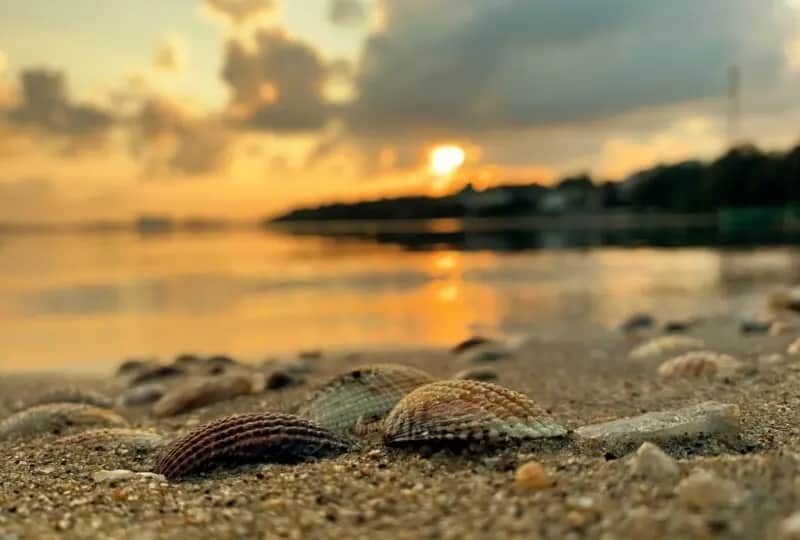
Trincomalee Harbour
Trincomalee Harbour is one of the largest and deepest natural harbours in the world. It was prized by the Portuguese, Dutch and British, and a key naval base in the Second World War.
Image Credit: ShutterStock
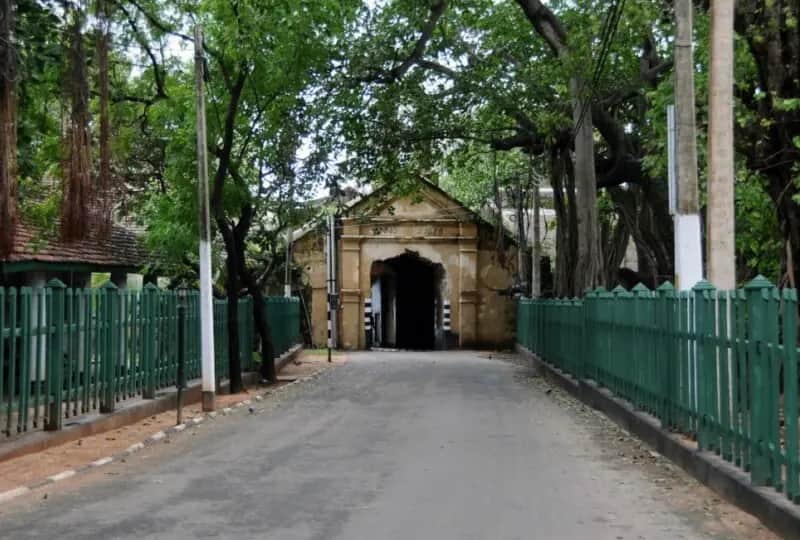
Fort Frederick
Fort Frederick guards the headland between Trincomalee town and its harbour. Still used by the army, it is open to visitors walking through to the Koneswaram temple, with spotted deer grazing inside.
Image Credit: ShutterStock
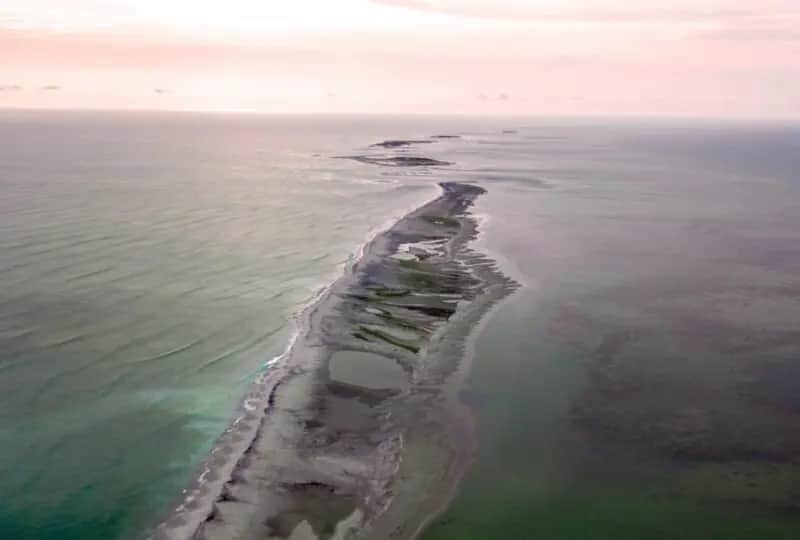
Adam’s Bridge
Adam's Bridge, also called Rama Setu, is a chain of shoals and sandbanks running about 30 km from Mannar to Rameswaram in India. In the Ramayana it is the bridge built by Rama's army.
Image Credit: ShutterStock

Jaffna Library
The Jaffna Public Library grew from a small community library in the 1930s into a major centre of Tamil learning. Burned in 1981 with many rare manuscripts, it has been rebuilt in its original style.
Image Credit: ShutterStock

Nallur Kovil
Nallur Kandaswamy Kovil, dedicated to Lord Murugan, is the most important Hindu temple in Jaffna. Visit during a puja, and come in July or August for its 25-day festival; men remove their shirts to enter.
Image Credit: ShutterStock
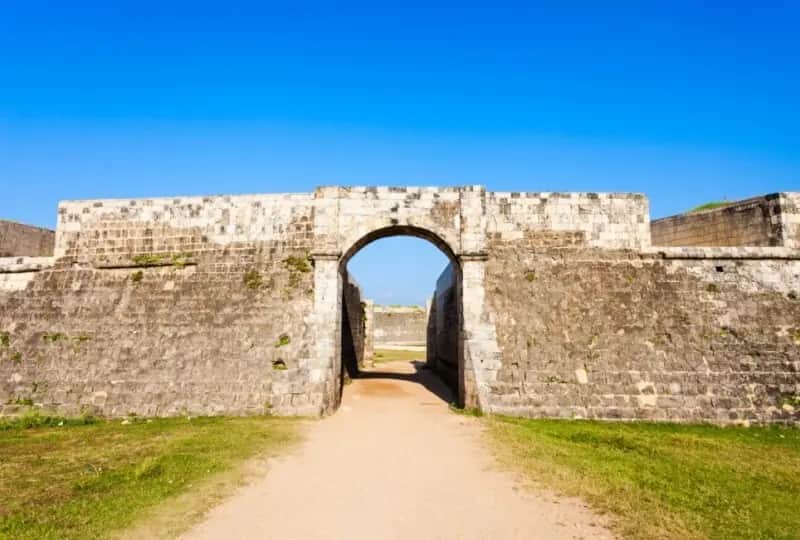
Jaffna Fort
Jaffna Fort stands beside the lagoon at the edge of town. Built by the Portuguese and rebuilt by the Dutch after 1658 as a large star-shaped fort, its ramparts give wide views over the water.
Image Credit: ShutterStock
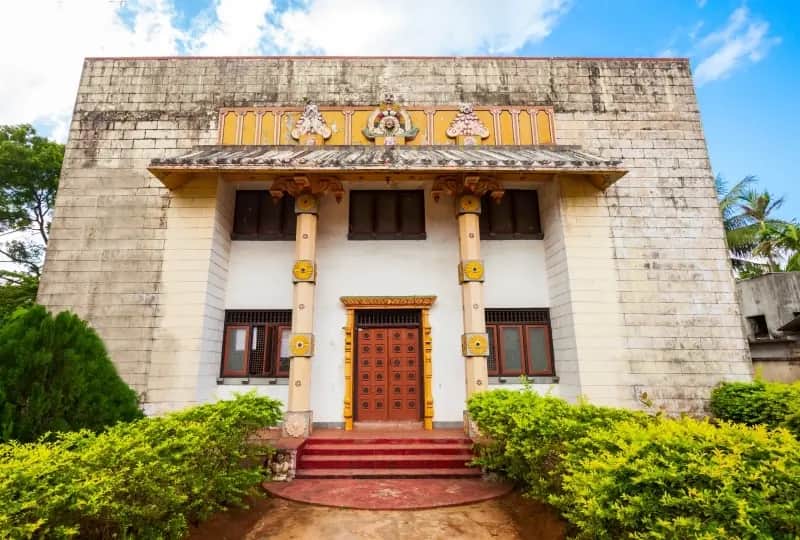
Jaffna Archaeological Museum
The Jaffna Archaeological Museum in Nallur displays finds from the north, including Buddhist and Hindu statues, coins and pottery. It is a short visit that adds depth to a day in the city.
Image Credit: ShutterStock

Elephant Pass
Elephant Pass is the causeway that carries the A9 road and the railway across the lagoon between the Jaffna peninsula and the mainland. It was a key battleground in the civil war and has a war memorial.
Image Credit: ShutterStock
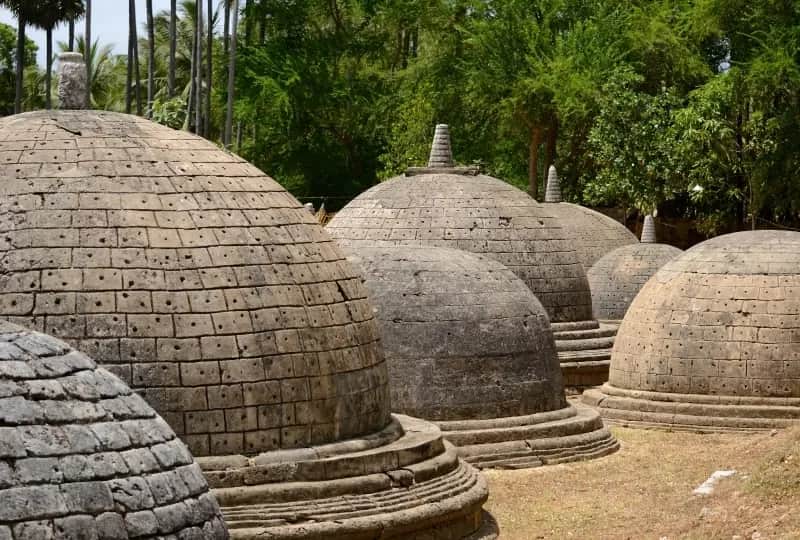
Kandarodai Viharaya
Kandarodai, near Chunnakam, is an archaeological site known for a cluster of small, dome-shaped stupas among palmyra palms. It is one of the most unusual ancient sites in the north.
Image Credit: ShutterStock

Kataragama Kiri Vehera
Kiri Vehera is an ancient white stupa at Kataragama, one of the 16 most sacred Buddhist sites in Sri Lanka. Kataragama is also sacred to Hindus and draws pilgrims of many faiths.
Image Credit: ShutterStock

Situlpawwa Monastery
Situlpawwa is an ancient Buddhist monastery on a large rock in the Yala area, believed to date from the 2nd century BC. Climb to the stupa on top for views over the jungle.
Image Credit: ShutterStock

Akurugoda Stone Inscriptions
Akurugoda, near Tissamaharama, is one of the places in the old kingdom of Ruhuna where early writing cut in stone can be seen. The inscriptions are an important source for the island's early history.
Image Credit: ShutterStock
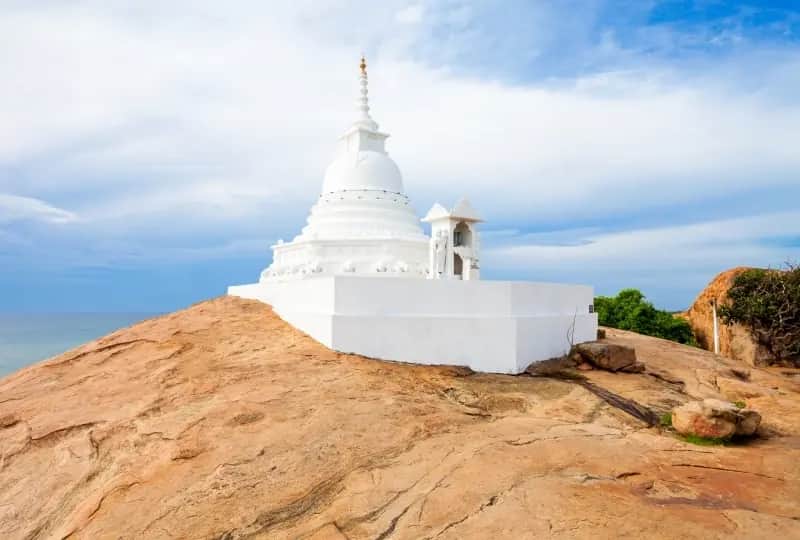
Kirinda Vihara Maha Devi Temple
Kirinda Raja Maha Viharaya is a Buddhist temple on a large rock by the sea at Kirinda, near Yala. It is linked to Viharamahadevi, the mother of King Dutugemunu, who in legend came ashore here.
Image Credit: ShutterStock

Telulla Archaeological Site
Telulla is a small, little-visited archaeological site near Bundala. It has the remains of eleven small stupas, an image house and other buildings that were part of an old monastery.
Image Credit: ShutterStock
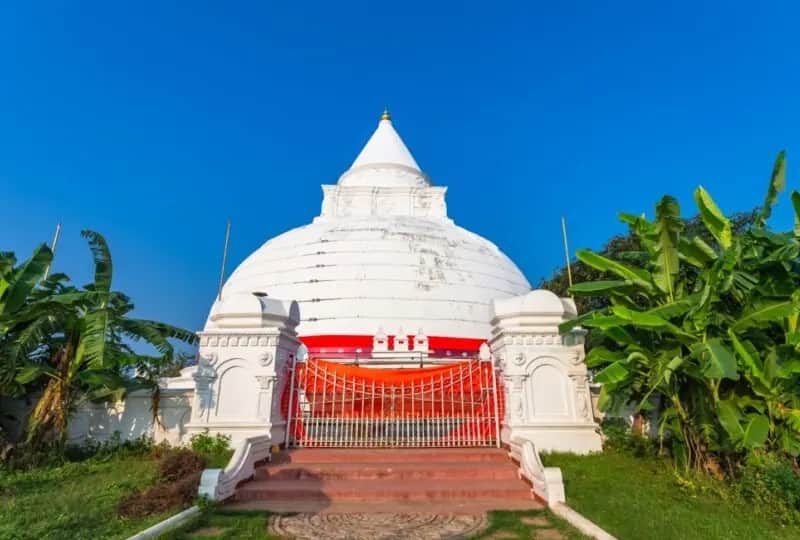
Tissamaharama Raja Maha Viharaya
The Tissamaharama Raja Maha Viharaya is the main temple of the old southern capital of Ruhuna. Its great white stupa is the largest in the south of the island.
Image Credit: ShutterStock
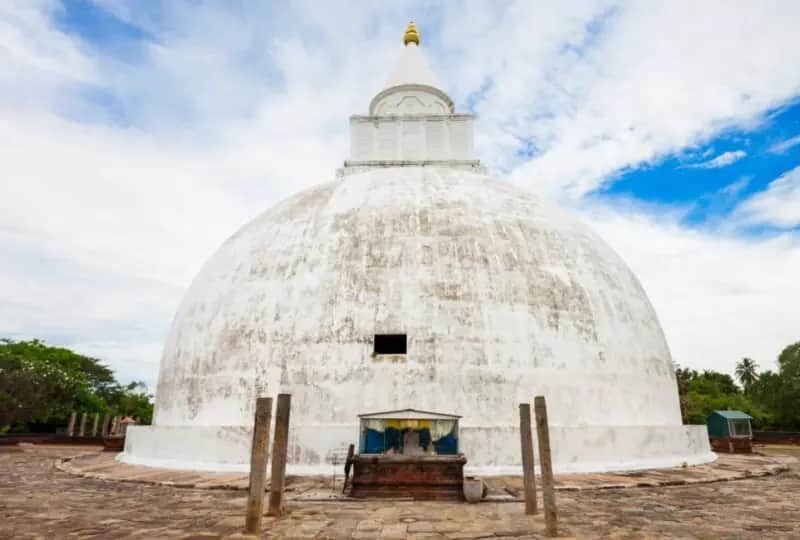
Yattala Vehera
Yattala Vehera is an ancient stupa on the edge of Tissamaharama, traditionally dated to around 2,300 years ago. It is surrounded by an elephant wall and the remains of an old monastery.
Image Credit: ShutterStock

Kudumbigala Monastery
Kudumbigala is an ancient forest monastery among rocky outcrops between Arugam Bay and Kumana. Climb past cave shelters and small stupas to a rock summit with views over the jungle.
Image Credit: ShutterStock
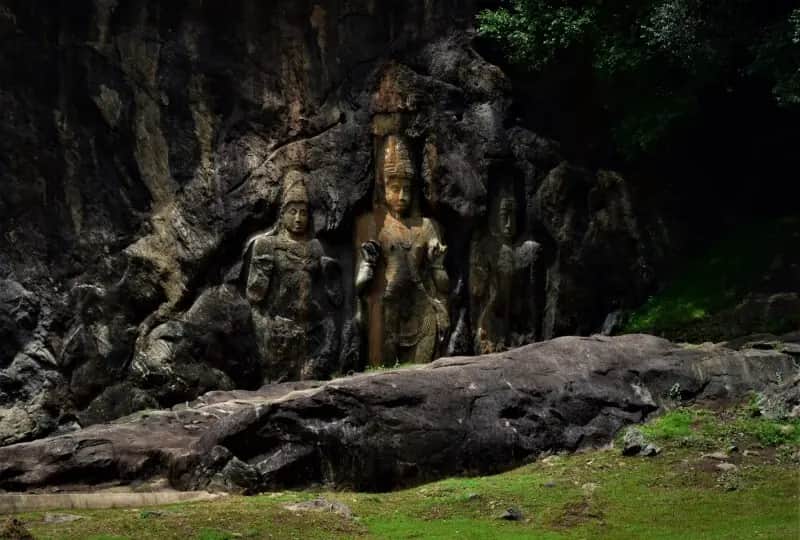
Buduruwayaya Archaeological Site
Buduruwayaya is an ancient Buddhist site near Wasgamuwa, set in quiet dry-zone forest. Its best-known feature is a large reclining Buddha among old ruins.
Image Credit: ShutterStock
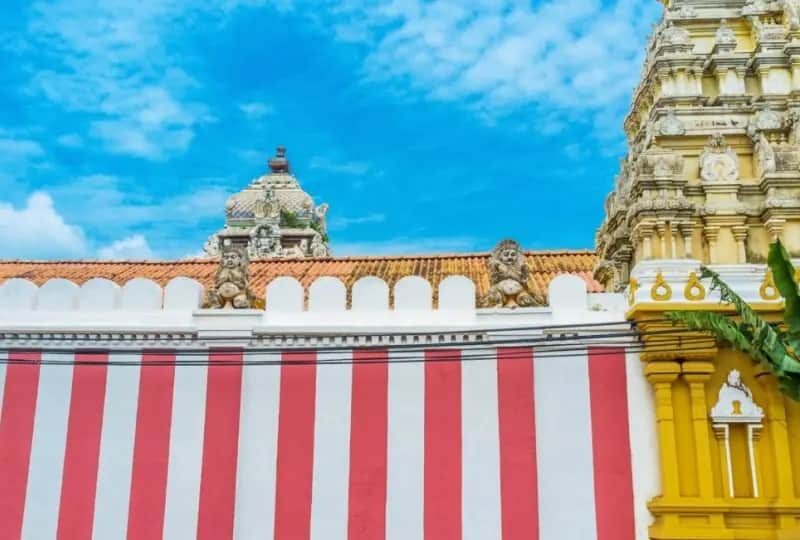
Day Trip To Munneswaram Temple
Visit Munneswaram, near Chilaw, one of the most important Hindu temples in Sri Lanka, dedicated to Shiva and linked to the Ramayana.
Image Credit: ShutterStock
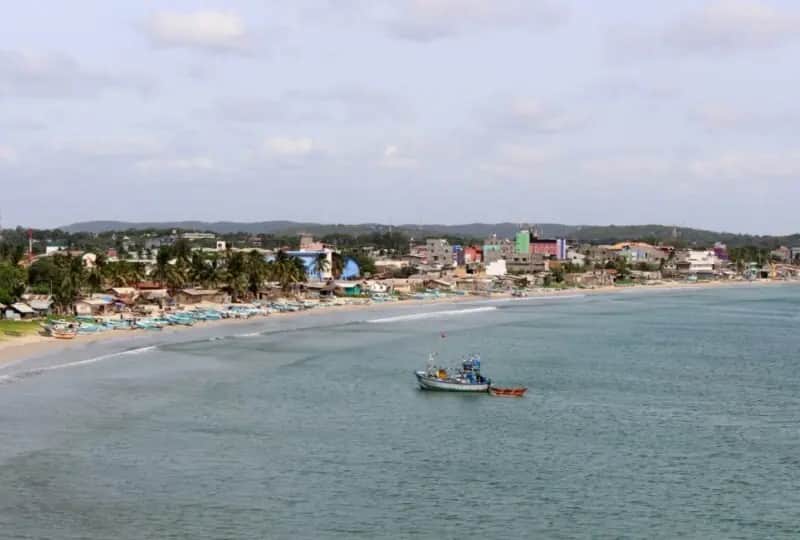
Day Tour of Trincomalee
See the best of Trincomalee in a day, from Koneswaram temple and Fort Frederick to the harbour, the beaches and the Kanniya hot wells.
Image Credit: ShutterStock